
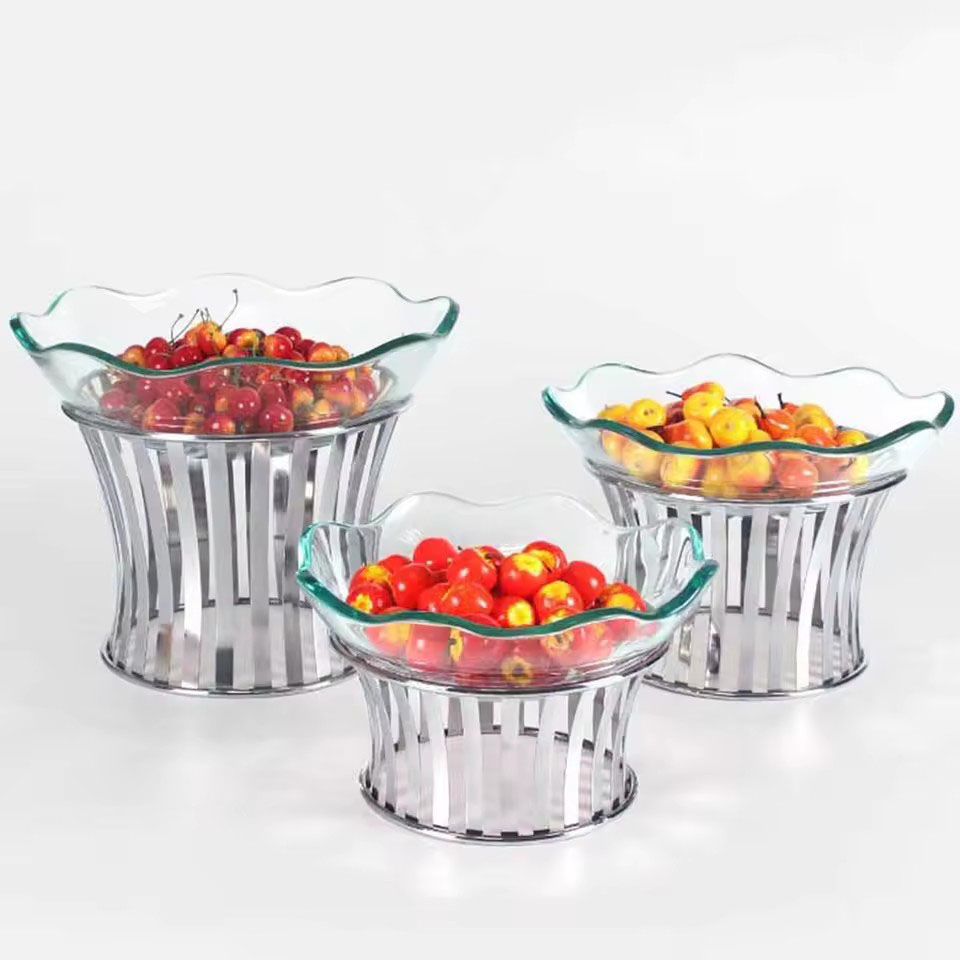
Chafing Dishes for Catering: Durable Options for Professional Use
Professional Catering Demands Professional Equipment
Running a catering business means your equipment must perform flawlessly under conditions that would overwhelm consumer-grade products. A chafing dish used daily across dozens of events per year faces stresses that occasional home entertaining simply does not produce: repeated thermal cycling, transport over roads, setup and breakdown multiple times per week, and exposure to acidic foods, harsh cleaning agents, and the general wear of commercial operations. Investing in equipment built for this environment is not optional — it is essential for maintaining service quality, controlling costs, and building a reputation that generates repeat business and referrals.
The economics are straightforward when you run the numbers. A consumer-grade chafing dish that fails after one or two seasons costs more in replacement purchases and lost reputation than a properly specified commercial unit that lasts a decade. For caterers operating year-round, equipment failures during events create cascading problems: food safety concerns, client dissatisfaction, potential liability exposure, and the immediate stress of managing a crisis while guests wait. Professional-grade equipment eliminates this entire category of risk.
Material Quality and Construction Standards
Commercial-grade chafing dishes are built from 18/8 or 18/10 stainless steel, specifications that indicate the chromium-to-nickel ratio responsible for corrosion resistance, durability, and surface finish quality. The "18/8" designation means approximately 18% chromium and 8% nickel — a ratio that provides excellent resistance to the acidic foods and cleaning agents common in catering environments. Consumer products often use lower-grade stainless steel that looks similar initially but corrodes, pits, and stains far more quickly under commercial use conditions.
Wall and base thickness also differ significantly between commercial and consumer products. Commercial units use thicker gauge steel in the body, lid, and water pan, which provides three benefits: greater durability under transport stress, more consistent heat distribution across the food surface, and better thermal mass that stabilizes temperature during busy service periods. The thicker construction also reduces the resonance that thinner units produce when lids are closed — a subtle but meaningful improvement in the working environment for catering staff during setup and breakdown.
Heating Performance Under Demanding Conditions
Commercial catering operations need heating systems that maintain consistent temperatures despite frequent door openings, varying ambient temperatures, and extended service periods. High-wattage electric units with precise digital controls have become the standard for indoor commercial applications, offering temperature accuracy that fuel-based units simply cannot match. Look for units with thermal efficiency ratings above 80% to minimize energy consumption while maximizing heat retention — this matters when you are running dozens of units simultaneously across multiple events.
For outdoor events where electrical access is limited or impractical, fuel-powered units remain indispensable. Commercial-grade fuel chafer designs accommodate the specific demands of heavy use: reinforced fuel holders that resist warping, better-insulated water pans that reduce fuel consumption, and hinged or roll-top lids designed for hundreds of opening-and-closing cycles without degradation. The initial investment in quality fuel units pays dividends through lower ongoing fuel costs and fewer premature replacements.
Our Top Picks for Professional Catering Use
Full Size 11L Electric Chafer
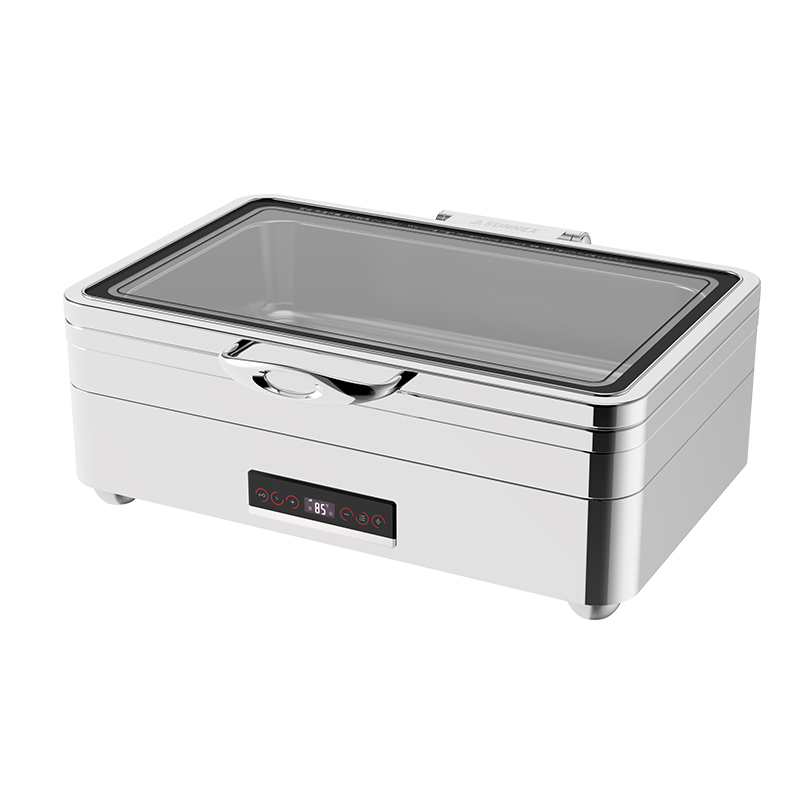
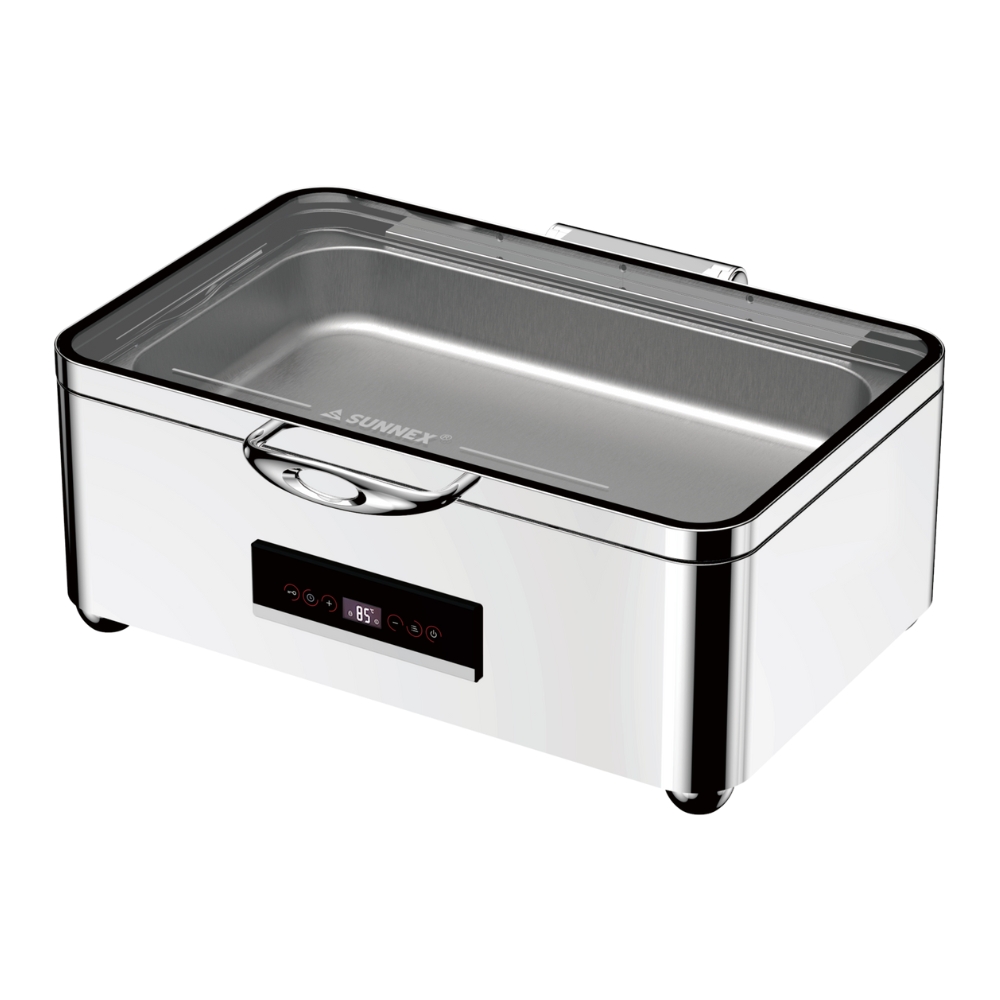
The Sunnex Full Size 11L Electric Chafer from the Lido Series represents the current benchmark for commercial electric chafing dishes, combining 1100W of heating power with intelligent thermal management that reaches optimal temperature in just 12 minutes. For catering companies managing tight setup schedules across multiple events, this rapid heat-up capability translates directly into operational flexibility — you can rely on shorter pre-event warm-up periods without sacrificing food temperature stability during service. The thermal efficiency rating exceeding 80% means lower electricity costs across high-volume operations, while the Smart Mode feature automatically adjusts heating intensity to maintain safe serving temperatures without overshooting or creating hot spots. The polished stainless steel and tempered glass lid construction is built for daily commercial use, with reinforced hinges and robust heating elements designed for hundreds of cycles per year. At 11 liters, it handles main course portions for groups of 30-40 guests comfortably, making it versatile enough for everything from corporate lunches to wedding receptions. The professional-grade durability is backed by a manufacturer with deep experience serving commercial catering operations worldwide.

Electric Chafing Dishes-W20
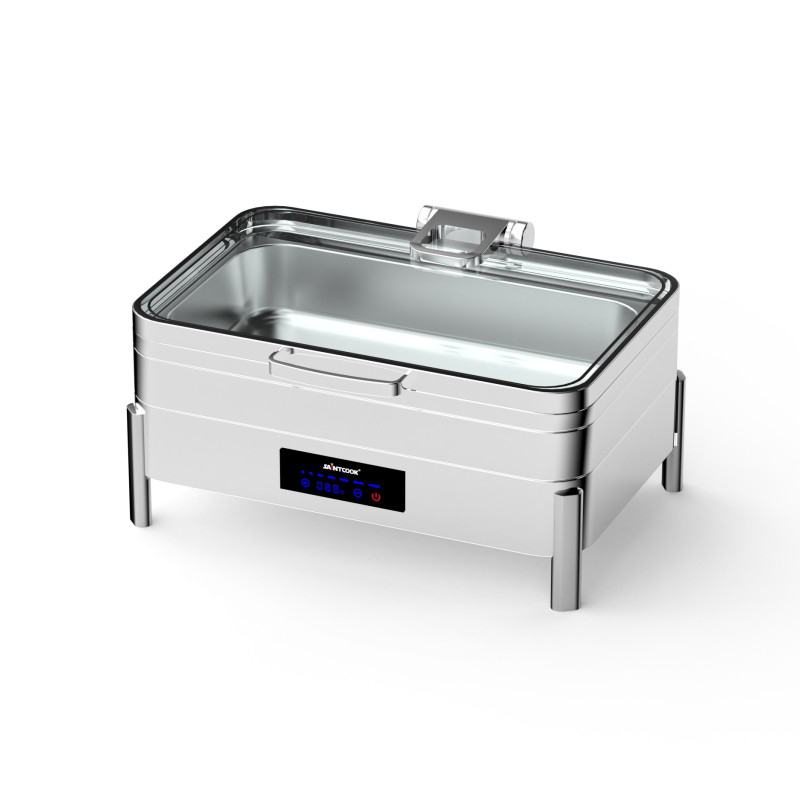
The 900W Electric Chafing Dish with OLED touchscreen and 3-layer base design brings a new level of operational intelligence to commercial food warming. The OLED display provides crystal-clear temperature readouts even in challenging lighting conditions — bright sunlight, dim banquet halls, or colorful event environments where traditional LCD screens become difficult to read. The 3-layer base construction ensures even heat distribution across the entire food surface, eliminating the temperature gradients that can compromise food quality near the edges of poorly-designed units. For caterers serving large groups where food sits in the chafer for extended periods, this even heating prevents the overcooked edges and underheated center issues that plague single-layer designs. The 304 stainless steel construction is rated for daily commercial use, and the digital temperature control system provides the precision that professional operations require. The OLED touchscreen interface is intuitive enough for event staff to master quickly, reducing training time and the errors that unfamiliar equipment can produce during high-pressure service periods.
Fuel Chafing Dish-HC380Z
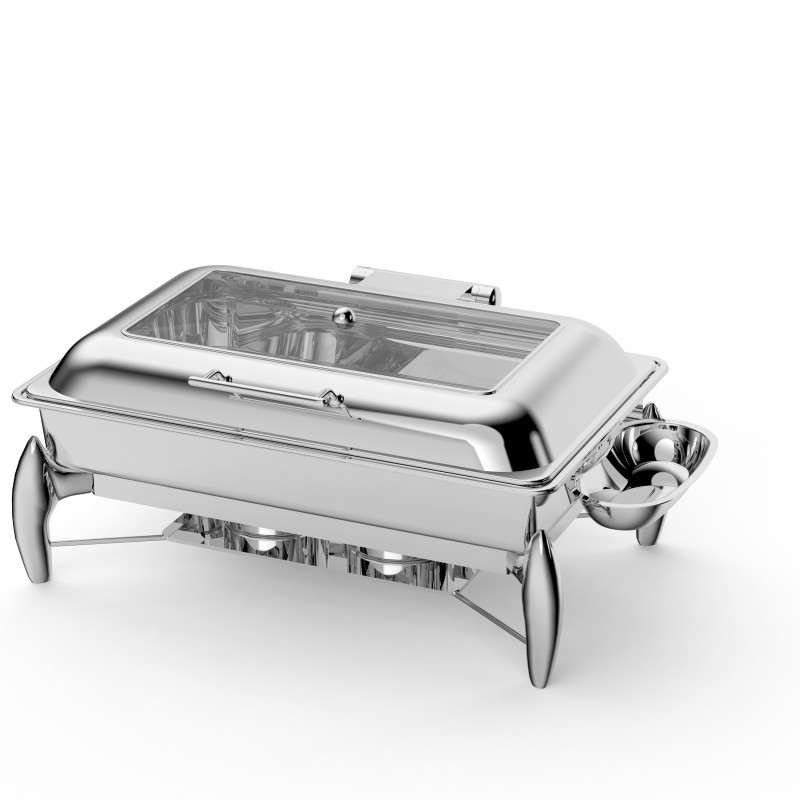
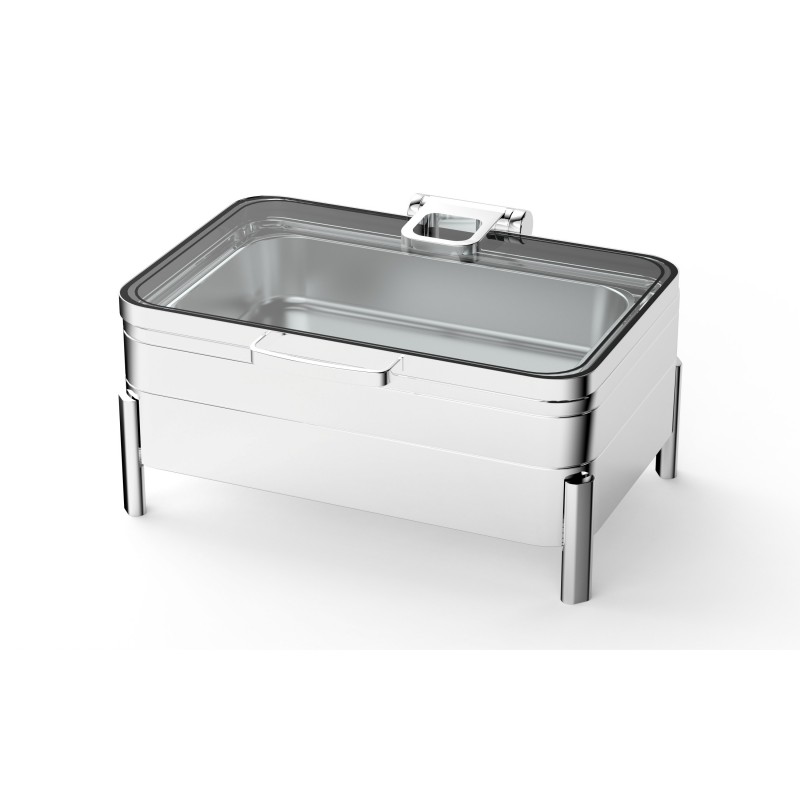
The HC380Z fuel-powered chafing dish remains indispensable for outdoor events, venues without reliable electrical access, and mobile catering operations where transport efficiency matters. Built entirely from 304 stainless steel, this unit is designed for the specific stresses of heavy commercial use: regular transport over roads, setup and breakdown in varying weather conditions, and exposure to the full range of foods and cleaning agents encountered in professional catering. Multiple capacity options let you match the unit to specific event requirements rather than forcing a one-size-fits-all approach. The dual heating capability — accepting both traditional sterno fuel and electric heating elements — provides flexibility that single-power-source units cannot match. For catering companies serving diverse venues and event types, this adaptability reduces the number of different equipment types you need to maintain in your inventory. The robust construction is backed by a manufacturer with extensive experience producing commercial catering equipment for professional operations worldwide.
Building Your Catering Equipment Inventory
Most established catering companies maintain a mix of electric and fuel-powered units, with the ratio shifting toward electric as indoor corporate events become an increasingly large share of the market. A practical starter inventory might include 60% electric units and 40% fuel-powered, with full-size 11-liter units comprising the majority of your fleet supplemented by a smaller number of round or compact units for specialized applications. Invest in quality transport covers, cleaning supplies, and replacement parts from the beginning — these operational necessities are easy to overlook during initial equipment purchases but become critical as your business grows.
Conclusion
Professional catering demands equipment built to commercial standards from the ground up, not adapted consumer products that happen to be marketed to businesses. The difference in material quality, construction standards, heating performance, and long-term durability is substantial — and it shows in the total cost of ownership over years of operation. Investing in quality chafing dishes from the start prevents the replacement cycles, service interruptions, and reputation risks that inferior equipment inevitably produces. Your clients notice the difference in food quality and service smoothness, and so does your bottom line.
Related Articles
Electric Buffet Warmer with Adjustable Thermostat for Restaurants
Discover the best Electric Buffet Warmer with Adjustable Thermostat for Restaurants solutions. Real ...
Mini Chafing Dish for Breakfast Buffet & Condiment Stations
Discover the best Mini Chafing Dish for Breakfast Buffet & Condiment Stations solutions. Real case s...
9QT Extra-Large Chafing Dish for Large-Scale Banquet Events
Discover the best 9QT Extra-Large Chafing Dish for Large-Scale Banquet Events solutions. Real case s...
Wall-Mounted Buffet Stove for Space-Saving Kitchen Layouts
Discover the best Wall-Mounted Buffet Stove for Space-Saving Kitchen Layouts solutions. Real case st...
Stainless Steel Food Warmer for Supermarket Deli Departments
Discover the best Stainless Steel Food Warmer for Supermarket Deli Departments solutions. Real case ...
Commercial Chafer Dish with Temperature Control for Food Safety
Discover the best Commercial Chafer Dish with Temperature Control for Food Safety solutions. Real ca...