
Portable Food Heat Lamps: Lightweight Warming for On-The-Go Use
The food service industry increasingly operates beyond the fixed boundaries of traditional brick-and-mortar establishments, with catering events, outdoor festivals, pop-up markets, and mobile food operations requiring professional food warming equipment that can be transported, set up, and operated at locations without established kitchen infrastructure. Portable food heat lamps address these mobile requirements by providing the warming capability that professional food service demands in packages designed for repeated transportation and rapid deployment. Understanding the characteristics that distinguish truly portable equipment from merely movable fixed equipment enables catering operators and mobile food businesses to select warming solutions that perform reliably under the demanding conditions of on-the-go food service.
What Makes Food Warming Equipment Portable
Mobility vs. Fixed Installation
The distinction between portable and fixed warming equipment centres on whether the equipment is designed for transportation and repeated relocation or merely for repositioning within a single location. Truly portable equipment features modular construction that separates into manageable components, wheeled bases that enable positioning without lifting, and quick-connect electrical and mounting systems that facilitate rapid setup. Fixed equipment, by contrast, assumes permanent or semi-permanent installation at a single location and typically lacks the construction features that enable reliable repeated transportation.
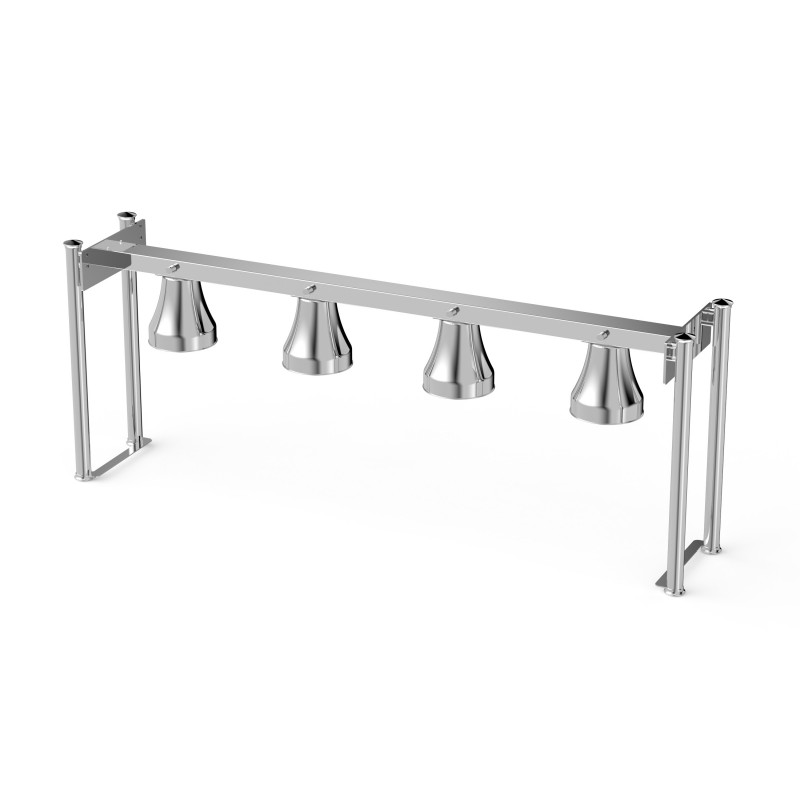
The Stainless Steel Buffet Heat Lamp Rack bridges the portable and fixed categories through its freestanding gantry design that enables positioning flexibility within a venue while maintaining the substantial warming capacity that professional catering operations require. The multiple model variants including BJ604, BJ604B, BJ604B-G, and BJ604C enable configuration matching for specific event requirements, while the gantry construction provides the structural stability that professional use demands without requiring ceiling mounting or permanent installation.
Weight and Component Manageability
Portable equipment must be light enough for transport and setup by catering staff without specialised equipment or extensive labour. Evaluate not just total weight but the distribution of that weight across components, preferring designs that separate into multiple manageable packages rather than single pieces that require two-person or equipment-assisted handling. The practical threshold for portable equipment is components manageable by one or two people without mechanical assistance, enabling setup by catering staff without requiring dedicated setup crews or specialised equipment.
Setup Time Considerations
Catering events operate on compressed timelines where setup time directly impacts labour costs and event readiness. Equipment requiring extensive assembly, calibration, or electrical installation cannot be considered truly portable regardless of its transportation characteristics. The ideal portable warming solution deploys to full operation within minutes of positioning, requiring only electrical connection and basic height adjustment without tool-assisted assembly or configuration. Assess equipment against realistic event scenarios when evaluating setup time requirements.
Applications for Portable Food Heat Lamps
Catering Events and Banquets
Catering operations face warming challenges that fixed kitchen equipment cannot address: events held in venues without kitchen facilities, outdoor locations where environmental conditions challenge food temperature maintenance, and situations where food must be held at serving temperature during extended service periods without resupply from a kitchen. Portable heat lamps bridge these gaps by providing the professional warming capability that catering quality standards demand in packages that accommodate the logistical constraints of off-site food service.
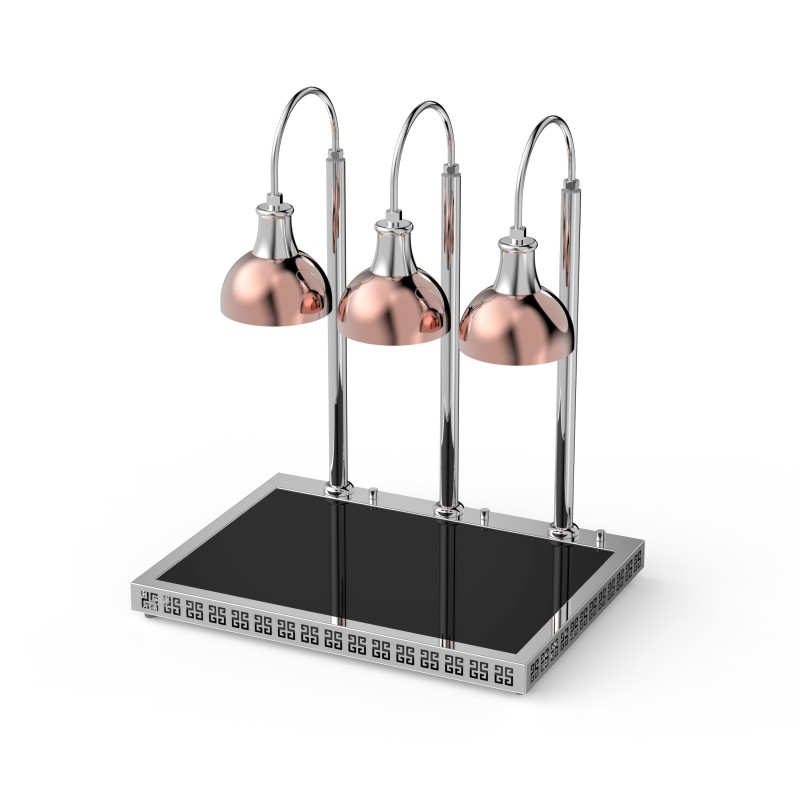
The Three-Head Rose Gold Buffet Heat Lamp Station addresses catering requirements through its three-position warming configuration that provides substantial holding capacity from a single integrated unit, reducing the number of separate pieces of equipment required for typical catering events. The linear arrangement of warming heads accommodates multiple food pans simultaneously, while the Greek key decorative base adds the aesthetic refinement that catering presentations demand, where equipment visibility is higher than in permanent kitchen installations.
Outdoor and Mobile Food Service
Outdoor food service operations face environmental challenges that indoor operations do not encounter: wind that accelerates cooling, direct sunlight that creates uneven heating, and the absence of climate control that maintains consistent ambient temperatures. Portable warming equipment for outdoor applications must address these environmental factors through design features that provide consistent warming despite environmental interference. Equipment with enclosed warming surfaces and wind-resistant configurations addresses outdoor challenges more effectively than open designs intended for controlled indoor environments.
Pop-Up Markets and Temporary Events
The pop-up retail trend has extended to food service, with temporary markets, food halls, and short-term lease spaces creating demand for professional equipment that can be installed and removed quickly. Portable warming equipment enables food entrepreneurs to operate in these temporary venues without the capital commitment that permanent kitchen installation requires, reducing the barrier to entry for new food service businesses and enabling established operators to test new locations without long-term lease obligations.
Evaluating Portable Heat Lamp Performance
Warming Capacity Under Variable Conditions
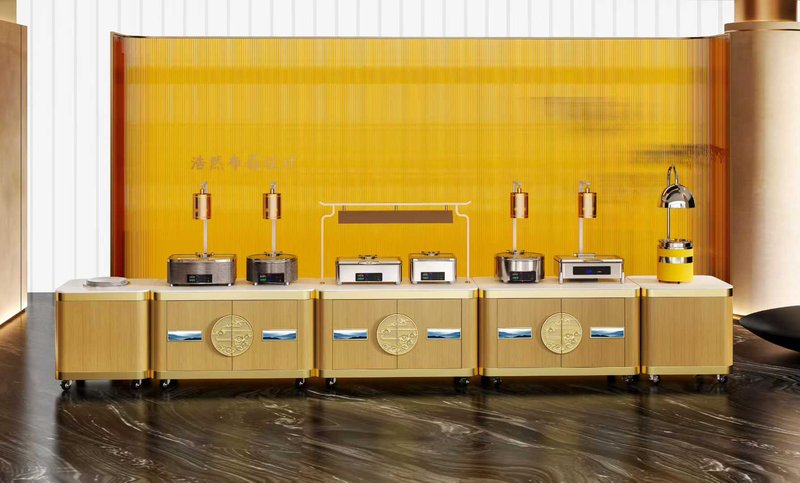
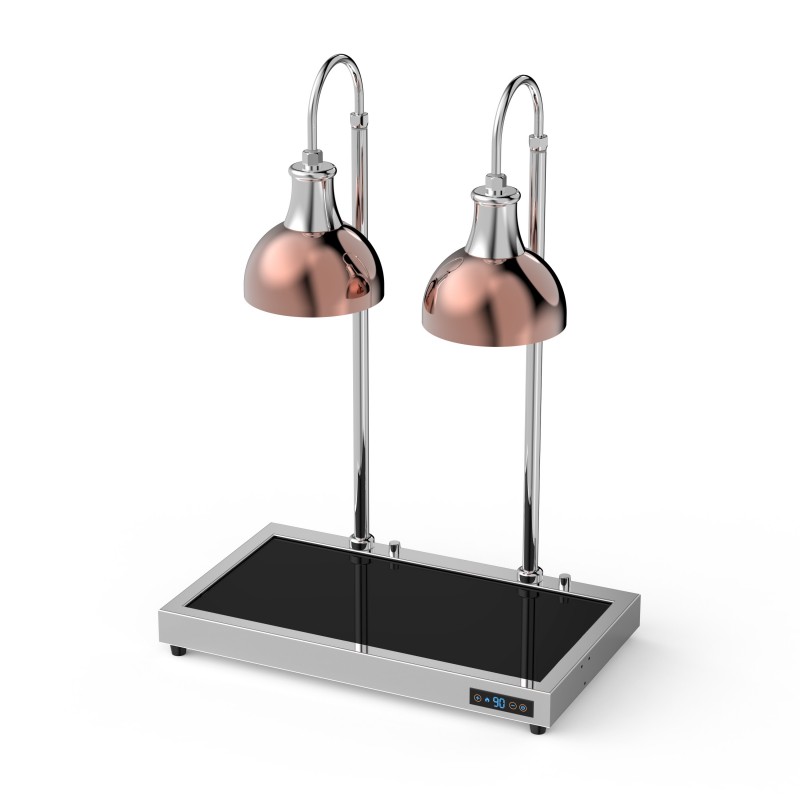
Portable equipment must deliver performance comparable to fixed installations despite the compromises that transportation-oriented design necessarily introduces. Evaluate warming capacity against the specific food volumes, ambient conditions, and holding durations that your portable applications require, not merely the equipment specifications that assume ideal conditions. The Dual-Insulation Workstation with Heat Lamp & Heating Plate with its dual-zone design addresses variable conditions through combined infrared and base heating that maintains consistent temperatures despite environmental interference that single-direction warming cannot fully compensate for.
Power Source Considerations
Portable food service locations vary in their access to electrical power, with some venues providing dedicated circuits while others offer only limited or shared power access. Evaluate the power requirements of portable warming equipment against your likely venue power availability, considering both voltage and amperage requirements alongside the physical location of power access relative to your warming stations. Equipment with lower power requirements offers greater venue flexibility at some cost to warming capacity, requiring informed trade-off decisions based on specific application requirements.
Stability and Safety During Use
Transportable equipment faces different stability challenges than fixed installations, with the risk of tipping, movement, or component loosening during transportation and setup. Select equipment with weighted bases, anti-tip designs, and secure component fastening that maintains alignment and positioning through transportation and repeated setup cycles. Safety during use requires the same attention to stable positioning and secure electrical connections that fixed installations demand, with the added requirement that the equipment maintain these safety characteristics despite the rigours of transportation.
Maintenance for Transportation Durability
Component Wear from Repeated Transport
Equipment that experiences regular transportation faces accelerated wear on moving parts, fastening systems, and electrical connections that fixed equipment does not encounter. Establish more frequent inspection and maintenance schedules for portable equipment than fixed installations require, with specific attention to fastening security, electrical connection integrity, and structural component condition. The stainless steel construction of the Stainless Steel Buffet Heat Lamp Rack provides durability that resists the transportation damage that lesser materials exhibit, though even quality construction requires regular inspection when subject to repeated handling.
Storage and Transportation Best Practices
Proper storage and transportation practices extend portable equipment lifespan by protecting components from damage during the periods between uses. Dedicated transportation cases or padding systems prevent impact damage during transit, while secure storage locations protect equipment from environmental damage and unauthorised access. Establish consistent practices that include pre-transport inspection, secure packaging, and post-event cleaning and inspection that identifies damage or wear requiring attention before the next deployment.
Selecting the Right Portable Configuration
Scale Considerations
Portable warming equipment scale should match your typical event requirements, neither underpowered for your largest typical events nor excessively heavy and complex for smaller applications. The Three-Head Rose Gold Buffet Heat Lamp Station with its three-head configuration provides substantial capacity for medium-scale events while remaining manageable for two-person setup, making it appropriate for the most common catering event sizes. Smaller single-head units may be more appropriate for events with minimal warming requirements or when transportation logistics constrain equipment size.
Event Type Alignment
Different event types create different warming requirements that equipment selection should address. High-end corporate catering demands equipment with aesthetic refinement that matches venue quality, while casual outdoor events prioritise practical durability over visual presentation. Religious and community events may require equipment that accommodates volunteer operators with limited training, favouring simple straightforward designs over complex sophisticated equipment. Match your portable warming selection to your most common event types rather than edge cases that represent small portions of your business.
Conclusion
Portable food heat lamps enable professional food warming capability at locations beyond the reach of fixed kitchen equipment, expanding the service possibilities for catering operators, mobile food businesses, and temporary food service operations. True portability requires consideration of transportation manageability, setup speed, and performance consistency under variable conditions rather than merely the ability to move equipment between locations. The investment in quality portable warming equipment pays returns through reliable event performance, reduced setup labour, and the professional presentation that distinguishes quality catering operations from improvised food service alternatives.
Featured Products
Stainless Steel Buffet Heat Lamp Rack
BAVA Stainless Steel Buffet Heat Lamp Rack. 4-lamp overhead system in stainless steel. Models: BJ604 (basic), BJ604B (angled), BJ604B-G (copper/gooseneck), BJ604C (sneeze guard). Freestanding gantry design. CE certified.
Three-Head Rose Gold Buffet Heat Lamp Station
BAVA Three-Head Rose Gold Buffet Heat Lamp Station. Three rose gold dome lamps in linear arrangement over black glass warming surface. Greek key decorative base pattern. BJ663T adds adjustable glass shelf. Premium hotel buffet design. CE certified.
Dual-Insulation Workstation with Heat Lamp & Heating Plate
BAVA Dual-Insulation Workstation with Heat Lamp and Heating Plate. Dual-zone warming with infrared lamp + heated base. Black glass-ceramic surface, digital thermostat, copper dome lamps. Models BJ661/BJ662 with optional sneeze guard. CE certified.
Related Articles
Electric Buffet Warmer with Adjustable Thermostat for Restaurants
Discover the best Electric Buffet Warmer with Adjustable Thermostat for Restaurants solutions. Real ...
Mini Chafing Dish for Breakfast Buffet & Condiment Stations
Discover the best Mini Chafing Dish for Breakfast Buffet & Condiment Stations solutions. Real case s...
9QT Extra-Large Chafing Dish for Large-Scale Banquet Events
Discover the best 9QT Extra-Large Chafing Dish for Large-Scale Banquet Events solutions. Real case s...
Wall-Mounted Buffet Stove for Space-Saving Kitchen Layouts
Discover the best Wall-Mounted Buffet Stove for Space-Saving Kitchen Layouts solutions. Real case st...
Stainless Steel Food Warmer for Supermarket Deli Departments
Discover the best Stainless Steel Food Warmer for Supermarket Deli Departments solutions. Real case ...
Commercial Chafer Dish with Temperature Control for Food Safety
Discover the best Commercial Chafer Dish with Temperature Control for Food Safety solutions. Real ca...