
Food Heat Lamps for Sale: Best Deals for Catering Companies
Catering companies operate on tight margins and tighter timelines. Every piece of equipment in your inventory needs to earn its keep, and food heat lamps are no exception. Whether you are outfitting a new operation, expanding your existing fleet, or replacing aging units that no longer hold temperature reliably, finding the right heat lamps at the right price makes a real difference to your bottom line. This guide walks you through what to look for when shopping for food heat lamps, which features justify a higher price tag, and where the best value lies for catering companies buying in volume.
What Catering Companies Need from a Heat Lamp
Before comparing prices and models, it helps to define exactly what your operation demands from a heat lamp. Catering environments differ from permanent restaurant installations in several important ways.
First, your equipment gets moved. A lot. Heat lamps that live on a buffet cart one night and ride in a truck the next morning need to withstand vibration, minor bumps, and frequent assembly and disassembly. Look for units with solid welds on joints, weighted bases that resist tipping, and lamp heads that lock firmly into position rather than drifting under their own weight.
Second, your events vary widely in scale. A breakfast meeting for thirty executives calls for a very different setup than a wedding reception for three hundred guests. The most versatile catering heat lamps offer modular configurations: single-head units that work alone for small stations, and multi-head rack systems that scale up for large banquet lines.
Third, appearance matters. Catering clients judge your presentation, and the equipment you bring into their venue sends a signal about your professionalism. Stainless steel and rose gold finishes photograph well and complement virtually any event decor, while scratched or discolored housings undermine the overall impression.
Key Features That Affect Price
Not all heat lamps are built the same, and the price range reflects real differences in capability and build quality. Here are the features that move the needle on cost.
Number of Lamp Heads
Single-head units are the most affordable entry point, typically ranging from $150 to $350. Dual-head configurations add 40 to 60 percent to the price. Multi-head rack systems with four or more lamp heads represent the premium tier, often priced between $500 and $900. For catering companies, the decision usually comes down to how frequently you run large versus small events. If your schedule leans toward large banquets, investing in multi-head racks pays off quickly in reduced setup time and more consistent coverage.
Heating Technology
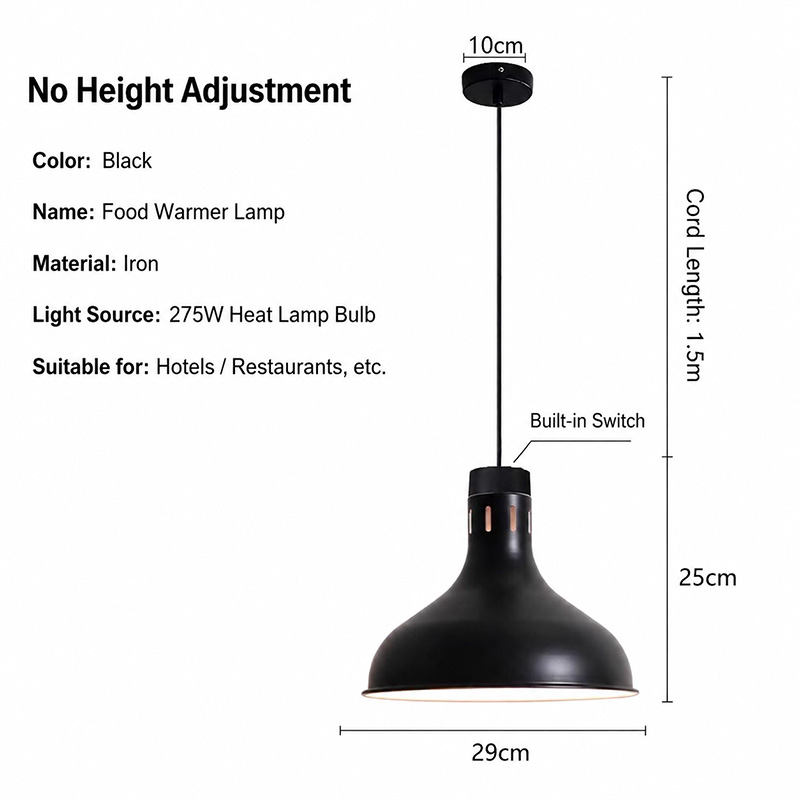
Infrared heat lamps dominate the commercial market for good reason. They deliver targeted warmth to food surfaces without significantly heating the surrounding air, which means less energy waste and more stable food temperatures over long service windows. Basic infrared bulbs are inexpensive to replace, typically costing $10 to $25 each, and they last 2,000 to 5,000 hours depending on the quality.
Some premium units add a thermostatic base plate alongside the overhead infrared lamp, creating a dual-zone heating system. The base plate maintains consistent heat from below while the infrared lamp works from above, resulting in more even temperature distribution across the food. This feature adds to the purchase price but can reduce food waste by preventing hot spots and cold corners.
Finish and Aesthetics
Standard stainless steel housings are the most cost-effective option and perfectly adequate for back-of-house or casual event settings. Rose gold and copper finishes carry a premium of roughly 15 to 25 percent but deliver significant visual impact for upscale events. If your client base includes hotels, luxury venues, and high-end wedding planners, the aesthetic upgrade pays for itself in perceived value and repeat bookings.
Mobility and Setup
Countertop models with weighted bases are the easiest to transport and set up, requiring no assembly beyond plugging in. Freestanding rack systems need more time to position and adjust, but they cover larger areas. Ceiling-mounted pendant lamps look stunning but require overhead mounting hardware and professional installation, making them better suited to permanent or semi-permanent installations rather than mobile catering use.
Three Models Worth Considering
Below are three heat lamp options that cater to different catering scenarios, each offering strong value at its price point.
Single-Head Rose Gold Buffet Heat Lamp
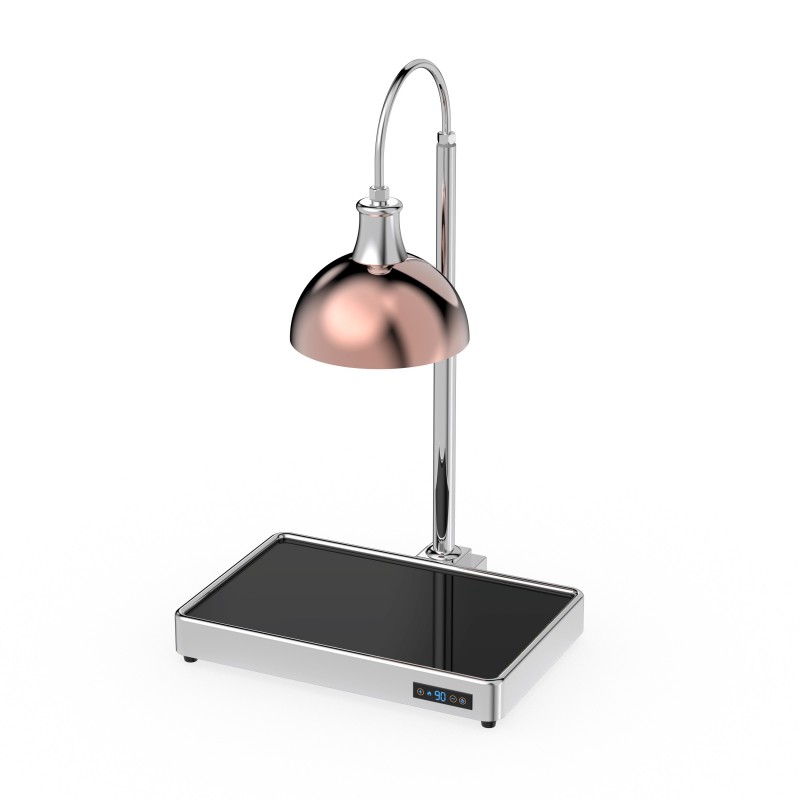
Single-Head Rose Gold Buffet Heat Lamp
The BAVA Single-Head Rose Gold Buffet Heat Lamp (models BJ1631 and BJ1831T) delivers dual-zone heating with an infrared overhead lamp and a thermostatic base plate. The polished stainless steel body with rose gold dome finish makes it a strong choice for events where the equipment is visible to guests. Its compact footprint works well for carving stations, dessert displays, and small buffet setups. For catering companies that need an attractive, portable unit for intimate events, this model hits the sweet spot of performance and presentation.
Three-Head Rose Gold Buffet Heat Lamp Station
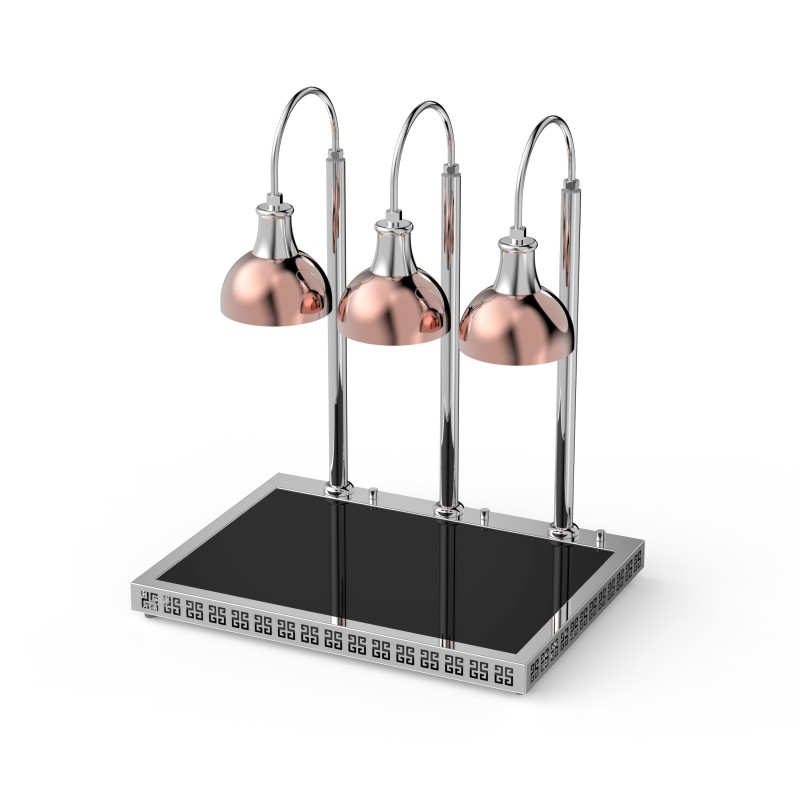
Three-Head Rose Gold Buffet Heat Lamp Station
When one lamp head is not enough, the BAVA Three-Head Rose Gold Station (model BJ663T) steps up with three infrared dome lamps arranged in a linear configuration over a black glass-ceramic warming surface. The Greek key decorative base pattern adds a touch of elegance that distinguishes it from purely functional equipment. The adjustable glass shelf on the BJ663T variant provides extra display space. This unit is built for high-end hotel buffets, VIP event stations, and any setting where the equipment needs to look as good as the food it is warming.
Stainless Steel Heat Lamp BJ10 Series
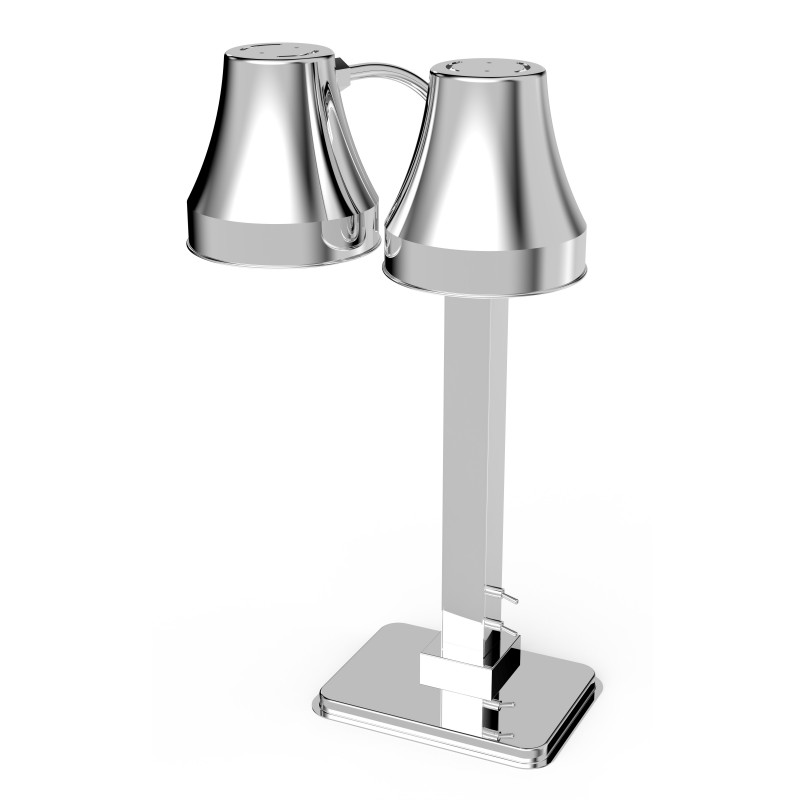
Stainless Steel Heat Lamp-BJ10
For straightforward, no-nonsense warming, the BAVA BJ10 Series offers a polished mirror stainless steel finish with a classic bell dome shade and height-adjustable post on a weighted base. Available in single-head (BJ10 and BJ101) and dual-head (BJ102) configurations, this line is the workhorse option for catering companies that prioritize reliability and easy maintenance over decorative appeal. The simple design means fewer parts that can break during transport, and the mirror stainless finish hides fingerprints and minor scratches better than coated alternatives.
Bulk Purchase Strategies
Catering companies buying three or more units at once should approach the purchase strategically. Most manufacturers and authorized distributors offer volume discounts starting at the three-unit level, with deeper breaks at five and ten units. If you are outfitting an entire operation, request a formal quote rather than relying on listed retail prices.
Consider mixing your order. Rather than buying all the same model, purchase a combination of single-head portable units for small events and multi-head rack systems for large banquets. This gives you flexibility to match equipment to each job without overspending on units that sit idle half the time.
Ask about spare parts availability before you buy. Infrared bulbs, reflector domes, and thermostatic controls are the components most likely to need replacement over the life of the equipment. A manufacturer that stocks spare parts and ships them quickly minimizes downtime when something breaks before a major event.
Warranty and After-Sales Support
Commercial food heat lamps typically carry warranties of one to three years, depending on the manufacturer and model. Read the fine print carefully. Some warranties cover only manufacturing defects and exclude damage from transport or commercial use, which defeats the purpose for a catering company. Look for warranties that explicitly cover commercial applications and include provisions for shipping replacement parts or units.
After-sales support matters more than you might think. When a lamp head stops working the morning of a major event, you need a manufacturer that answers the phone and can overnight a replacement. Check online reviews and industry forums for feedback on responsiveness before committing to a brand.
Making the Right Investment
Buying food heat lamps is not a decision to rush. Take the time to evaluate your typical event sizes, your transport and storage capacity, and the visual standards your clients expect. Match your purchase to your actual operational needs rather than buying the cheapest option available or over-investing in features you will rarely use. The right heat lamps, properly maintained, will serve your catering business for years and keep every dish you serve at the perfect temperature.
Related Articles
Electric Buffet Warmer with Adjustable Thermostat for Restaurants
Discover the best Electric Buffet Warmer with Adjustable Thermostat for Restaurants solutions. Real ...
Mini Chafing Dish for Breakfast Buffet & Condiment Stations
Discover the best Mini Chafing Dish for Breakfast Buffet & Condiment Stations solutions. Real case s...
9QT Extra-Large Chafing Dish for Large-Scale Banquet Events
Discover the best 9QT Extra-Large Chafing Dish for Large-Scale Banquet Events solutions. Real case s...
Wall-Mounted Buffet Stove for Space-Saving Kitchen Layouts
Discover the best Wall-Mounted Buffet Stove for Space-Saving Kitchen Layouts solutions. Real case st...
Stainless Steel Food Warmer for Supermarket Deli Departments
Discover the best Stainless Steel Food Warmer for Supermarket Deli Departments solutions. Real case ...
Commercial Chafer Dish with Temperature Control for Food Safety
Discover the best Commercial Chafer Dish with Temperature Control for Food Safety solutions. Real ca...