
Food Heat Lamps for Fast Food Chains: Bulk & Durable Options
Fast food chain operations represent the most demanding environment for commercial food warming equipment, where thousands of locations worldwide must maintain identical product quality standards across vastly different kitchen configurations, staff skill levels, and customer traffic patterns. The franchise model that enables rapid geographic expansion also creates equipment requirements that prioritised standardised performance, minimal training burden, and legendary durability over the customisation and aesthetic considerations that characterise independent restaurant equipment selection. Food heat lamps for fast food chain applications must deliver reliable warming performance across tens of thousands of service cycles while surviving the abuse that high-volume quick-service environments inevitably inflict on all equipment.
Fast Food Chain Equipment Requirements
Standardisation and Compliance
Chain-level equipment standardisation serves multiple operational purposes beyond simple brand consistency. Standardised equipment simplifies the training burden across thousands of locations with varying staff experience levels and turnover rates. When every franchise location operates identical warming equipment, training materials, maintenance procedures, and replacement protocols can be standardised at the corporate level, reducing the local expertise required to operate each location successfully. This standardisation also enables consistent quality audits that compare performance across the network, identifying locations that deviate from expected standards for targeted intervention.
The Single-Head Rose Gold Buffet Heat Lamp exemplifies the standardised approach that chain operators require, with specific model designations including BJ1631 and BJ1831T that enable precise equipment matching across the franchise network. Corporate specifications can reference exact model numbers and optional configurations, ensuring that every franchise location receives equipment that matches the specifications assumed in menu development, food safety protocols, and quality standards documentation.
Durability Under Heavy Use
Fast food environments subject equipment to use patterns that far exceed typical restaurant operations. Multiple shifts, weekend rushes, and holiday peak periods create continuous equipment utilisation that would be unusual in sit-down restaurant contexts. Heat lamps selected for fast food applications must survive thousands of operating hours annually without developing the mechanical failures, electrical degradation, or physical damage that characterised commercial rather than industrial equipment. The cost of premature equipment failure extends beyond replacement parts and repair labour to include the service disruptions that degrade customer experience and reduce throughput during critical revenue periods.
Maintenance Accessibility
Chain equipment specifications must account for the maintenance capabilities available at each franchise location. Corporate-operated locations may have dedicated maintenance staff, while independent franchisees typically rely on service contracts with local equipment technicians who may lack specialised knowledge of specific equipment brands. Equipment that requires factory-level service or specialised diagnostic equipment for routine maintenance creates disproportionate burdens for smaller franchise operators, potentially leading to deferred maintenance that compromises equipment performance and longevity.
Multi-Head Configurations for High Volume
Demand Characteristics of Fast Food Operations
Fast food menu configurations typically include multiple items requiring simultaneous warming during peak periods. A single drive-through window might need to warm breakfast sandwiches, hash browns, coffee, and pastry items simultaneously during morning service, then transition to burger, chicken, and fries warming during midday and evening operations. This varied warming demand suggests multi-head configurations that provide flexible warming capacity across different menu periods without requiring equipment repositioning or wholesale replacement when menu offerings change seasonally or permanently.
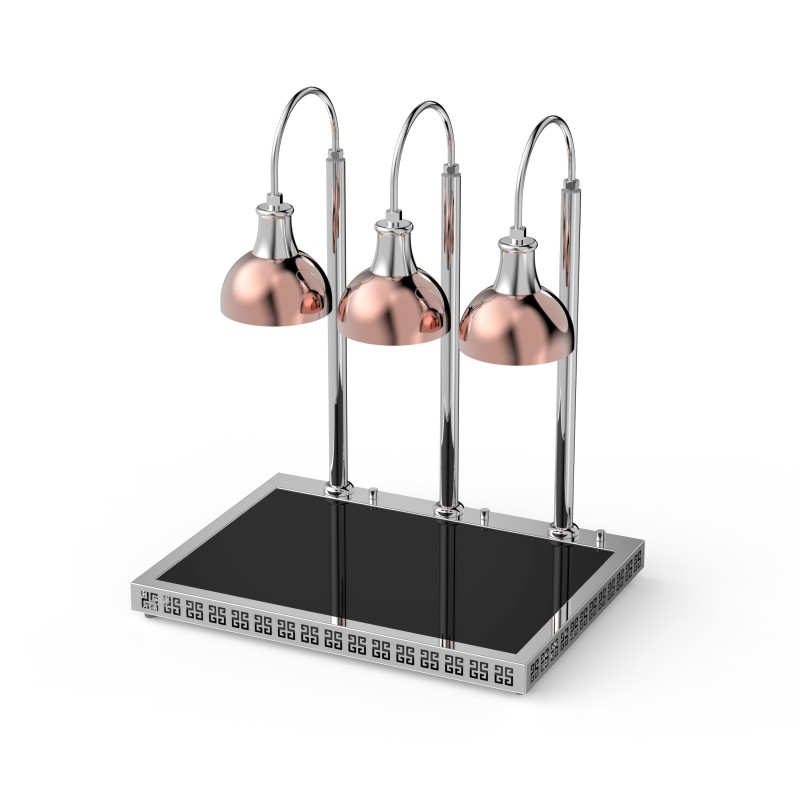
The Three-Head Rose Gold Buffet Heat Lamp Station provides the three-position warming flexibility that diverse fast food menu requirements demand, with its linear arrangement of three rose gold dome lamps providing independent warming zones that can accommodate different product types simultaneously. The black glass warming surface adds secondary warming capability for items requiring base heat in addition to overhead radiant warming, addressing the varied warming approaches that different fast food products demand.
Counter vs. Overhead Configurations
Fast food kitchen layouts typically prioritise counter space for assembly operations, eliminating the dedicated counter footprint that traditional freestanding heat lamp stations require. Overhead-mounted configurations address this space constraint by positioning warming capability in the vertical space above the service counter, keeping the counter surface clear for assembly operations while delivering warming energy from above the product. These configurations require careful mounting to ensure adequate height for staff movement while maintaining effective warming distance from product surfaces.
Bulk Procurement Considerations
Cost Optimisation at Scale
Fast food chains operating hundreds or thousands of locations face equipment procurement costs that multiply dramatically across the network. While individual restaurant equipment purchases focus on per-unit cost, chain procurement teams evaluate equipment economics through total cost of ownership calculations that account for purchase price, installation costs, maintenance expenses, expected lifespan, and the operational costs associated with equipment performance variations across the network. Equipment that costs more initially but delivers superior reliability and longevity may represent better overall economics than cheaper alternatives that require frequent service or premature replacement.
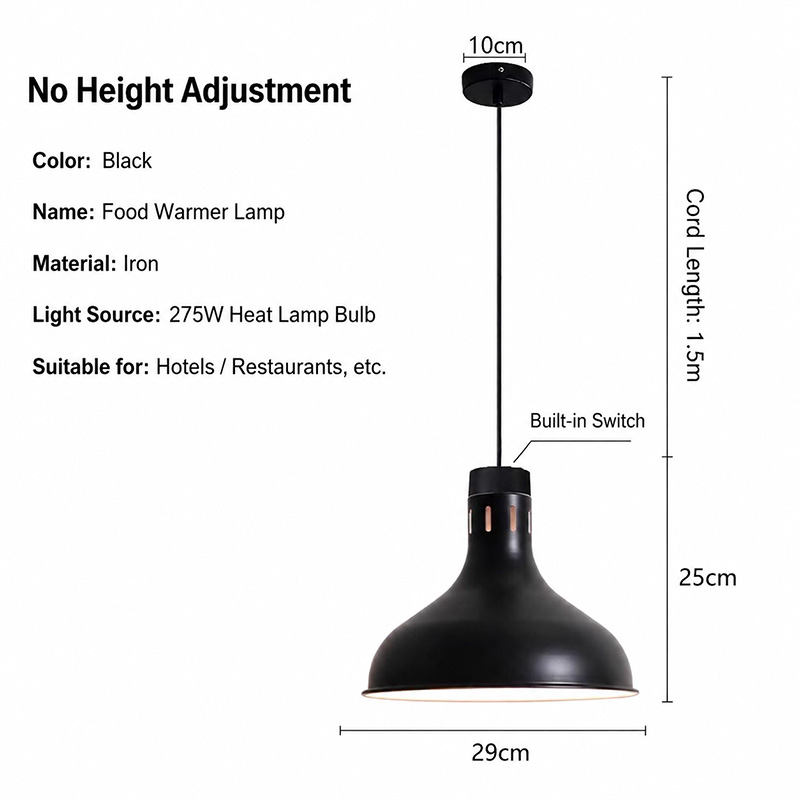
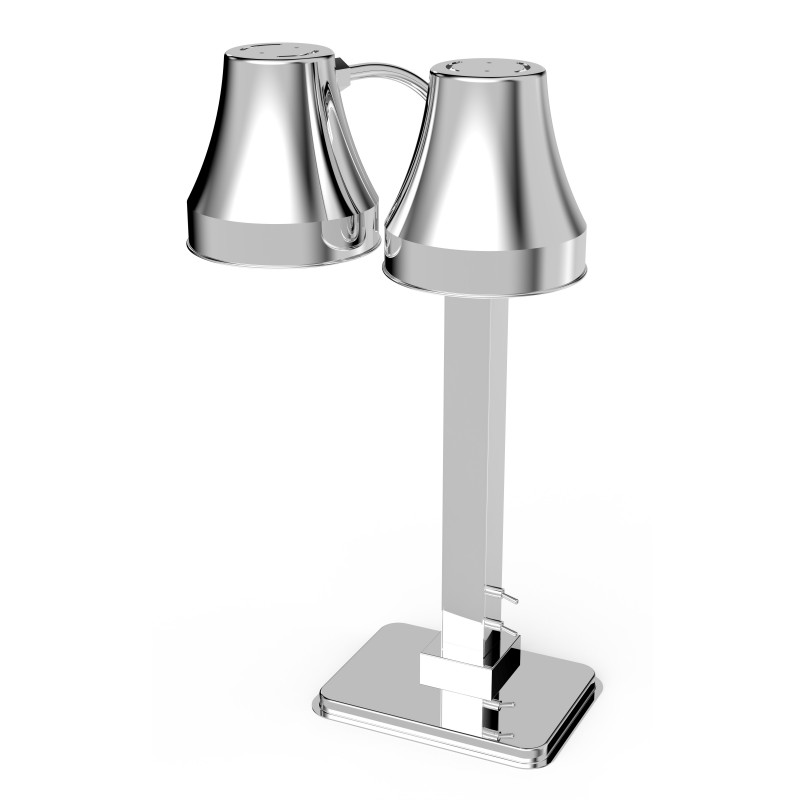
The Stainless Steel Heat Lamp-BJ10 Series from BAVA addresses the bulk procurement requirements that fast food chains represent, with standardised configurations including single-head BJ10 and dual-head BJ101 models that enable precise equipment matching for different location sizes and service volumes. The polished mirror stainless steel construction provides the durability that high-volume operations demand, while the height-adjustable post and weighted base configuration enables flexible positioning that accommodates varying counter heights and product configurations across different location layouts.
Supply Chain Reliability
Chain operations cannot tolerate equipment supply disruptions that delay new location openings or create extended service disruptions when equipment fails unexpectedly. Equipment suppliers must demonstrate supply chain reliability that includes adequate manufacturing capacity, finished goods inventory, and distribution capabilities to meet bulk procurement requirements on compressed timelines. Evaluate supplier track records through reference conversations with existing chain customers, focusing on historical performance during supply disruptions and the responsiveness of supplier support during urgent procurement situations.
Food Safety Compliance
HACCP Requirements for Fast Food Operations
Fast food chains operate under rigorous HACCP (Hazard Analysis Critical Control Points) programmes that mandate documented temperature monitoring for all hot-held food products. Heat lamp equipment must perform consistently enough to enable reliable temperature documentation that satisfies both internal quality standards and external health inspection requirements. Equipment that creates uneven warming across the service area complicates temperature monitoring by introducing temperature variation within product batches that complicates the representative sampling that compliance documentation requires.
Documentation and Audit Readiness
Chain-level food safety audits require equipment performance data that may not be readily available from standard commercial equipment. Consider heat lamp configurations that include integrated temperature monitoring capabilities or that interface with chain-level temperature logging systems. Equipment that generates consistent performance data automatically reduces the documentation burden on individual location operators while improving the accuracy and completeness of safety records that auditors review.
Installation and Ventilation Requirements
Electrical Specifications
Fast food kitchens typically operate with constrained electrical capacity, with dedicated circuits allocated to specific equipment categories during initial construction. Heat lamp procurement must account for the electrical requirements of specific models, including voltage specifications, amperage draw, and circuit allocation that may vary across franchise locations. Multi-head configurations draw substantially more electrical current than single-head units, potentially requiring dedicated circuit installation that adds to the total installation cost beyond the equipment purchase price.
Heat Output and Kitchen Climate
Commercial kitchens already face significant cooling challenges from cooking equipment, with HVAC systems working continuously to maintain comfortable working temperatures. Heat lamps add to this thermal load, potentially requiring upgraded ventilation or air conditioning capacity in locations where kitchen temperatures already approach design limits. Evaluate the cumulative heat output of your planned warming equipment configuration against your kitchen's ventilation and cooling capacity, adjusting equipment selection if thermal loads approach or exceed the capabilities of your existing infrastructure.
Training and Operational Consistency
Equipment Operation Simplicity
Fast food locations employ staff members with varying educational backgrounds, language capabilities, and prior food service experience. Equipment that requires complex operational procedures, language-dependent controls, or specialised knowledge creates consistency problems across locations with different staff capabilities. Select heat lamp equipment with straightforward controls that require minimal training investment, enabling rapid onboarding of new employees while maintaining consistent operational procedures across the franchise network.
Troubleshooting and Self-Service Maintenance
Chain-level maintenance programs benefit from equipment that enables self-service diagnosis and resolution of common problems without requiring service technician visits. Equipment with accessible bulb replacement, straightforward diagnostic indicators, and common component availability reduces the maintenance burden on both franchise operators and chain-level support organisations. Establish clear escalation protocols that distinguish problems franchisees can resolve independently from those requiring professional service intervention.
Conclusion
Fast food chain equipment procurement demands a comprehensive evaluation framework that accounts for standardised performance requirements, bulk procurement economics, supply chain reliability, and the operational simplicity that thousands of locations with varying capabilities require. Food heat lamps for chain applications must deliver consistent warming performance across extended operating hours while surviving the demanding use patterns that characterise high-volume quick-service environments. The investment in quality equipment selected for chain-specific requirements pays returns through reduced maintenance burden, improved operational consistency, and the reliable performance that enables consistent food quality across the entire franchise network.
Featured Products
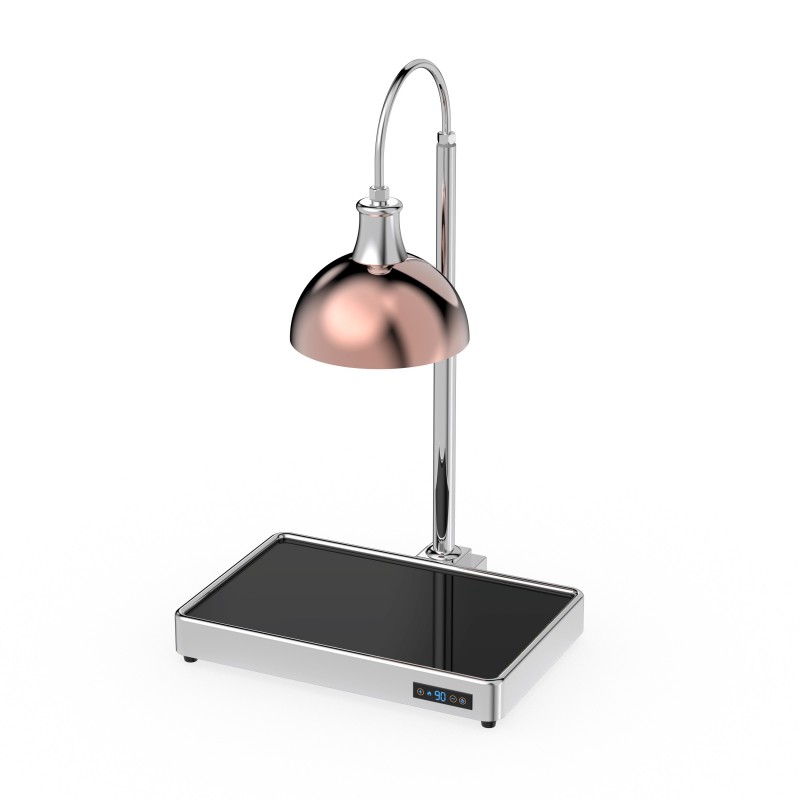
Single-Head Rose Gold Buffet Heat Lamp
BAVA Single-Head Rose Gold Buffet Heat Lamp. Dual-zone heating with infrared lamp and thermostatic base plate. Polished stainless steel + rose gold finish. Models BJ1631/BJ1831T. Ideal for hotel buffets and catering.
Three-Head Rose Gold Buffet Heat Lamp Station
BAVA Three-Head Rose Gold Buffet Heat Lamp Station. Three rose gold dome lamps in linear arrangement over black glass warming surface. Greek key decorative base pattern. BJ663T adds adjustable glass shelf. Premium hotel buffet design. CE certified.
Stainless Steel Heat Lamp-BJ10
BAVA Stainless Steel Heat Lamp BJ10 Series. Freestanding countertop design with polished mirror SS, bell dome shade, height-adjustable post, weighted base. Available in single-head (BJ10/BJ101) and dual-head (BJ102). CE certified.
Related Articles
Electric Buffet Warmer with Adjustable Thermostat for Restaurants
Discover the best Electric Buffet Warmer with Adjustable Thermostat for Restaurants solutions. Real ...
Mini Chafing Dish for Breakfast Buffet & Condiment Stations
Discover the best Mini Chafing Dish for Breakfast Buffet & Condiment Stations solutions. Real case s...
9QT Extra-Large Chafing Dish for Large-Scale Banquet Events
Discover the best 9QT Extra-Large Chafing Dish for Large-Scale Banquet Events solutions. Real case s...
Wall-Mounted Buffet Stove for Space-Saving Kitchen Layouts
Discover the best Wall-Mounted Buffet Stove for Space-Saving Kitchen Layouts solutions. Real case st...
Stainless Steel Food Warmer for Supermarket Deli Departments
Discover the best Stainless Steel Food Warmer for Supermarket Deli Departments solutions. Real case ...
Commercial Chafer Dish with Temperature Control for Food Safety
Discover the best Commercial Chafer Dish with Temperature Control for Food Safety solutions. Real ca...