
Stainless Steel Food Heat Lamps: Durable for Kitchen Surfaces
Kitchen surfaces in commercial food service environments face constant stress from heavy use, moisture exposure, cleaning procedures, and the physical impacts that busy service creates. Equipment selected for kitchen deployment must withstand these demanding conditions without degradation that compromises functionality, appearance, or food safety. Stainless steel has become the standard material for commercial kitchen equipment precisely because it provides the durability, corrosion resistance, and cleanability that these environments demand. When applied to heat lamp construction, stainless steel delivers the same durability benefits, producing equipment that maintains appearance and function through years of demanding commercial use while resisting the degradation that lesser materials experience in kitchen conditions.
The Engineering Properties of Stainless Steel
Alloy Composition and Durability
Stainless steel achieves its durability through the addition of chromium, which at concentrations above approximately 10.5 percent forms a chromium oxide passive layer on the steel surface that resists corrosion. Additional alloying elements modify the steel properties for specific applications: nickel increases corrosion resistance and improves formability, molybdenum increases resistance to pitting and crevice corrosion, and carbon allows higher hardness for cutting and wear applications. Commercial food service equipment typically uses the 300-series austenitic stainless steels, particularly Type 304 with 18 percent chromium and 8 percent nickel, which provides the best combination of corrosion resistance, formability, and fabrication characteristics for kitchen equipment manufacturing.
The Stainless Steel Buffet Heat Lamp Rack uses stainless steel construction throughout the gantry structure, lamp holders, and structural components, with the material selection providing the durability and corrosion resistance that commercial kitchen conditions require. The multi-lamp configuration places substantial mechanical demands on the support structure, demands that only adequate material strength and stiffness can accommodate without deflection or deformation that would affect lamp positioning.
Surface Finish and Cleanability
Stainless steel surface finish affects both appearance and cleanability, with smoother finishes providing better cleanability while decorative finishes enhance visual appeal in front-of-house applications. Mill finish stainless steel has a slightly textured surface from the rolling process, while polished finishes progressively smooth the surface through progressively finer abrasives, with mirror polish providing the smoothest and most cleanable surface. The polished mirror finish on the Three-Head Rose Gold Buffet Heat Lamp Station provides the cleanability that food service requires while the Greek key decorative pattern adds visual interest appropriate for hospitality environments where equipment appearance influences customer perceptions.
Thermal Properties and Performance
Stainless steel conducts heat efficiently, which in heat lamp applications means that structural components maintain relatively uniform temperatures even when lamp elements generate substantial heat. This thermal conductivity prevents hot spots that could cause burns or create fire hazards, while the thermal mass of stainless steel construction provides stability against the temperature fluctuations that affect lighter materials. The thermal expansion of stainless steel must be accommodated in design, as the temperature range that kitchen equipment experiences causes measurable dimensional changes that, if not accommodated, create stress that can lead to distortion or failure.
Design Considerations for Kitchen Surface Deployment
Countertop Weight and Stability
Kitchen countertops must support the weight of equipment deployed on them without deflection or damage, requiring consideration of both the static weight of equipment and the dynamic loads that service activities create. Stainless steel construction provides durability but adds weight compared to lighter materials, with the stable positioning that this weight provides offsetting benefits for equipment like heat lamps where vibration-free operation improves performance. The Dual-Insulation Workstation with Heat Lamp & Heating Plate with its substantial construction provides stable positioning on kitchen counters but requires counters capable of supporting the combined weight of equipment and food loads.
Heat Transmission to Countertops
Heat lamp equipment generates thermal energy that transfers to surrounding surfaces, including the countertops on which equipment stands. Extended operation at elevated temperatures can damage some countertop materials, particularly laminate surfaces that delaminate when exposed to sustained heat, or stone surfaces where thermal shock can cause cracking. Stainless steel equipment design can incorporate heat shields or insulated base plates that reduce the thermal transmission to underlying surfaces, protecting countertop materials while maintaining the equipment performance that food warming requires.
Chemical Resistance for Kitchen Cleaning
Commercial kitchen cleaning uses chemical agents specifically selected for their ability to remove food soils, grease, and mineral deposits, including alkaline cleaners, acid descaling agents, and chlorine-based sanitizers. Equipment surfaces must resist the chemical attack that these cleaning agents create, maintaining both appearance and structural integrity through repeated cleaning cycles. Stainless steel provides broad chemical resistance but can be attacked by concentrated chlorine solutions, acidic cleaners, and extended exposure to highly alkaline conditions. The Stainless Steel Buffet Heat Lamp Rack with its full stainless steel construction tolerates the cleaning procedures that commercial kitchens require, though following manufacturer guidelines for cleaning agent concentration and contact time preserves surface appearance and extends equipment life.
Comparing Surface Materials for Heat Lamp Construction
Heat lamps use various materials in their construction beyond the structural stainless steel, with the warming surface and lamp dome materials creating trade-offs between performance, durability, and cost. Understanding these material choices helps operators select equipment appropriate for their specific kitchen conditions and performance requirements.
| Material | Durability | Cleanability | Heat Performance | Best For |
|---|---|---|---|---|
| Stainless Steel Surface | Excellent | Excellent | Good | Heavy-duty commercial kitchens |
| Black Glass Surface | Very Good | Excellent | Excellent (even distribution) | Hospitality and display applications |
| Glass-Ceramic Surface | Very Good | Excellent | Superior (thermal shock resistant) | High-demand continuous service |
| Chrome Plated Finish | Good | Very Good | Good | Front-of-house decorative use |
Maintenance Practices for Stainless Steel Equipment
Daily Cleaning Procedures
Daily cleaning of stainless steel heat lamp equipment requires appropriate cleaning agents and techniques that remove food deposits and soils without damaging the protective passive layer. Neutral cleaners or mild alkaline cleaners used at recommended concentrations remove most food soils without attacking the stainless steel surface. Apply cleaning solution to a soft cloth or sponge rather than directly onto equipment surfaces, which prevents cleaning agent pooling that could cause surface damage. Rinse thoroughly with clean water to remove all cleaning residue, and dry with a soft cloth to prevent water spot formation that can leave mineral deposits on surfaces.
Addressing Surface Contamination
Stainless steel surfaces can be contaminated by iron particles from carbon steel tools, abrasive pads, or airborne particles in industrial environments, creating small rust spots that appear on stainless steel surfaces. These iron particles rust rapidly in moist kitchen environments, creating the appearance of stainless steel corrosion even though the underlying material is undamaged. Remove iron contamination by scrubbing with mild acid solutions, oxalic acid cleaners, or commercial stainless steel cleaners formulated for this purpose, following with thorough rinsing and passivation to restore the protective passive layer.
Preventing and Removing Scratches
Scratches in stainless steel surfaces create locations where contamination can accumulate and corrosion can initiate, though minor scratches do not substantially affect the corrosion resistance of properly alloyed stainless steel. Avoid using abrasive tools or pads on stainless steel surfaces, and use cutting boards and protective surfaces when working with sharp objects near heat lamp equipment. Light scratches can be removed by progressive polishing with fine abrasive compounds, though deep scratches require more aggressive treatment that may not restore original surface appearance.
Long-Term Durability Considerations
Stress Corrosion Cracking
Stainless steel can experience stress corrosion cracking when subjected to tensile stress in environments containing chlorides, a combination that occurs in commercial kitchens from both cleaning chemicals and food materials. Stress corrosion cracking creates fine cracks that propagate through the material, potentially causing catastrophic failure without warning. Selecting stainless steel with low residual stress, achieved through proper heat treatment during manufacturing, reduces susceptibility to stress corrosion cracking. The Dual-Insulation Workstation with Heat Lamp & Heating Plate with its controlled manufacturing process maintains low residual stress levels that reduce this failure mechanism risk.
Fatigue Resistance in Service Applications
Heat lamp equipment in busy commercial kitchens experiences repeated thermal cycling and physical loading that creates fatigue stress on structural components. Stainless steel provides excellent fatigue resistance when properly designed, maintaining structural integrity through the millions of loading cycles that commercial kitchen equipment experiences over its operational life. Design features that distribute loads evenly, avoid stress concentrations, and provide adequate material thickness contribute to fatigue resistance that enables long-term reliable performance.
Equipment Lifespan Expectations
Quality stainless steel heat lamp equipment properly maintained in commercial kitchen environments typically provides ten to fifteen years of reliable service, with some installations exceeding twenty years when conditions are favourable and maintenance practices are thorough. The Three-Head Rose Gold Buffet Heat Lamp Station with its full stainless steel construction and quality finishing provides the material foundation for long-term service, with the durability to maintain appearance and function through the demanding conditions that commercial kitchens create.
Conclusion
Stainless steel construction provides the durability that commercial kitchen environments demand from heat lamp equipment, with the corrosion resistance, cleanability, and structural strength that maintains reliable performance through years of demanding use. Material selection decisions during equipment purchase have long-term consequences for maintenance requirements, appearance retention, and equipment lifespan, making stainless steel the clear choice for permanent kitchen installations. The three products evaluated above represent quality approaches to stainless steel heat lamp design for kitchen surface deployment: the four-lamp stainless steel rack for high-capacity commercial applications, the rose gold and glass combination for environments prioritising both performance and presentation, and the dual-zone workstation with glass-ceramic surface for demanding continuous-service operations.
Featured Products
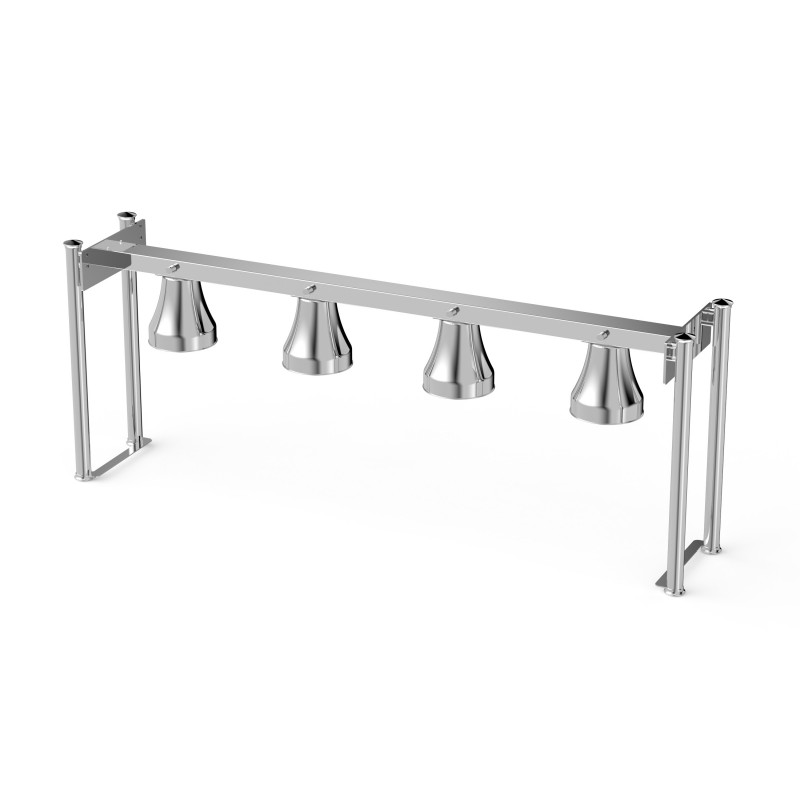
Stainless Steel Buffet Heat Lamp Rack
BAVA Stainless Steel Buffet Heat Lamp Rack. 4-lamp overhead system in stainless steel. Models: BJ604 (basic), BJ604B (angled), BJ604B-G (copper/gooseneck), BJ604C (sneeze guard). Freestanding gantry design. CE certified.
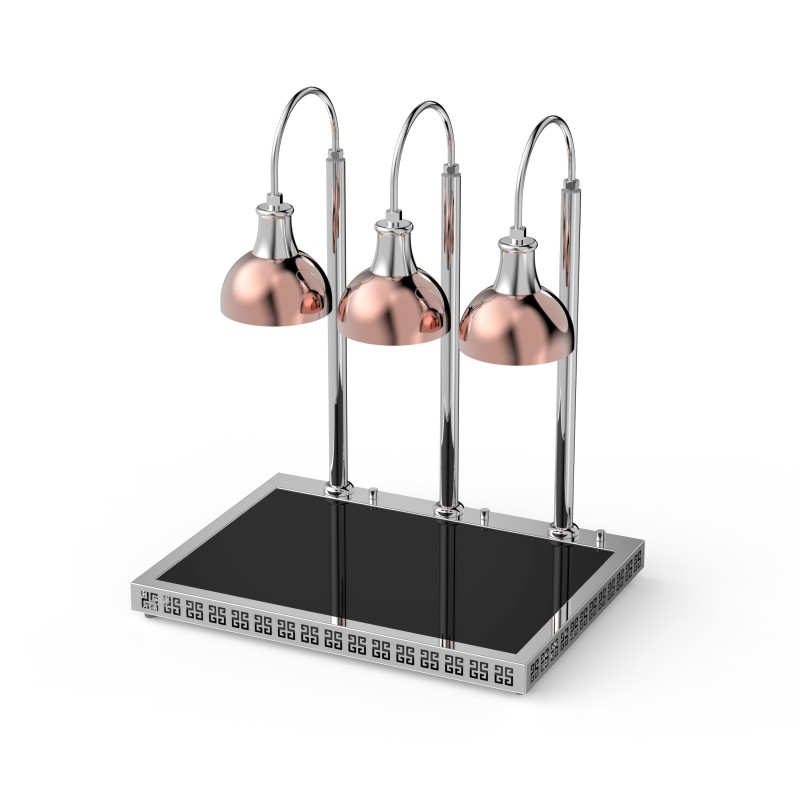
Three-Head Rose Gold Buffet Heat Lamp Station
BAVA Three-Head Rose Gold Buffet Heat Lamp Station. Three rose gold dome lamps in linear arrangement over black glass warming surface. Greek key decorative base pattern. BJ663T adds adjustable glass shelf. Premium hotel buffet design. CE certified.
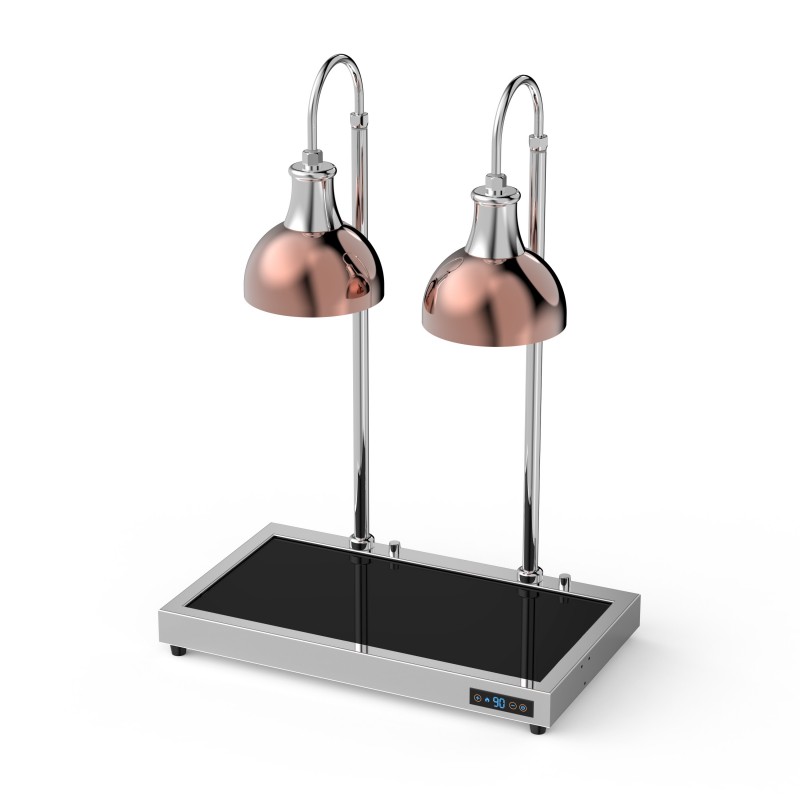
Dual-Insulation Workstation with Heat Lamp & Heating Plate
BAVA Dual-Insulation Workstation with Heat Lamp and Heating Plate. Dual-zone warming with infrared lamp + heated base. Black glass-ceramic surface, digital thermostat, copper dome lamps. Models BJ661/BJ662 with optional sneeze guard. CE certified.
Related Articles
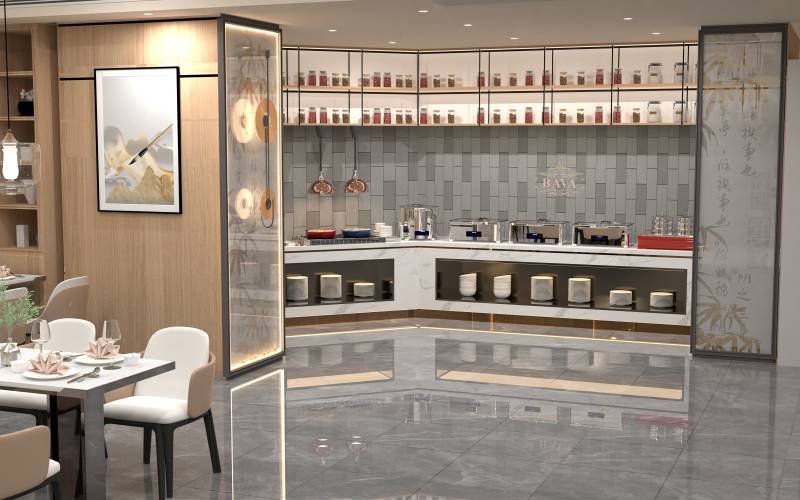
Electric Buffet Warmer with Adjustable Thermostat for Restaurants
Discover the best Electric Buffet Warmer with Adjustable Thermostat for Restaurants solutions. Real ...
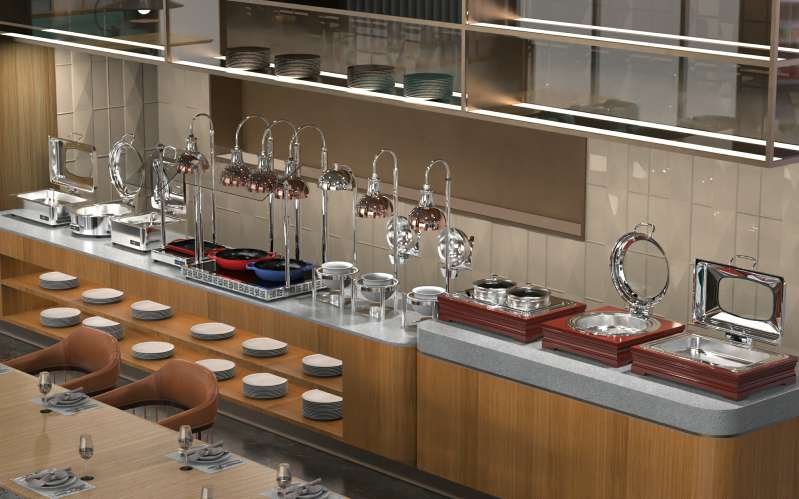
Mini Chafing Dish for Breakfast Buffet & Condiment Stations
Discover the best Mini Chafing Dish for Breakfast Buffet & Condiment Stations solutions. Real case s...
9QT Extra-Large Chafing Dish for Large-Scale Banquet Events
Discover the best 9QT Extra-Large Chafing Dish for Large-Scale Banquet Events solutions. Real case s...
Wall-Mounted Buffet Stove for Space-Saving Kitchen Layouts
Discover the best Wall-Mounted Buffet Stove for Space-Saving Kitchen Layouts solutions. Real case st...
Stainless Steel Food Warmer for Supermarket Deli Departments
Discover the best Stainless Steel Food Warmer for Supermarket Deli Departments solutions. Real case ...
Commercial Chafer Dish with Temperature Control for Food Safety
Discover the best Commercial Chafer Dish with Temperature Control for Food Safety solutions. Real ca...