
Food Heat Lamp vs. Steam Table: Which Is More Efficient?
Commercial food warming equipment choices significantly affect both the quality of food served and the operational efficiency of food service businesses. Among the most commonly deployed warming technologies, food heat lamps and steam tables represent two fundamentally different approaches to maintaining food at safe serving temperatures during extended service periods. Heat lamps use radiant infrared energy to apply gentle surface warmth, while steam tables use heated water in enclosed wells to create a moist hot environment that surrounds food from below and at the sides. Each technology has specific strengths, appropriate applications, and inherent limitations that make it better suited for some food types and service contexts than others. Understanding the efficiency characteristics and practical differences between these two warming methods enables food service operators to deploy the right equipment for their specific needs rather than defaulting to convention or equipment that may be suboptimal for the food types they serve.
Understanding the Two Warming Technologies
How Food Heat Lamps Work
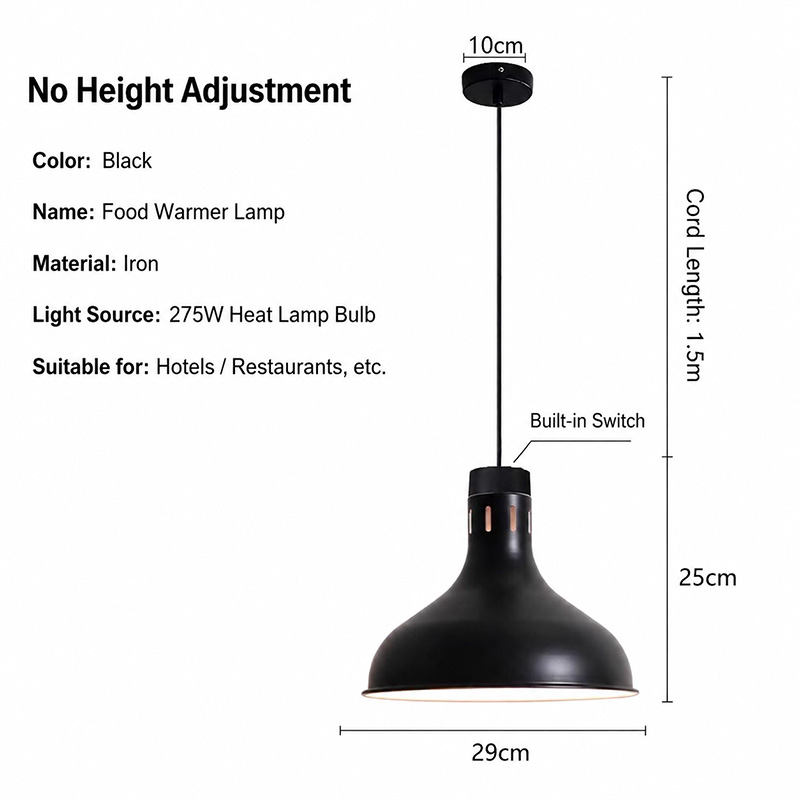
A food heat lamp generates infrared radiation by passing electrical current through a tungsten filament inside a glass envelope, creating electromagnetic energy that travels through air and is absorbed by the surfaces it encounters. The Ceiling-Mounted Rose Gold Buffet Heat Lamp demonstrates the pendant-mounted configuration commonly used in hotel buffets and upscale catering operations, where the lamp head is suspended above the food display at an adjustable height. Infrared radiation does not significantly heat the surrounding air — it transfers energy directly to the surfaces it contacts, warming the outer layers of food items without creating the steam and moisture-laden environment associated with wet warming methods. The Single-Head Rose Gold Buffet Heat Lamp with its dual-zone design takes this principle further, combining radiant infrared heat from above with a thermostatic base plate that provides gentle conductive warming from below, addressing one of the limitations of bare infrared warming by ensuring that the full depth of the food item receives consistent heat exposure.
How Steam Tables Work
A steam table operates by heating water in an enclosed well or pan beneath the food container, creating a moist hot environment that maintains food temperature through steam generation and conductive heat transfer. The water is heated by electric elements or by connection to a direct steam supply in larger institutional installations, and the steam rises to warm the underside and sides of food containers placed in the wells. Steam tables are typically enclosed or covered when not in active use to contain the heat and moisture within the cabinet, and the moist environment they create is particularly effective for wet dishes, soups, gravies, and food items that would dry out under the dry radiant heat of infrared lamps. The enclosed nature of steam table wells also provides some protection against contamination and temperature loss from air circulation, though this benefit depends on the covers and cabinet design of the specific equipment.
The Fundamental Efficiency Question
Efficiency in food warming equipment can be measured in multiple ways — energy conversion efficiency, labour efficiency, food quality preservation efficiency, and throughput efficiency for different food types. A heat lamp converts nearly all electrical energy into infrared radiation that reaches food surfaces directly, making it thermodynamically efficient for the specific task of surface warming. A steam table must first heat a large mass of water before it can warm food, and the process of steam generation and heat transfer through water is less thermodynamically direct than radiant infrared. However, these thermodynamic differences do not automatically determine which equipment is more efficient for a given food service operation, because the types of food being served, the service environment, and the labour requirements of each equipment type significantly affect overall operational efficiency.
Energy Efficiency Analysis
Direct Energy Conversion
Heat lamps are highly efficient at converting electrical energy into usable warming energy at the food surface. A typical heat lamp element converts approximately 90 percent of electrical energy into infrared radiation, and because this radiation travels directly through air to be absorbed by food surfaces, there are minimal losses in the transfer medium. The Stainless Steel Heat Lamp-BJ10 with its freestanding countertop design provides focused warming over a defined serving area, and the energy required to maintain serving temperature in this configuration is relatively low because the heat is concentrated on the food surface rather than dispersed into a large volume of water or a heated cabinet. A steam table, by contrast, must maintain a large volume of water at boiling or near-boiling temperatures throughout the service period, and the energy required to compensate for heat loss through the well sides, the water surface, and the cabinet structure can be substantial.
Idle Energy Consumption
Both heat lamps and steam tables consume energy continuously during service periods, but the patterns of consumption differ significantly. A heat lamp that is maintaining food at temperature draws relatively constant power, and the energy input correlates directly with the warming demand from the food and the ambient environment. If food is removed from under a heat lamp, the lamp continues to draw full power, but the energy is simply not absorbed by food — this represents a pure inefficiency that is difficult to avoid in operations with variable food volumes. A steam table must maintain its water bath at temperature regardless of whether food containers are in the wells, and the thermal mass of the water means that the steam table cannot be quickly turned off and on to match demand fluctuations. The water bath must be heated from cold each time the equipment is turned on, creating a significant energy penalty for operations that间歇 use steam tables or need to cycle them on and off during service.
Per-Item Energy Cost
For operations serving high volumes of food over extended periods, the per-item energy cost of warming is an important efficiency metric. A steam table that maintains a full well of water at temperature for a six-hour breakfast service distributes its energy consumption across all the food items served during that period, potentially offering a lower per-item energy cost than a heat lamp for operations that can keep the steam table fully loaded throughout the service period. Conversely, a heat lamp serving a buffet with variable food volumes and intermittent food item placement may have a higher per-item energy cost because a larger proportion of its energy consumption goes to warming air and empty surfaces rather than food. The actual per-item efficiency depends heavily on how fully each piece of equipment is utilised during the service period.
Food Quality and Suitability
Wet Dishes and Sauced Preparations
The most significant efficiency difference between heat lamps and steam tables lies in their performance with wet dishes and sauced preparations. Steam tables excel with soups, stews, chilis, gravies, and other liquid or semi-liquid preparations because the moist hot environment maintains the temperature and consistency of these items without the surface drying and skinning that can occur under dry heat lamps. A steam table can keep a pot of soup at consistent serving temperature throughout an extended service period without the surface cooling and evaporation that would occur under a heat lamp, making steam tables the default choice for operations serving significant volumes of wet dishes. Heat lamps are largely ineffective for wet dishes because infrared radiation does not penetrate liquid surfaces effectively, and the evaporative cooling effect of surface heat loss can actually lower the temperature of wet dishes while they sit under the lamp.
Solid Foods and Grilled Items
Heat lamps demonstrate their superiority with solid foods, grilled items, baked goods, and preparations where surface quality and texture are important. The radiant infrared heat of the Ceiling-Mounted Rose Gold Buffet Heat Lamp gently warms the surface of solid proteins, roasted vegetables, and bread items without drawing moisture from the food or creating the steamed texture that can occur in the moist environment of a steam table. A grilled chicken breast that has been held under a heat lamp maintains its surface colour and texture much better than the same item held in a steam table, where the moist environment can cause the breading or surface coating to soften and the skin to lose crispness. The Single-Head Rose Gold Buffet Heat Lamp with its thermostatic base plate is particularly effective for solid foods because it provides both radiant surface warming from above and gentle conductive warming from below, ensuring that thicker items are warmed consistently throughout without the surface degradation associated with either technology used alone.
Mixed Menu Operations
Operations with mixed menus that include both wet dishes and solid foods face the most complex efficiency and quality decisions in warming equipment selection. A breakfast buffet that serves both scrambled eggs and roasted potatoes, a lunch service that includes both soup and grilled sandwiches, or a catering event with both a pasta dish and roasted vegetables requires warming equipment that can handle both categories effectively. Some operations solve this by deploying both heat lamps and steam tables in different areas of the service line, using steam tables for wet dishes and heat lamps for solid items. Others choose one technology as the primary warming method and accept the quality compromises that arise from using a single warming approach for food types that would be better served by the other. The Stainless Steel Heat Lamp-BJ10 in a freestanding configuration can be positioned flexibly to address specific warming needs in different areas of a service line.
Labour and Operational Efficiency
Setup and Preparation Requirements
Heat lamps require minimal setup and preparation compared to steam tables, which must be filled with water and brought to operating temperature before they can be used effectively. A heat lamp requires only mounting or positioning and connection to electrical power — once the lamp is on and at operating temperature, which takes only a minute or two for the filament to reach full output, it is ready to warm food. A steam table requires filling the wells with water, connecting to power or steam supply, and then waiting for the water mass to reach operating temperature, which can take thirty minutes to an hour depending on the water volume and the heating method. This preparation time represents both a labour cost and an energy cost that should be factored into efficiency calculations for operations that use steam tables intermittently rather than continuously throughout the day.
During-Service Management
Both heat lamps and steam tables require ongoing management during service, though the nature of the management differs. Heat lamps require monitoring of food item temperature and rotation of items to ensure even warming, with some items potentially requiring repositioning under the lamp as service progresses and the food volume decreases. Steam tables require monitoring of water levels and topping up as water evaporates, checking food temperatures throughout the wells, and stirring or rotating items in deeper wells to ensure even heat distribution. The labour required for steam table management tends to be higher than for heat lamp management in operations with continuous food turnover, though the steam table's ability to hold food for longer periods without active attention can offset this in operations with less frequent food replenishment.
Cleaning and Maintenance
Cleaning requirements for heat lamps are relatively straightforward — the lamp heads, reflectors, and mounting hardware can be wiped down during normal kitchen cleaning procedures, and the lamp elements are replaced as needed based on usage hours rather than on a regular schedule tied to cleaning cycles. Steam tables require more involved cleaning because the water wells accumulate mineral deposits from the water used to fill them, particularly in areas with hard water, and the enclosed cabinet and covered well design can trap food debris and create sanitation concerns if not cleaned thoroughly after each service. The mineral scale that accumulates in steam table wells reduces heating efficiency over time, requiring periodic descaling maintenance that adds to the total cost of ownership. Heat lamps do not accumulate mineral deposits and do not require the periodic descaling maintenance that steam tables demand, making them more labour-efficient to maintain over their service life.
Cost Comparison
Initial Equipment Investment
Heat lamps and steam tables occupy similar price ranges in the commercial food service equipment market, though significant variation exists within each category based on construction quality, features, and manufacturer. Basic freestanding heat lamp configurations like the Stainless Steel Heat Lamp-BJ10 are available at relatively accessible price points, while the more elaborate ceiling-mounted Ceiling-Mounted Rose Gold Buffet Heat Lamp requires additional installation costs including mounting hardware, electrical work, and potentially ceiling modification in some facilities. Steam tables similarly range from basic drop-in well configurations to elaborate enclosed cabinet models with multiple zones and precise temperature control. The initial investment comparison should include not only the equipment price but also the installation costs, which can be substantially higher for ceiling-mounted heat lamp systems and for steam tables that require plumbing connections or dedicated electrical circuits.
Operating Cost Differences
Operating cost differences between heat lamps and steam tables are driven primarily by energy consumption patterns, though the actual difference depends heavily on how fully each piece of equipment is utilised. Based on typical power ratings, a single heat lamp head drawing 375 watts operating for eight hours consumes approximately three kilowatt-hours of electricity, at a cost of roughly thirty to forty cents depending on electricity rates. A four-well steam table drawing six to eight kilowatts and operating for the same eight hours consumes approximately fifty to sixty-four kilowatt-hours, representing a substantially higher daily operating cost. However, this comparison assumes that all the steam table wells are fully loaded throughout the service period. A steam table operating with only one or two wells filled may have a proportionally higher per-item energy cost than a heat lamp serving a similar food volume.
Total Cost of Ownership
Total cost of ownership calculations that include initial equipment investment, installation costs, energy consumption, maintenance, and expected service life generally favour heat lamps for operations whose food offerings are well-suited to radiant warming. Heat lamps have no water to maintain, no mineral scale to remove, and simpler construction that typically results in longer reliable service life with less maintenance intervention. Steam tables accumulate maintenance requirements over their service life that add to the total cost of ownership, including water treatment costs, descaling labour, element replacement, and the more frequent repair cycles associated with equipment that operates in a moist environment. For operations that can use both technologies for their appropriate food types, the most efficient approach may be a combination — using steam tables for wet dishes and heat lamps like the Single-Head Rose Gold Buffet Heat Lamp for solid foods.
Comparative Efficiency Summary
| Criteria | Food Heat Lamp | Steam Table |
|---|---|---|
| Warming Technology | Radiant infrared (surface warming) | Steam and conductive (moist environment) |
| Energy Efficiency | High — direct surface transfer | Lower — water mass must be heated |
| Best Food Types | Solid proteins, baked goods, grilled items | Wet dishes, soups, sauced preparations |
| Wet and Sauced Dishes | Poor — surface evaporation cools food | Excellent — moist environment preserves consistency |
| Solid Proteins | Excellent — maintains surface texture | Fair — moisture can degrade surface |
| Setup Time | Minimal — ready in minutes | Significant — 30-60 minutes to heat water |
| Idle Energy Use | Moderate — constant when on | High — maintains water temperature continuously |
| Maintenance Requirements | Low — element replacement, wipe cleaning | Higher — descaling, water treatment, element checks |
| Typical Power Draw | 250-500W per lamp head | 1500-2000W per well |
| Flexibility of Placement | High — freestanding or ceiling-mounted options | Lower — fixed or built-in installation typical |
| Daily Operating Cost (8hr) | Approximately 0.30-0.50 USD per lamp | Approximately 5-12 USD per 4-well table |
| Best For | Hotels, upscale buffets, solid food display | Institutions, cafeterias, wet dish service |
Making the Right Choice for Your Operation
Assess Your Food Mix Honestly
The efficiency comparison between heat lamps and steam tables is ultimately resolved by the specific food types your operation serves. If the majority of your menu consists of wet dishes, soups, stews, and sauced preparations, a steam table will deliver superior food quality and acceptable operational efficiency despite its higher energy consumption. If your menu centres on solid proteins, grilled items, baked goods, and preparations where surface quality matters, a heat lamp like the Ceiling-Mounted Rose Gold Buffet Heat Lamp will deliver better food quality and lower operating costs. Attempting to use a single technology for both categories means accepting quality compromises in one category or the other, and the operational cost of those compromises — in food waste, customer satisfaction, and rework — should be factored into the equipment decision.
Consider the Combined Approach
Many food service operations find that the most efficient approach is to deploy both heat lamps and steam tables in different sections of their service line, using each technology for the food types it handles best. A hotel breakfast buffet might use steam tables for scrambled eggs, oatmeal, and hash browns while deploying heat lamps over a carving station for roasted meats and a pastry display for baked goods. A catering operation might use portable steam tables for soup and stew service alongside heat lamps for grilled and roasted items. The Single-Head Rose Gold Buffet Heat Lamp with its dual-zone warming capability represents an intermediate option that can handle both solid foods and some wet dishes within a single unit, reducing the total equipment investment needed for operations with mixed food types.
Think About Service Patterns
The efficiency of both heat lamps and steam tables depends heavily on how they are used in your specific operational context. Operations with continuous high-volume service can maximise the efficiency of steam tables by keeping wells fully loaded throughout the service period, while operations with intermittent or variable food volumes may find that the idle energy consumption of steam tables makes heat lamps more cost-effective. The Stainless Steel Heat Lamp-BJ10 in a freestanding configuration offers particular flexibility for operations with variable service patterns, as it can be positioned where needed, moved between service areas, and easily stored during periods of low demand. Understanding your actual usage patterns and calculating the real operational cost implications of each technology in your specific context is more valuable than relying on general efficiency comparisons.
Conclusion
The efficiency comparison between food heat lamps and steam tables does not yield a universal winner because the answer depends fundamentally on what food types an operation serves and how those foods are handled during service. Heat lamps are the more energy-efficient choice for solid foods, offering lower per-item energy consumption, better food quality outcomes, and simpler maintenance requirements. Steam tables are the appropriate choice for wet dishes and sauced preparations, where their moist hot environment preserves food quality that would degrade under the dry radiant heat of infrared lamps. Operations with mixed menus should consider deploying both technologies to serve each food category optimally, accepting the additional equipment investment in exchange for the food quality and operational efficiency benefits that each technology delivers in its appropriate application. The Ceiling-Mounted Rose Gold Buffet Heat Lamp, Single-Head Rose Gold Buffet Heat Lamp, and Stainless Steel Heat Lamp-BJ10 represent the range of heat lamp configurations available for operations that prioritise solid food quality, while steam tables handle the wet dish category that heat lamps cannot serve effectively. The most efficient food service operations are those that match warming technology to food type rather than forcing a single technology to serve all food categories inadequately.
Featured Products
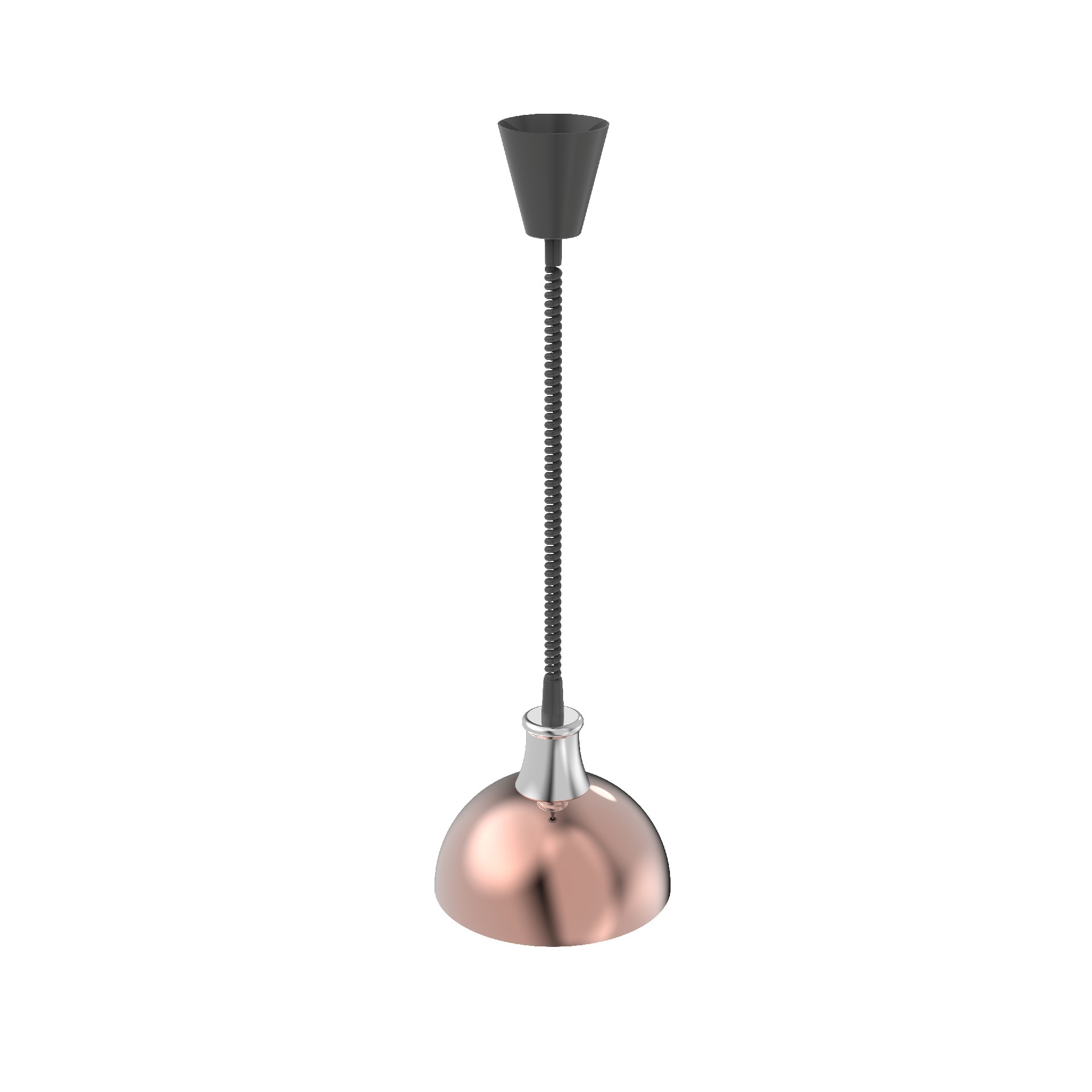
Ceiling-Mounted Rose Gold Buffet Heat Lamp
BAVA Ceiling-Mounted Rose Gold Buffet Heat Lamp. Single-head pendant lamp with rose gold dome, coiled cord height adjustment, matte black canopy. Models BJ1001/BJ1002. CE certified. Ideal for hotel buffets and upscale catering.
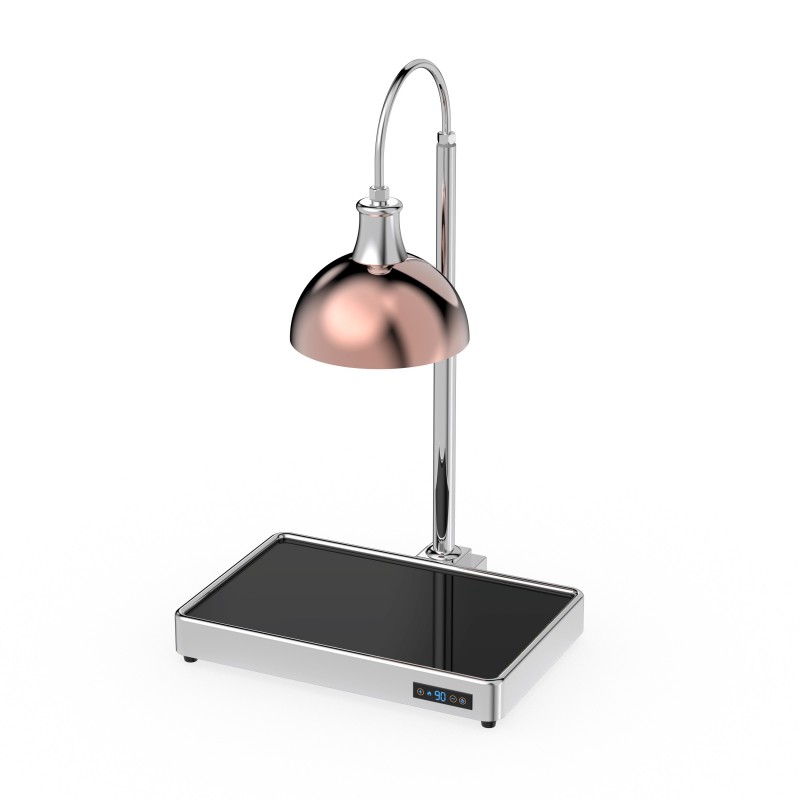
Single-Head Rose Gold Buffet Heat Lamp
BAVA Single-Head Rose Gold Buffet Heat Lamp. Dual-zone heating with infrared lamp and thermostatic base plate. Polished stainless steel + rose gold finish. Models BJ1631/BJ1831T. Ideal for hotel buffets and catering.
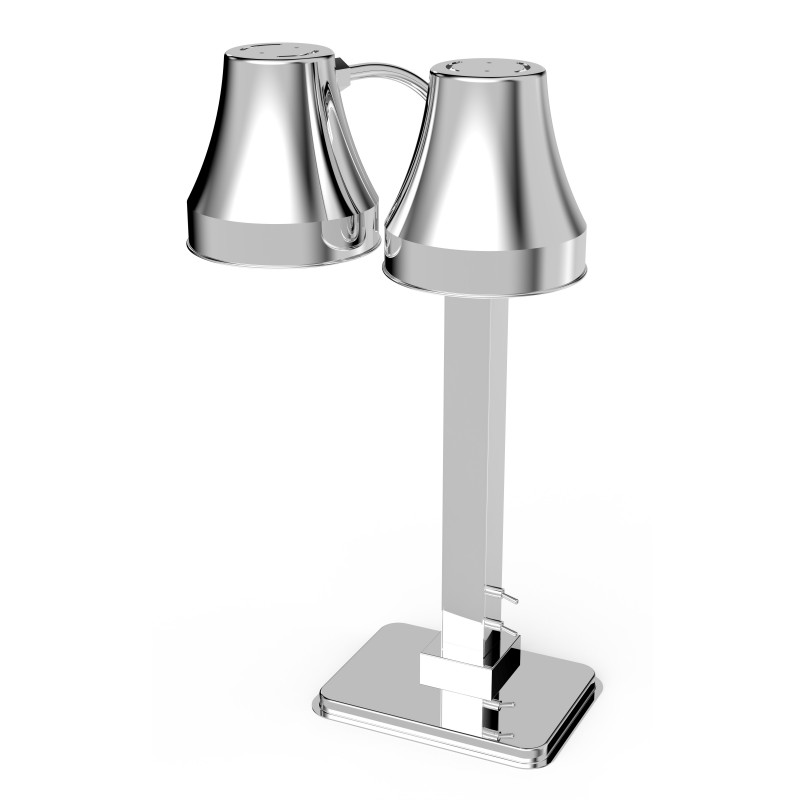
Stainless Steel Heat Lamp-BJ10
BAVA Stainless Steel Heat Lamp BJ10 Series. Freestanding countertop design with polished mirror SS, bell dome shade, height-adjustable post, weighted base. Available in single-head (BJ10/BJ101) and dual-head (BJ102). CE certified.
Related Articles
Electric Buffet Warmer with Adjustable Thermostat for Restaurants
Discover the best Electric Buffet Warmer with Adjustable Thermostat for Restaurants solutions. Real ...
Mini Chafing Dish for Breakfast Buffet & Condiment Stations
Discover the best Mini Chafing Dish for Breakfast Buffet & Condiment Stations solutions. Real case s...
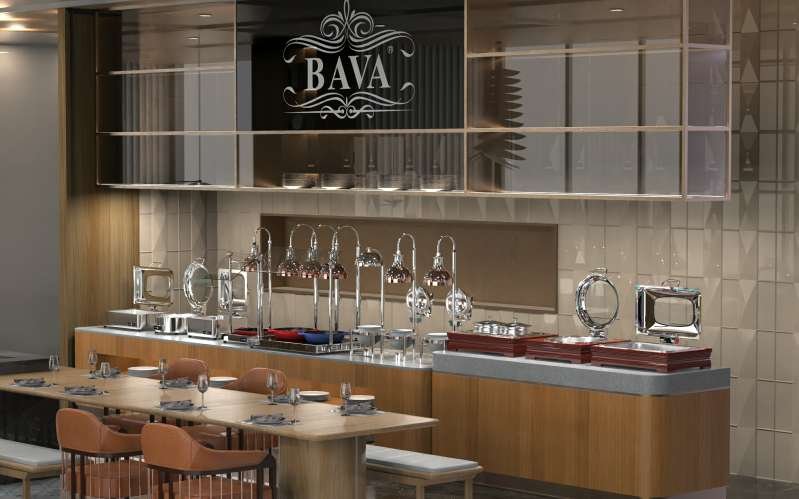
9QT Extra-Large Chafing Dish for Large-Scale Banquet Events
Discover the best 9QT Extra-Large Chafing Dish for Large-Scale Banquet Events solutions. Real case s...
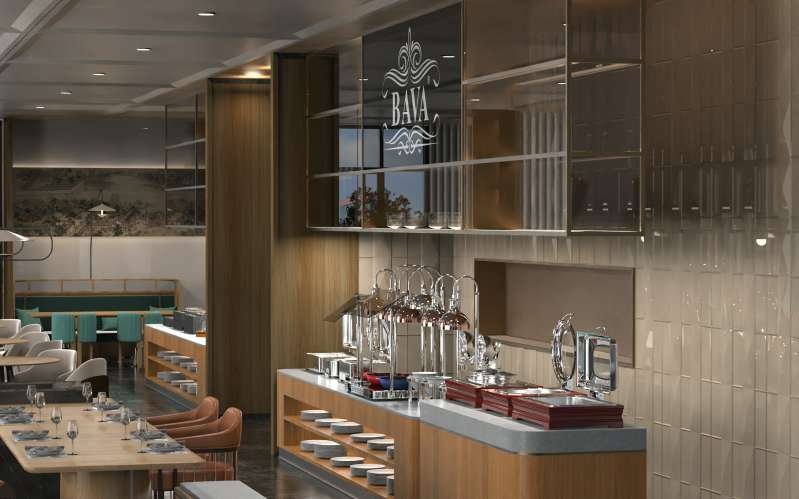
Wall-Mounted Buffet Stove for Space-Saving Kitchen Layouts
Discover the best Wall-Mounted Buffet Stove for Space-Saving Kitchen Layouts solutions. Real case st...
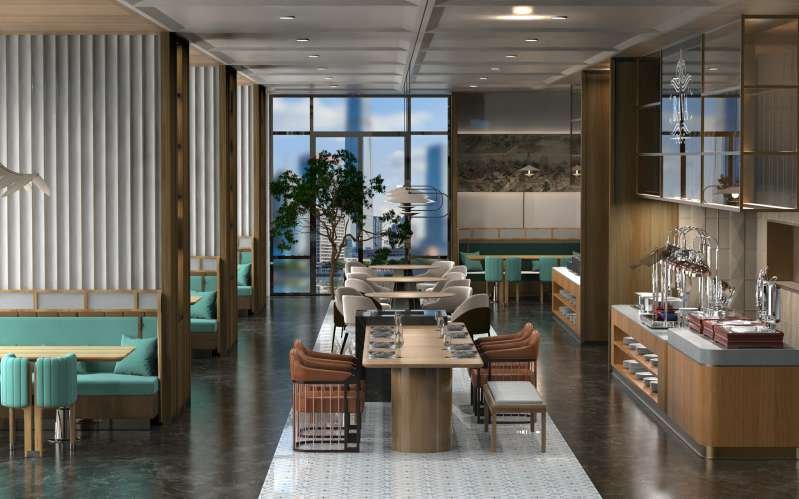
Stainless Steel Food Warmer for Supermarket Deli Departments
Discover the best Stainless Steel Food Warmer for Supermarket Deli Departments solutions. Real case ...
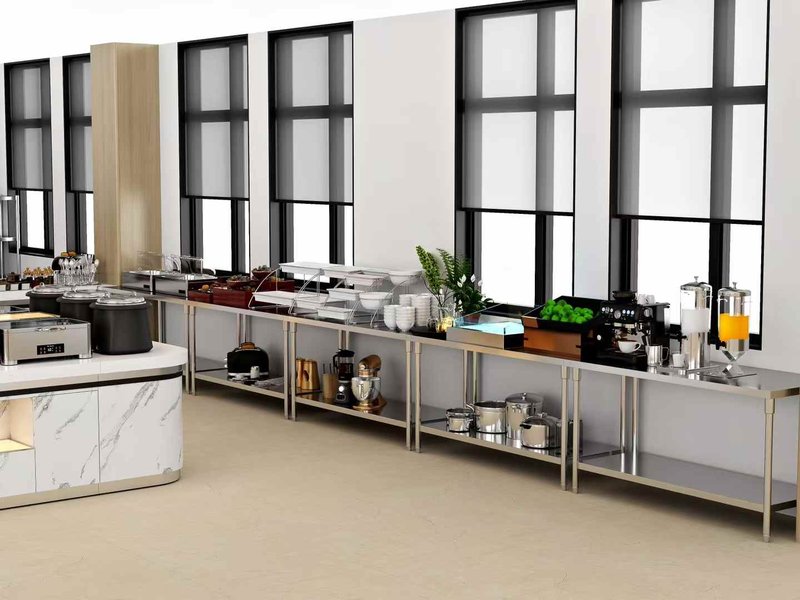
Commercial Chafer Dish with Temperature Control for Food Safety
Discover the best Commercial Chafer Dish with Temperature Control for Food Safety solutions. Real ca...