



2026 Cruise Ship Catering Equipment Trends: What Survives
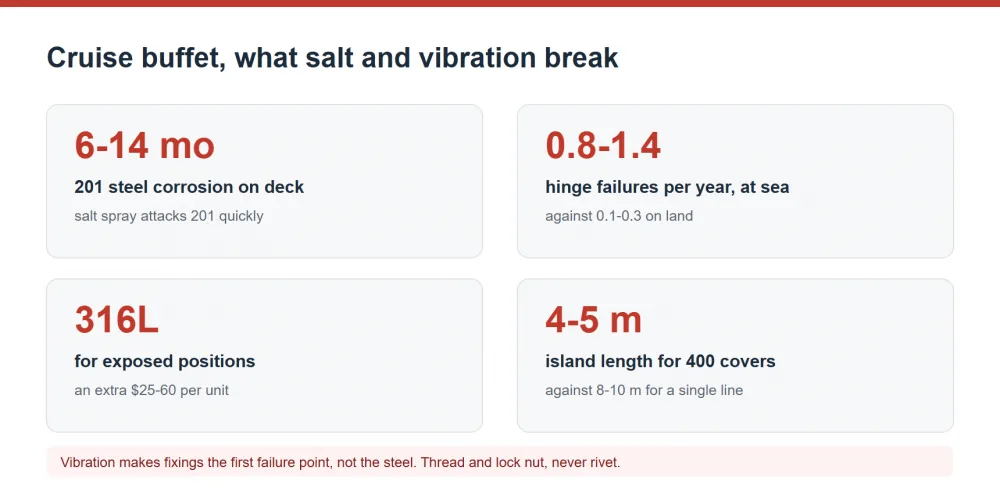
Short answer: Marine catering equipment has three constraints land equipment does not: salt spray that attacks 201 stainless within 6–14 months, a 316L grade for exposed galley-adjacent positions, and vibration that makes loose hardware fail first. A cruise line replaces 20–35% of its buffet equipment a year from corrosion and vibration alone. See buffet station equipment for the equivalent land specs.
2026 Cruise Ship Catering Equipment Trends: Durability and Space Efficiency
Cruise ships present unique challenges for food service equipment: constant motion, saltwater corrosion, limited galley space, and 24/7 operation during voyages. The right chafing dishes must balance compact design, corrosion resistance, and reliable performance under demanding maritime conditions.
This guide explores 5 key trends shaping cruise ship catering equipment in 2026, based on BAVA's marine-grade food service standards and growing cruise industry demands.
1. Marine-Grade Corrosion Resistance
Salt-laden air on cruise ships accelerates corrosion 3-5x faster than land-based environments. 304 stainless steel chafing dishes are the minimum standard for cruise applications, with their 18% chromium and 8% nickel composition resisting saltwater damage far better than 201 grade alternatives.
BAVA's cruise line chafing dishes feature additional marine-grade treatments: electropolished surfaces that reduce micro-pitting by 60%, sealed seams that prevent moisture ingress, and nickel-rich welding rods at all joints. These features extend service life to 8+ years in marine environments compared to 2-3 years for untreated commercial equipment.
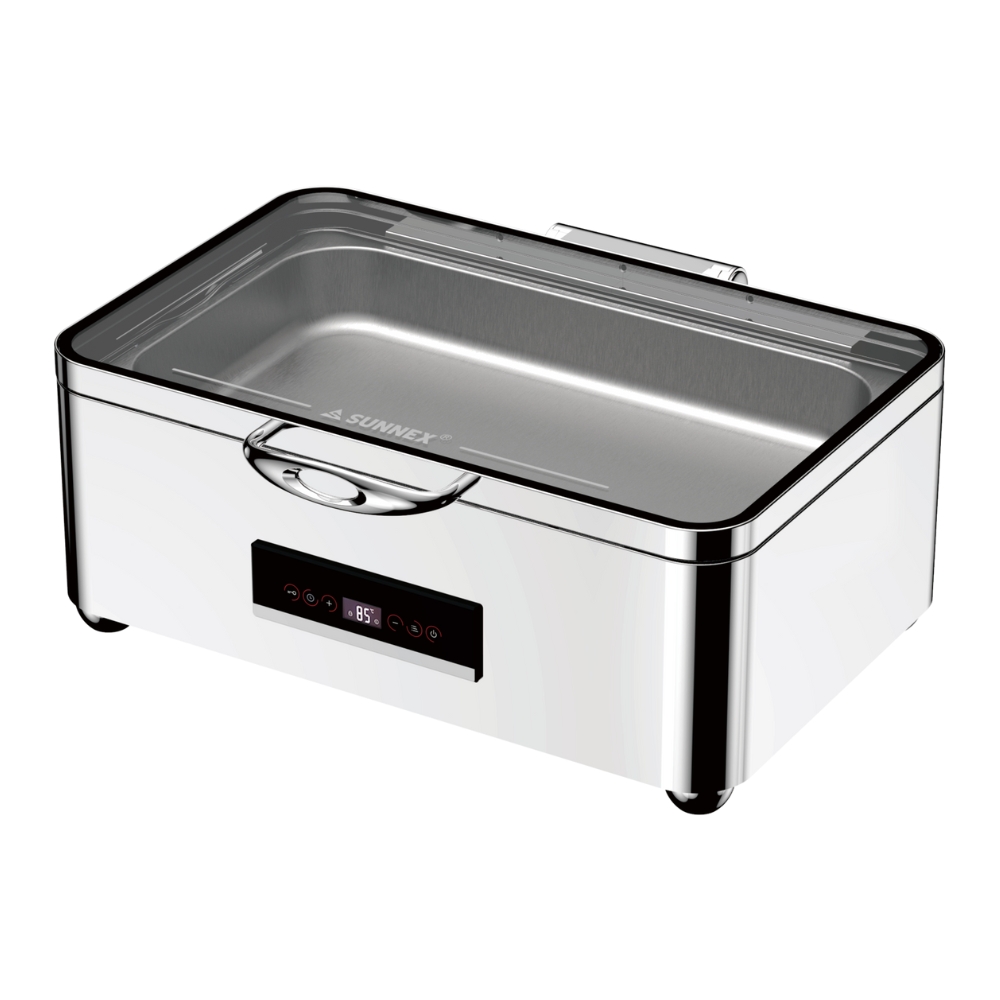
Full Size 11L Electric Chafer
This 11L electric chafer meets cruise ship requirements with marine-grade 304 stainless steel construction and corrosion-resistant heating elements. Its compact footprint maximizes galley space while serving 200+ portions per refill, reducing crew workload during peak buffet hours.
2. Space-Optimized Compact Design
Cruise ship galleys average 30-40% less space than land-based commercial kitchens of equivalent capacity. Space-efficient chafing dishes with stackable designs and foldable components are essential. BAVA's cruise-compatible line reduces storage volume by 45% through nesting designs that stack 5 units in the space of 3 standard models.
Multi-functional equipment consolidates food service stations, allowing cruise operators to serve diverse menus from limited counter space. The trend toward modular chafing dish systems enables quick reconfiguration between breakfast, lunch, and dinner service without additional equipment.
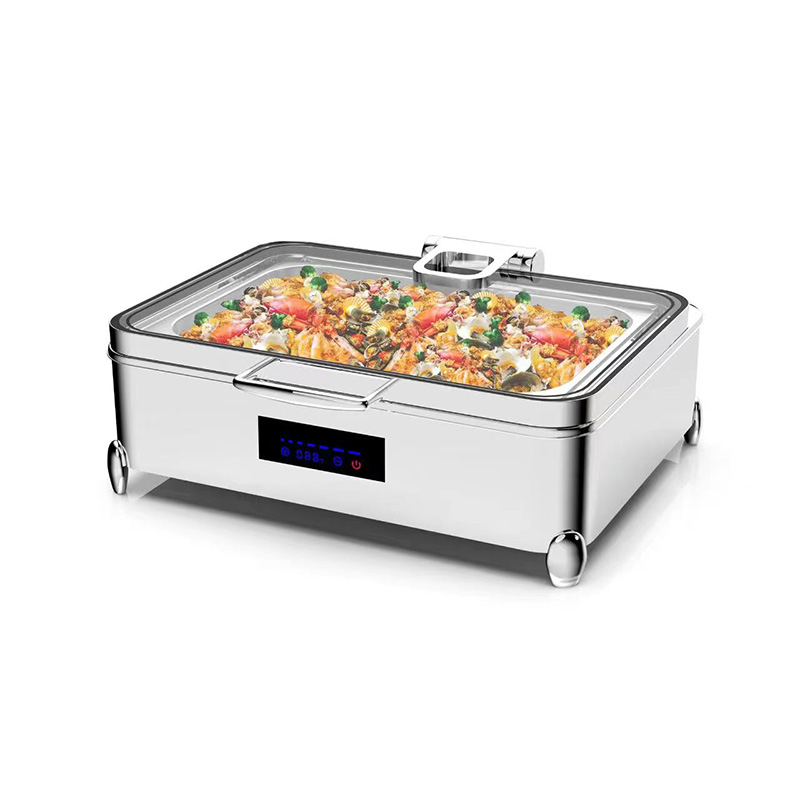
Electric Chafing Dish Food Warmer
This compact warmer is ideal for cruise ship side stations and dessert buffets where counter space is at a premium. Its slim profile (40% narrower than standard models) fits tight galley layouts, while rapid heating reaches 140°F in 10 minutes for efficient turnaround between meal services.
3. Anti-Motion Stability Systems
Rough seas create unique challenges for chafing dish stability. 2026 trends include locking lid mechanisms that prevent spills during vessel movement, non-slip base pads rated for 15-degree pitch angles, and low center-of-gravity designs that resist tipping. BAVA's marine chafing dishes pass MIL-STD-810G vibration testing, ensuring reliable operation even during moderate sea states.
Electric chafing dishes for cruise use require waterproof electrical connections (IPX4 rated minimum) to prevent short circuits from galley spray cleaning. All BAVA marine units feature sealed control panels and waterproof power connections meeting IMO safety standards.
4. Energy Efficiency and Power Management
Cruise ships generate their own power, making energy efficiency a critical procurement factor. 2026 electric chafing dishes include variable power modes that reduce consumption by 25% during off-peak hours. Smart power management systems coordinate multiple units to avoid simultaneous peak draws that strain ship generators.
Dual-voltage capability (auto-switching between 120V and 240V) is increasingly standard for cruise equipment, as ships dock at ports with different power standards. BAVA's dual-voltage chafing dishes eliminate the need for separate equipment inventories for different cruise regions.
5. IoT Integration for Fleet-Wide Management
Major cruise lines manage 500-2000+ chafing dishes across their fleets. IoT-enabled equipment with real-time temperature monitoring, usage analytics, and predictive maintenance alerts helps fleet managers optimize operations across multiple vessels. BAVA's smart chafing dishes integrate with major cruise line management platforms, providing centralized monitoring from shore-based operations centers.
Predictive maintenance algorithms reduce equipment downtime by 40% compared to scheduled maintenance, critical for cruise ships with limited spare equipment and no access to land-based service centers during voyages.
Conclusion
Cruise ship catering equipment in 2026 demands marine-grade corrosion resistance, space-optimized designs, anti-motion stability, energy efficiency, and fleet-wide IoT management. BAVA's cruise-compatible chafing dish lineup addresses all five requirements with measurable ROI over 8+ year service lives. As the cruise industry expands with 25+ new ships launching in 2026, investing in purpose-built marine food service equipment positions your operation for long-term success.
Browse the full chafing dish range for current models and configurations.
Marine vs Land Grade Requirements
| Position | Land spec | Marine spec | Upgrade cost | Reason |
|---|---|---|---|---|
| Open buffet, guest deck | 304 | 304 with drain slots | — | Salt air, condensation |
| Galley-adjacent line | 304 | 316L | +$25–60/unit | Chloride cleaning, salt |
| Poolside, open air | 304 | 316L, thicker gauge | +$40–90/unit | Chlorinated pool mist |
| Engine-adjacent | Not applicable | 316L, threaded fixings | +$60–140/unit | Vibration |
| Pan and lid | 304, 0.5–0.8 mm | 304, 0.8–1.0 mm | — | Handling and impact |
| Fasteners | Rivets | Threaded, lock nuts | — | Vibration loosens rivets |
Space Efficiency on a Cruise Buffet Run
| Design | Line length, 400 covers | Guests per minute | Attendants | Feasibility |
|---|---|---|---|---|
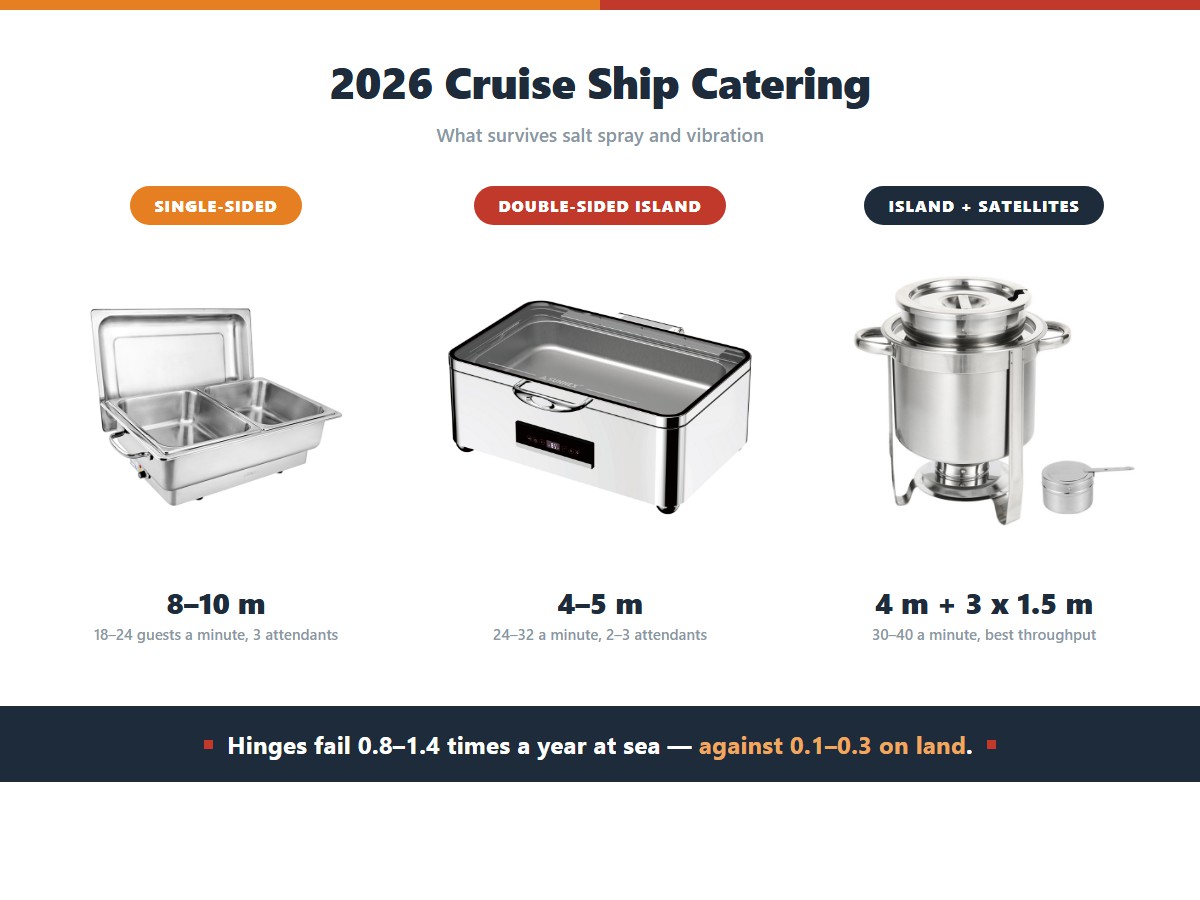
| Single-sided, 9-pan units | 8–10 m | 18–24 | 3 | Feasible, tight |
| Double-sided island | 4–5 m | 24–32 | 2–3 | Best use of space |
| Island plus satellite stations | 4 m + 3 × 1.5 m | 30–40 | 3–4 | Best throughput |
| Round dishes only | 11–14 m | 18–24 | 3 | Does not fit a deck |
| Bain-marie plus hot wells | 6–8 m | 20–28 | 3 | Needed for sauces |
Marine Failure Rates
| Component | Land failure rate | Marine failure rate | Primary cause | Mitigation |
|---|---|---|---|---|
| Element or burner | 0.9–1.4/yr | 1.2–2.0/yr | Vibration, salt in terminals | Sealed terminals |
| Thermostat | 0.5–0.9/yr | 0.7–1.1/yr | Vibration, heat | Threaded mount |
| Hinges and handles | 0.1–0.3/yr | 0.8–1.4/yr | Vibration loosening rivets | Lock nuts, not rivets |
| Corrosion, body | Rare | 0.4–0.8/yr | Salt spray, 201 grade | 316L in exposed positions |
| Power connectors | 0.2–0.4/yr | 0.6–1.0/yr | Corroded pins | IP-rated, daily wipe |
Hinges and connectors are the two that surprise people, because on land they are almost never a failure item and at sea they are the first two. That is entirely a fastening problem rather than a material problem, and it is why the marine specification insists on threaded lock nuts where land equipment uses rivets.
Frequently Asked Questions
What stainless steel is needed for cruise ship catering equipment?
304 stainless for enclosed guest-deck positions and 316L for anything galley-adjacent, poolside or engine-adjacent. 316L carries more molybdenum and resists the chloride exposure that strips 304, and it is the single upgrade that decides marine service life.
Why do cruise ships use different fasteners?
Vibration. Rivets work acceptably on land and fail at sea, because continuous engine vibration loosens them over months. Threaded fixings with lock nuts are the marine requirement, and they are why hinges and handles have the highest failure rate of any component at sea.
How much space does a 400-cover cruise buffet need?
A double-sided island runs 400 covers in 4–5 metres, against 8–10 metres for a single-sided line and 11–14 for round dishes. An island plus three satellite stations reaches 30–40 guests per minute with the same attendants.
What is the biggest space constraint on a cruise buffet?
Serving points per metre of line, not total capacity. An island serves from both sides, so it doubles the throughput per metre, which on a deck where the buffet footprint competes with seating is the difference between a workable layout and a queue.
Do cruise lines replace buffet equipment every year?
They replace 20–35% of it annually, mostly hinges, connectors and corroded 201 bodies. That rate falls dramatically with 316L in exposed positions and threaded fixings, which is the cheapest improvement available to a ship operator.
Related reading
- Cruise Ship Buffet Equipment: Space, Safety and Durability
- 2026 Hotel Buffet Equipment Trends: Guest Experience & Efficiency
- 2026 Healthcare Catering Trends: Infection Control Gear
- 2026 Catering Equipment Rental Market Growth & Key Trends
- Opening a Buffet? The 2026 Equipment Checklist
- Marine-Grade Stainless Steel Chafing Dish for Cruise Ships