
What Is a Chafing Dish? A Comprehensive Guide
For buffet-style dining, catered events, or large gatherings, keeping food warm and appetizing for hours is a key challenge. The chafing dish is the go-to solution for this need—a versatile and essential tool in food service. If you’re asking what a chafing dish is, how it works, which type to choose, or how to use it safely, this structured guide covers all critical information clearly.
1. Core Definition: What Is a Chafing Dish?
A chafing dish (commonly called a “chafer”) is a portable device designed to warm and serve food over extended periods. Its core function is to maintain food at a safe temperature (140°F to 160°F) without overcooking, drying out, or compromising flavor. Unlike regular cooking pots, chafing dishes are for holding and serving (not primary cooking)—they rely on indirect heat to keep food fresh.
The term comes from the French chauffer (meaning “to warm”), which perfectly reflects its purpose. Merriam-Webster formally defines it as “a utensil for keeping food warm at the table,” highlighting its focus on heat retention for serving.
2. Key Components of a Chafing Dish
All standard chafing dishes share four core components that work together to maintain consistent, gentle heat. Each part plays a vital role in the device’s functionality:
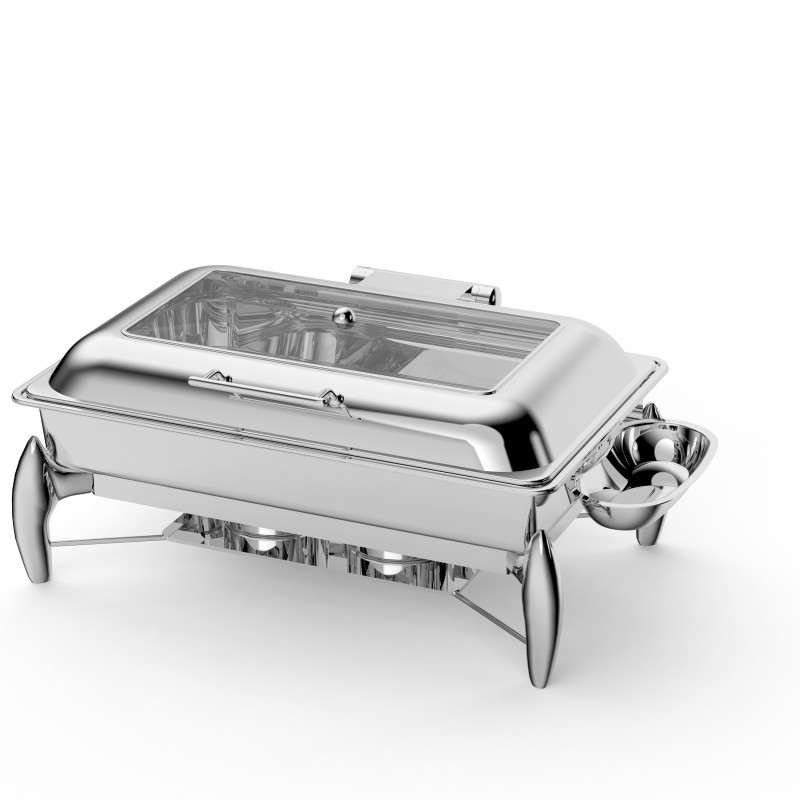
Stand/Frame: A sturdy metal (usually stainless steel) structure that elevates the food pan and holds the heat source. Many models have foldable legs for easy storage and portability.
Water Pan: A deep pan placed on the stand, filled with 1 inch of hot water. This creates an indirect steam heat system (similar to a bain-marie) that prevents food from burning or drying out.
Food Pan: The top pan where food is placed, fitting inside the water pan. It comes in standard sizes (full, half, 2/3) and shapes to accommodate different food volumes and presentation needs.
Heat Source: The power source for warming. Common options include gel fuel cans (portable, no electricity) and electric heating elements (consistent, fume-free). Some modern models use induction technology.
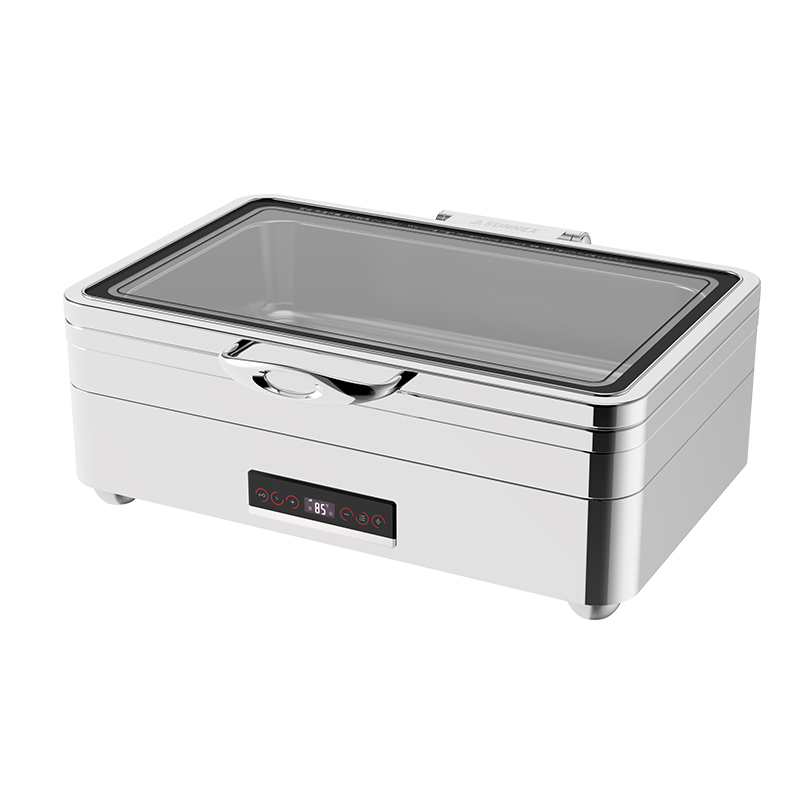
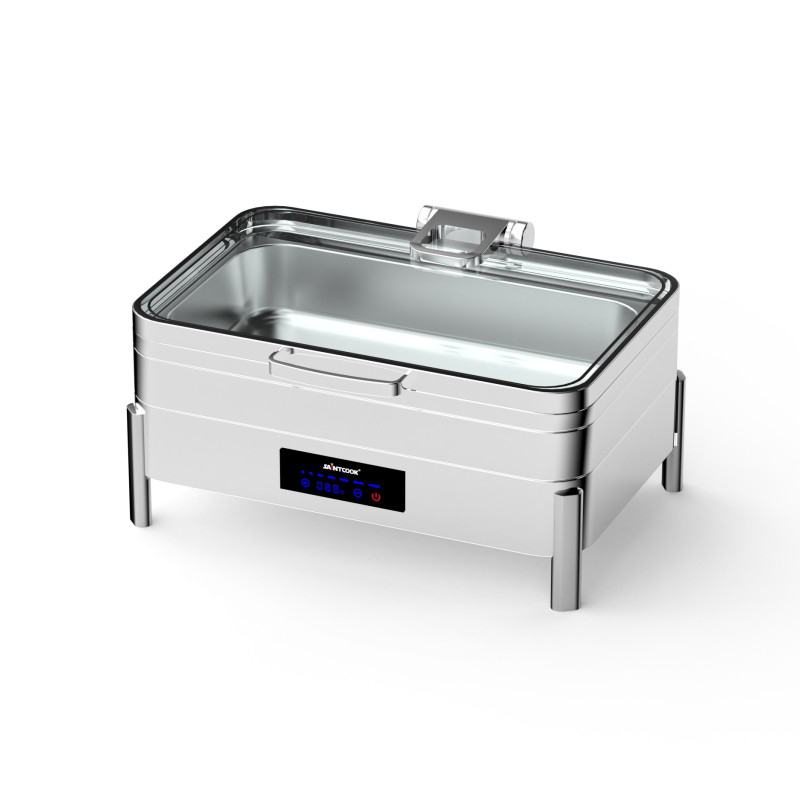
Lid: A necessary accessory to retain heat and moisture. Lids are available in dome, roll-top, or glass styles (glass lids let guests see the food, ideal for buffets).
3. Common Types of Chafing Dishes
Chafing dishes vary by material, shape, and heat source to suit different events, budgets, and food types. Here’s a clear breakdown of the most popular categories:
3.1 By Material
Stainless Steel: The industry standard for commercial use. Durable, rust-resistant, easy to clean, and sleek in appearance. Perfect for high-end restaurants, luxury catering, and long events. Drawback: Heavier than other materials.
Aluminum: Lightweight and budget-friendly. Offers excellent heat conductivity and can be color-coated for customization. Ideal for mobile catering, pop-up events, or budget-conscious users. Drawback: Prone to dents and scratches.
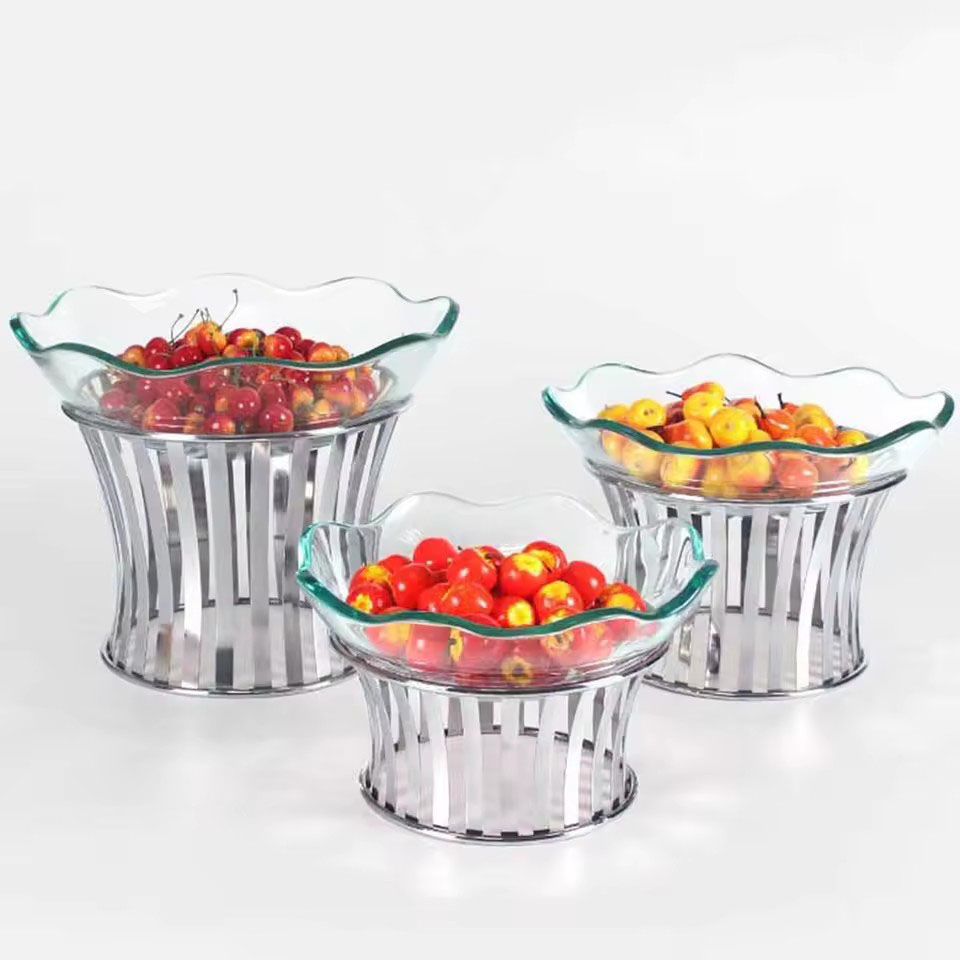
Glass: A modern, visually appealing option (often paired with a metal frame). Transparent design showcases food, making it great for corporate events or contemporary gatherings. Drawback: Fragile and requires careful handling.
3.2 By Shape
Rectangular: The most popular choice for commercial buffets. Maximizes space efficiency and food surface area. Suitable for main courses and large-volume events (e.g., hotel banquets).
Round: Ensures even heat circulation. Great for soups, stews, sauces, or beverages (some have spouts for easy pouring). Takes up less linear space, ideal for compact buffet setups.
Square/Oval: Square models offer a modern, geometric look for upscale events. Oval combines the space efficiency of rectangular with the elegance of round, perfect for weddings and special occasions.
3.3 By Heat Source
Fuel-Based (Gel/Liquid): Portable and electricity-free, making it ideal for outdoor events or remote venues. Fuel cans burn for 2–6 hours. Safety note: Use a heat-resistant tray to protect surfaces.
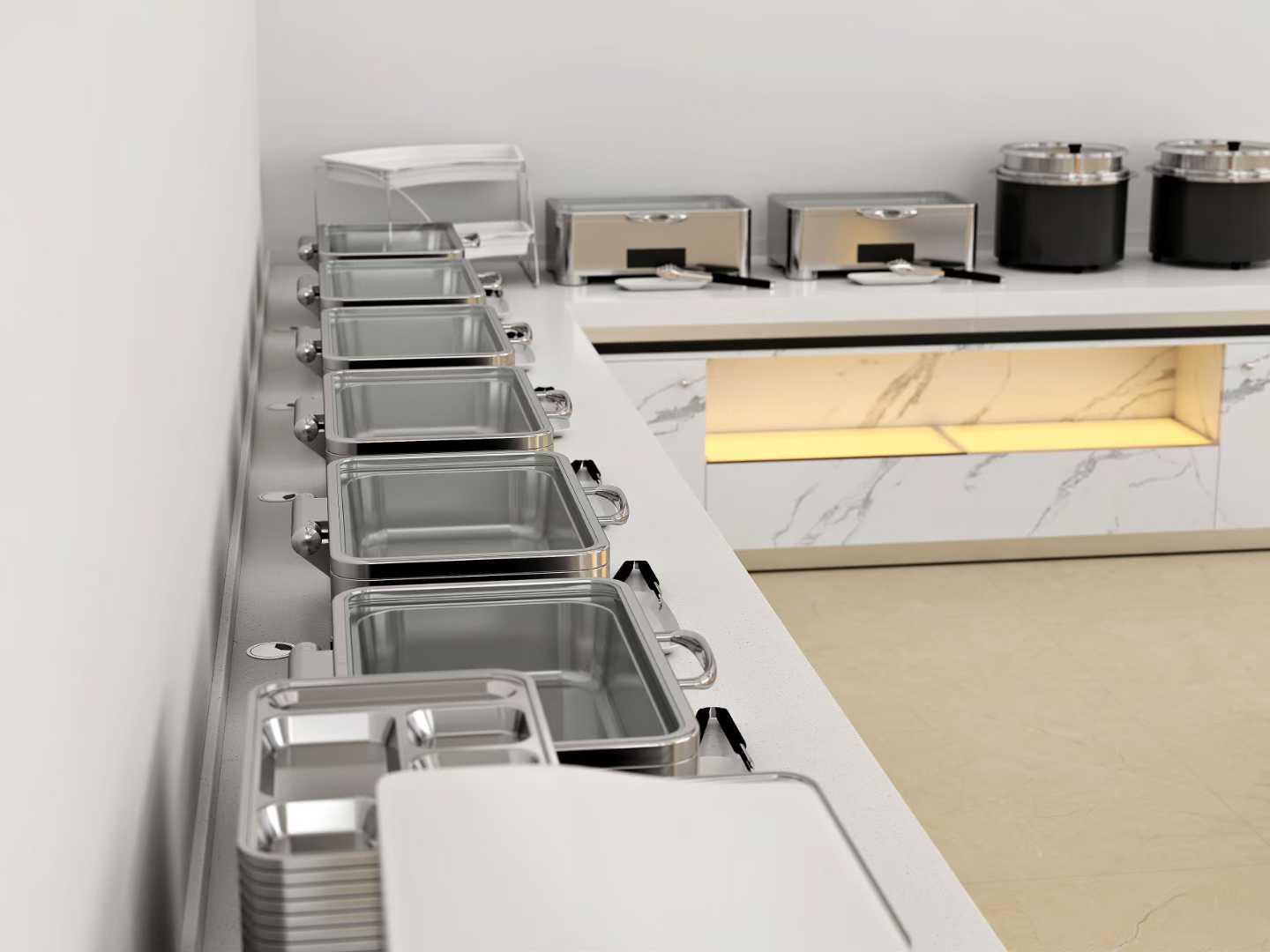
Electric: Provides consistent temperature control with adjustable settings. Clean, eco-friendly, and safe for indoor use (no open flame or fumes). Best for conference centers, hotels, and permanent buffet setups. Drawback: Requires a power outlet.
Induction: A modern, energy-efficient option for induction-ready stainless steel or square models. Offers precise temperature control, suitable for contemporary restaurants and caterers.
3.4 By Budget Range
We’ve split chafing dish selections into three budget tiers, aligned with real market pricing and practical use cases for home and commercial settings, balancing cost-effectiveness and functional value.
Budget-Friendly (Under $50)
Core Recommendation: Basic aluminum chafers or entry-level stainless steel single sets (1–2 pieces)
Key Specs: Fuel-based heat source, foldable metal frame, standard half/full-size rectangular/round food pans
Ideal For: Small home gatherings, casual pop-up events, one-time catered small parties (20–30 guests)
Core Advantages: Ultra-portable, low upfront cost, easy to store; aluminum models offer excellent heat conductivity. Bulk single-piece purchases can further reduce per-unit costs.
Considerations: Aluminum is prone to dents; entry stainless steel may have thinner metal construction (not for daily commercial use).
Mid-Range ($50–$150)
Core Recommendation: Thickened 201 stainless steel chafers (4-piece sets) or dual-heat (fuel + electric) aluminum-stainless hybrid models
Key Specs: Reinforced non-slip frame, glass/roll-top lids, large 8–11QT capacity, heat-resistant handles
Ideal For: Small to medium catering businesses, hotel brunch buffets, wedding showers, corporate luncheons (30–80 guests)
Core Advantages: Durable enough for regular use, versatile heat sources for indoor/outdoor use, better food presentation with glass lids; foldable designs save storage space.
Considerations: Electric models require power access; hybrid sets may be slightly bulkier than single-heat options.
Premium/Commercial-Grade (Over $150)
Core Recommendation: Food-grade 304 stainless steel chafers (gold/silver plated for upscale design) or induction-heat commercial sets
Key Specs: Solid non-foldable heavy-duty frame, double-walled water pan for enhanced insulation, adjustable precise temperature control, custom shapes (oval/square with gold trim)
Ideal For: High-end catering, luxury hotels, 5-star restaurant buffets, grand weddings, large corporate galas (80+ guests)
Core Advantages: Rust-proof and scratch-resistant for daily commercial use, superior heat retention, luxury presentation for high-end events; some models come with a manufacturer’s durability warranty.
Core Perk: Bulk purchasing from wholesalers can reduce per-unit costs by up to 30% for commercial buyers.
4. How to Use a Chafing Dish Correctly
Proper setup ensures food safety and optimal performance. Follow these step-by-step instructions:
Place the chafing dish stand on a stable, flat surface (final position—do not move once heated).
Insert the heat source (fuel can or electric element) into the stand’s designated holder.
Put the water pan on the stand and fill it with 1 inch of boiling water (critical for indirect, gentle heat).
Preheat your food to a safe temperature (160°F for meats, 165°F for poultry) in an oven first—chafing dishes do not cook food, only keep it warm.
Transfer the preheated food to the food pan and place it inside the water pan.
Light the fuel can (use a long lighter) or plug in the electric model. Adjust the heat to maintain food at 140–160°F.
Keep the lid closed when not serving to retain heat and moisture. Stir food occasionally for even warming.
5. Safety & Maintenance Tips
To ensure safe use and long-lasting performance, keep these tips in mind:
General Safety: Never light fuel before adding water to the water pan. Use tongs to handle hot fuel cans. Keep the device away from flammable materials (linens, paper). For outdoor use, wrap the sides to block wind from extinguishing the flame.
Food Safety: Do not leave food in a chafing dish for more than 4 hours. Discard any food that drops below 140°F to prevent bacterial growth.
Cleaning: Wash all components with warm, soapy water after use. Stainless steel models are dishwasher-safe; aluminum and glass require gentle hand washing to avoid damage.
Storage: Foldable stands save space. Store components separately to prevent scratches. Keep fuel cans in a cool, dry place away from heat sources.
Budget Model Care: For aluminum budget chafers, avoid abrasive scrubbers to prevent surface damage and maintain heat conductivity.
6. When to Use a Chafing Dish
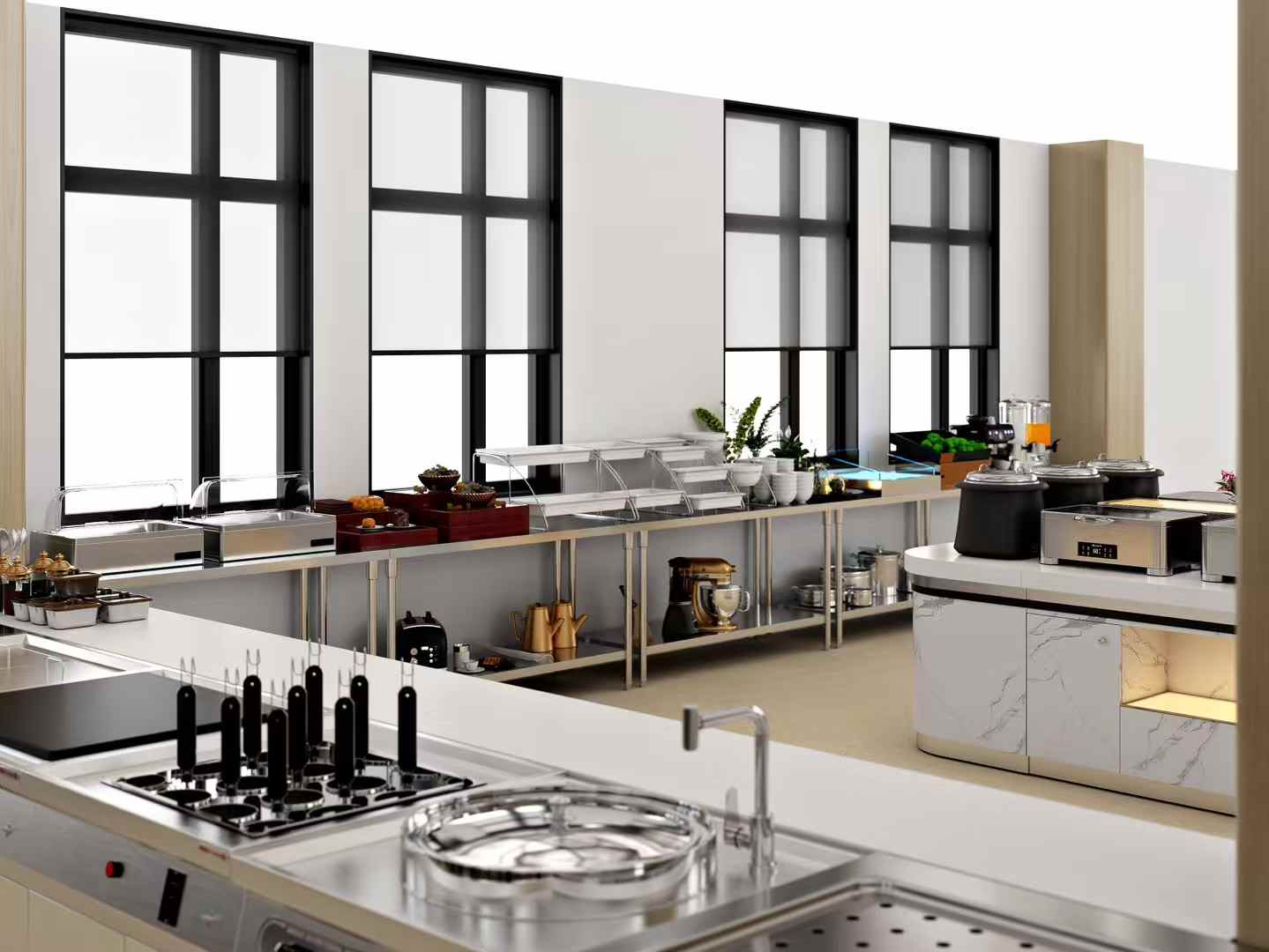
Chafing dishes are indispensable for any scenario where food needs to stay warm during serving. Common use cases include:
Buffet-style events (weddings, corporate luncheons, holiday parties)
Catered services (mobile or on-site)
Hotel banquets and institutional dining (schools, hospitals)
Outdoor gatherings (picnics, backyard barbecues—use fuel-based models)
Beverage service (coffee, tea—use specialized chafing urns)
7. Final Summary
In short, a chafing dish is a portable, heat-retention tool that keeps food warm and appetizing for serving. Its key components (stand, water pan, food pan, heat source) work together to deliver gentle, indirect heat. With various types available—by material, shape, heat source, and budget—you can choose the right one for your event, whether it’s a casual home gathering, a mid-sized corporate buffet, or a luxury wedding. By following proper usage and safety guidelines, and matching your chafer to your budget and usage frequency, you’ll ensure food stays safe and delicious for every guest, while maximizing the value of your purchase.
Related Articles
Electric Buffet Warmer with Adjustable Thermostat for Restaurants
Discover the best Electric Buffet Warmer with Adjustable Thermostat for Restaurants solutions. Real ...
Mini Chafing Dish for Breakfast Buffet & Condiment Stations
Discover the best Mini Chafing Dish for Breakfast Buffet & Condiment Stations solutions. Real case s...
9QT Extra-Large Chafing Dish for Large-Scale Banquet Events
Discover the best 9QT Extra-Large Chafing Dish for Large-Scale Banquet Events solutions. Real case s...
Wall-Mounted Buffet Stove for Space-Saving Kitchen Layouts
Discover the best Wall-Mounted Buffet Stove for Space-Saving Kitchen Layouts solutions. Real case st...
Stainless Steel Food Warmer for Supermarket Deli Departments
Discover the best Stainless Steel Food Warmer for Supermarket Deli Departments solutions. Real case ...
Commercial Chafer Dish with Temperature Control for Food Safety
Discover the best Commercial Chafer Dish with Temperature Control for Food Safety solutions. Real ca...