
Food Heat Lamps 101: Everything You Need to Know About Food Warming
Food warming is one of the most fundamental yet frequently overlooked aspects of professional food service. Get it right, and every dish reaches the customer at peak quality. Get it wrong, and no amount of culinary skill in the kitchen can save a dining experience. Among the many tools available for food warming, the food heat lamp stands out as one of the most versatile, practical, and widely used solutions across every sector of the hospitality industry.
The Basics: How Food Heat Lamps Work
A food heat lamp uses radiant heat technology to keep cooked food warm before serving. The lamp housing contains a bulb — typically an infrared or halogen element — that emits heat energy in a downward direction. A reflective surface inside the housing directs that heat toward the food below, creating a consistent warming zone directly beneath the lamp.
The key to understanding heat lamps lies in the word "radiant." Unlike conduction (heat transfer through direct contact) or convection (heat transfer through air movement), radiant heat travels in straight lines and heats objects it strikes directly. When you stand near a fireplace or a halogen heater, you feel the warmth on your skin immediately — that is radiant heat in action. A food heat lamp applies this principle to food service, creating a pocket of warmth above a plate or serving dish.
Because the heat is directional and controllable, operators can position the lamp at a specific height to deliver a precise amount of warmth. Raising the lamp reduces the heat intensity at the food surface; lowering it increases it. This adjustability is what makes heat lamps so versatile across different food types and service scenarios.
Why Radiant Heat Is Better Than Steam for Many Applications
Steam tables have been a food service staple for decades, and they remain excellent for certain applications. However, radiant heat lamps offer several distinct advantages that make them preferable for many scenarios:
Drier food surfaces. Steam is moist heat, which means it adds water to food over time. Crispy roasted potatoes lose their texture under a steam table. A salad with delicate greens wilts. A heat lamp, by contrast, applies dry radiant warmth that does not introduce moisture. Food stays crisp, vibrant, and visually appealing.
Better food presentation. Food under a heat lamp is visible and fully accessible. Customers can see exactly what they are choosing. Staff can serve without removing covers or opening containers. In buffet service especially, the visual appeal of open, glowing food displays significantly influences customer behavior and satisfaction.
No water maintenance. Steam tables require filling, monitoring, and draining. They create humidity in the kitchen and require regular sanitation of the water reservoir. Heat lamps eliminate all of this infrastructure entirely.
More precise temperature control. With a heat lamp, adjusting the height changes the heat output instantly. Steam tables take time to heat up and cool down, making quick adjustments difficult during service.
Types of Heat Lamps and Their Ideal Uses
Single-Head Freestanding Lamps
The workhorse of the industry. These portable units feature one lamp head on an adjustable arm, mounted to a stable weighted base. They cover one to two food pans and are endlessly repositionable. Best for carving stations, small buffet sections, a la carte plating areas, and mobile catering carts. A single-head lamp is usually the right choice for operations with limited space or variable service needs.
Two-Head and Three-Head Stations
Essentially a single-head lamp multiplied across a wider frame. Two or three lamp heads share a common base or rail system, allowing one unit to cover a much wider stretch of buffet. These are ideal for medium-sized buffet lines, hotel breakfast bars, and event catering where a single station needs to warm multiple dishes simultaneously. The shared footprint also makes organization simpler than managing several individual single-head units.
Wall-Mounted and Ceiling-Mounted Lamps
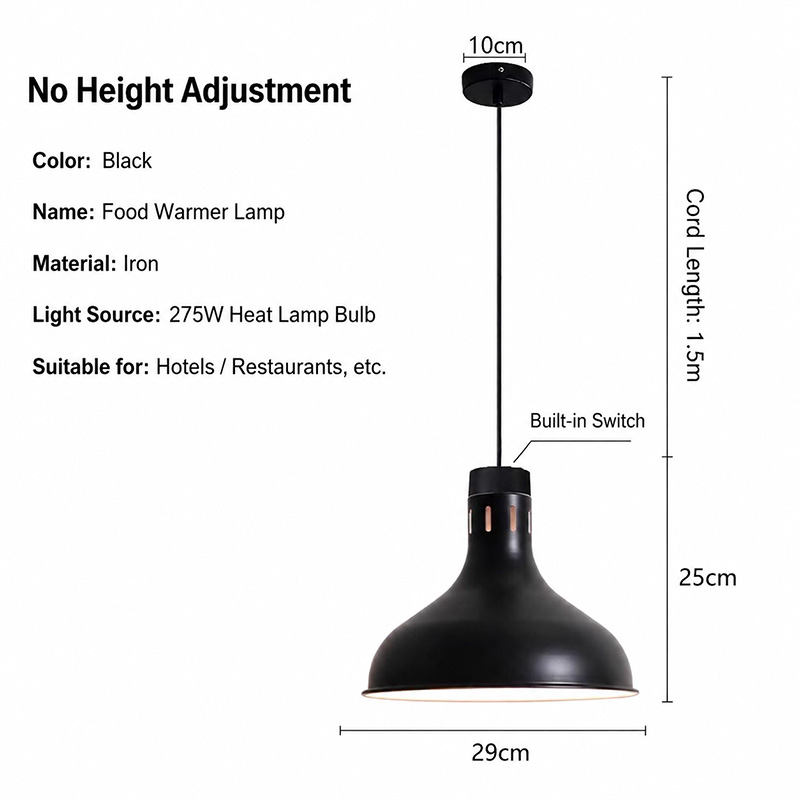
For permanent installations where counter space is at a premium, wall-mounted or ceiling-mounted options are the professional choice. These units are hardwired into the building's electrical system and positioned permanently above the service line. The result is a completely unobstructed counter surface and a clean, streamlined appearance that works well in upscale hotel buffets, fine dining restaurants, and design-forward food halls.
Dual-Heat Insulated Workstations
The premium option for high-end food service. These combine an overhead heat lamp with a base heating element, warming food from both above and below simultaneously. The result is more consistent internal temperature in dense foods and longer holding times without quality degradation. Dual-heat workstations are commonly found in luxury hotel buffets, five-star banquet operations, and high-volume catering companies serving upscale events.
Understanding Wattage and Heat Output
Heat lamp wattage directly determines how much heat the lamp can generate. Commercial units typically range from 250 to 500 watts per head. Understanding wattage in context helps you select the right lamp for your specific needs:
250-350 watts: Suitable for standard indoor restaurant or hotel buffet use with moderate ambient temperatures. Appropriate for lighter foods, shorter holding periods, and environments with minimal air movement.
350-500 watts: Required for larger food volumes, drafty environments, outdoor catering, or extended holding periods. Higher wattage compensates for heat loss to the surrounding environment and ensures food stays safely above 140 degrees Fahrenheit.
One common mistake is assuming more wattage is always better. Too much heat too close to delicate foods causes surface drying, discoloration, and texture breakdown. Match your wattage and lamp height to the specific food type and service conditions.
The Role of Heat Lamps in Food Safety
Food safety regulations across most jurisdictions specify that hot food must be held at or above 140 degrees Fahrenheit (60 degrees Celsius) to prevent the growth of pathogenic bacteria. Heat lamps are designed to help operators maintain this temperature window, but they are not a foolproof safety net on their own.
The critical principle is that heat lamps maintain temperature — they do not raise it. Food placed under a heat lamp must already be at safe serving temperature. If food starts cold or partially cooled, a heat lamp may keep it in the bacterial danger zone indefinitely without ever bringing it to a safe temperature.
Best practices for safe heat lamp use include pre-heating all food to at least 165 degrees Fahrenheit before placing it under the lamp, using a calibrated probe thermometer to verify food temperature at regular intervals during service, establishing maximum holding time policies (typically two to four hours depending on local regulations), and rotating food in and out of the heat lamp to ensure no item sits under warming for excessive periods.
Heat Lamps in Different Service Environments
Hotels and Resorts
Hotel buffets represent perhaps the most demanding application for heat lamps. Buffets may run for four to six hours during breakfast, lunch, or dinner service, with hundreds of customers serving themselves throughout. Heat lamps must maintain food quality and safety across this entire window while presenting an attractive display that encourages guests to eat. Ceiling-mounted and dual-heat workstation configurations are most common in this environment.
Restaurant Buffets and Smorgasbords
Restaurant-sized buffets face many of the same challenges as hotel operations but typically on a smaller scale. Multi-head freestanding stations are the norm here, offering flexibility to reconfigure the buffet layout between services while providing sufficient coverage for the menu.
Catering and Events
Off-site catering presents unique challenges: unpredictable room temperatures, varying food volumes, and limited ability to monitor conditions continuously. Higher-wattage units and careful pre-service planning are essential. Portable multi-head stations with stable bases are preferred for their versatility and stability in unfamiliar venues.
Quick-Service and Fast-Casual Restaurants
Even in fast-paced environments where food moves quickly, heat lamps play an important role. Holding areas for finished orders awaiting pickup or delivery rely on heat lamps to maintain quality during brief waiting periods. Single-head units positioned near the pass or pickup area are typical.
Maintenance and Care
A well-maintained heat lamp performs better, lasts longer, and reduces food safety risks. Basic maintenance practices include wiping down the lamp housing and reflective surfaces after each service to remove grease and food residue (buildup reduces heat efficiency), inspecting bulbs before every service and replacing them at the first sign of dimming or irregular output, checking electrical cords and connections regularly for fraying or damage, and cleaning reflective surfaces periodically to maintain optimal heat reflection.
Recommended Products
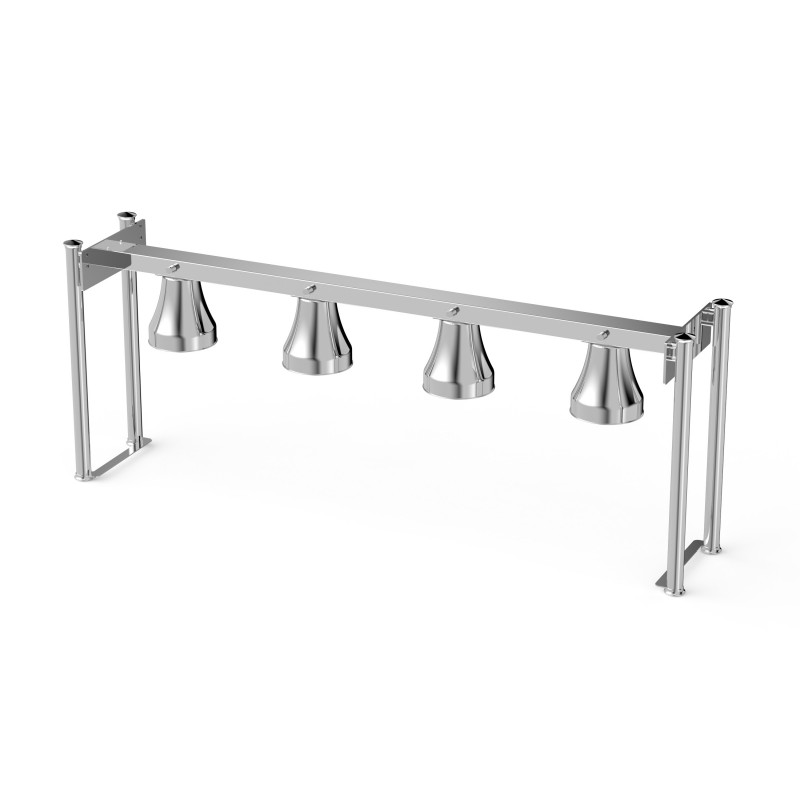
Stainless Steel Buffet Heat Lamp Rack
A freestanding stainless steel heat lamp designed for durability and reliability in busy commercial kitchens. The robust stainless steel construction withstands the rigors of daily use, while the adjustable arm allows precise positioning for different food types and pan sizes. The wide base provides stability on countertops and service lines. Ideal for restaurants, caterers, and institutional food service operations that need dependable warming performance day after day.
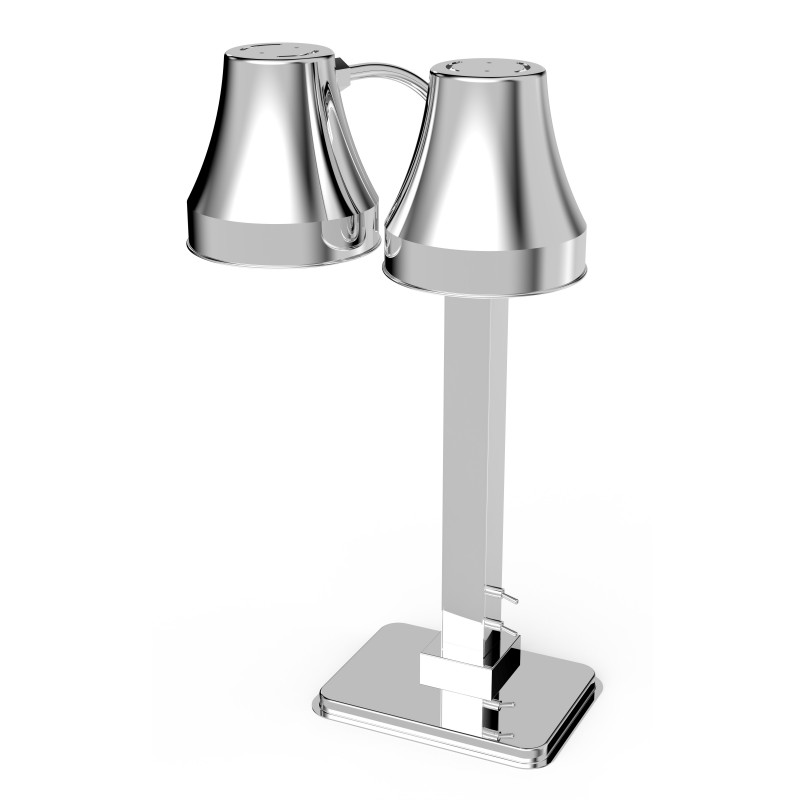
Stainless Steel Heat Lamp BJ10
A compact, professional-grade heat lamp built for reliability in commercial food service environments. The stainless steel body ensures long-term durability and easy cleaning, while the adjustable height mechanism provides the flexibility needed to warm everything from delicate sauces to hearty carved meats. Compact enough for tight service stations yet powerful enough for demanding buffet applications. A versatile workhorse suitable for any food service operation.
Heat Lamp vs. Other Warming Methods: A Quick Comparison
Different warming methods serve different purposes. Understanding when to use each helps operators make the right choice:
- Heat lamps: Best for short-to-medium holding times, open display service, foods that need to stay dry on the surface, and environments where presentation matters.
- Steam tables: Best for very long holding times, foods that benefit from moisture, soup stations, and large batch cooking scenarios.
- Drawer warmers: Best for plated meals awaiting service, large volumes of covered plates, and environments where food must be completely enclosed.
- Hot holding cabinets: Best for plated meal programs, banquet service, and situations where food must be held for extended periods with minimal quality loss.
Conclusion
Food heat lamps are a deceptively simple piece of equipment that plays an outsized role in daily food service operations. By understanding how they work, choosing the right type and wattage for your needs, and following proper food safety practices, a heat lamp becomes one of the most reliable tools in your kitchen.
Whether you are running a hotel buffet that serves hundreds of guests per day, a catering company that sets up in different venues each week, or a small restaurant with a single carving station, there is a heat lamp configuration that fits your operation. Invest in quality equipment, maintain it regularly, and your food will always arrive at the table the way the chef intended.
Related Articles
Electric Buffet Warmer with Adjustable Thermostat for Restaurants
Discover the best Electric Buffet Warmer with Adjustable Thermostat for Restaurants solutions. Real ...
Mini Chafing Dish for Breakfast Buffet & Condiment Stations
Discover the best Mini Chafing Dish for Breakfast Buffet & Condiment Stations solutions. Real case s...
9QT Extra-Large Chafing Dish for Large-Scale Banquet Events
Discover the best 9QT Extra-Large Chafing Dish for Large-Scale Banquet Events solutions. Real case s...
Wall-Mounted Buffet Stove for Space-Saving Kitchen Layouts
Discover the best Wall-Mounted Buffet Stove for Space-Saving Kitchen Layouts solutions. Real case st...
Stainless Steel Food Warmer for Supermarket Deli Departments
Discover the best Stainless Steel Food Warmer for Supermarket Deli Departments solutions. Real case ...
Commercial Chafer Dish with Temperature Control for Food Safety
Discover the best Commercial Chafer Dish with Temperature Control for Food Safety solutions. Real ca...