
Food Heat Lamp vs. Food Warmer: Key Differences Explained
When planning a food service operation, one of the most common questions operators face is: should I use a food heat lamp or a food warmer? Both equipment categories serve the same fundamental purpose — keeping food at safe serving temperatures — but they go about it in very different ways, and the choice between them has real implications for food quality, operational efficiency, and the overall dining experience.
This article breaks down the key differences between food heat lamps and food warmers, examines their respective strengths and weaknesses, and helps you decide which solution is right for your specific operation.
Understanding the Core Technology
How a Food Heat Lamp Works
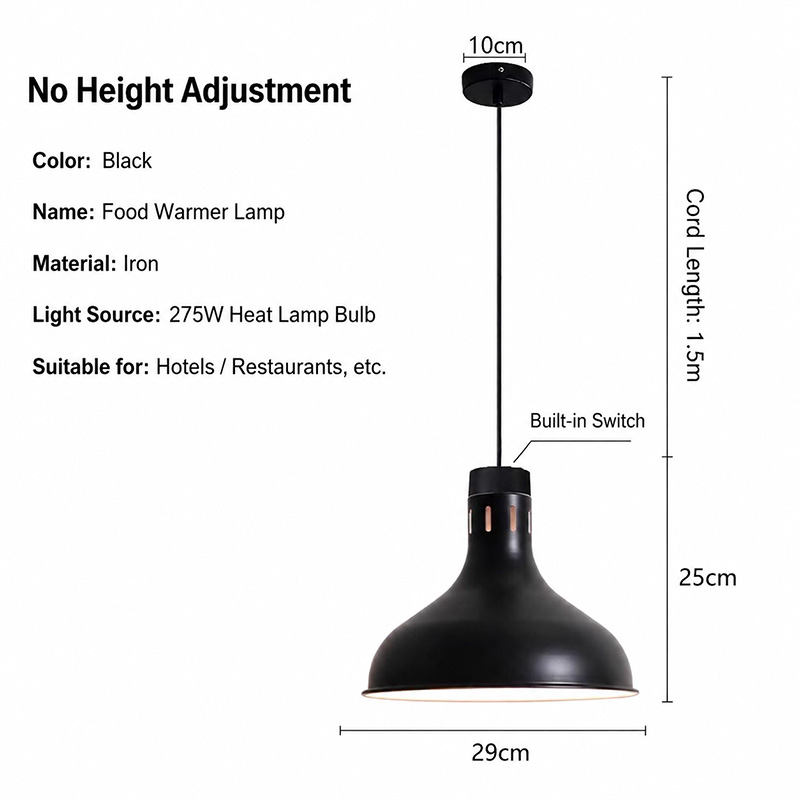
A food heat lamp uses radiant heat technology — typically infrared or halogen bulbs — to emit heat in a downward direction onto food. The lamp housing sits above the food, often on an adjustable arm or ceiling mount, and warms the food surface directly without needing any medium like water or steam. Heat travels in straight lines and heats whatever it strikes.
The adjustable height of the lamp head gives operators direct control over heat intensity. Moving the lamp closer increases warmth; raising it higher reduces it. This makes heat lamps remarkably flexible across different food types and service conditions.
How a Food Warmer Works
A food warmer — sometimes called a heated holding cabinet, hot holding drawer, or Bain Marie depending on the specific design — uses a heating element to warm food through conduction or convection. Food warmers typically fall into several categories:
Electric food warmers with heated surfaces use a flat heating plate or drawer to warm food from below. The food sits directly on or in a heated container.
Steam-based warmers and Bain Marie units use a water bath to generate gentle, even warmth. Food is placed in pans sitting over or in hot water, which maintains temperature through moist heat.
Heated holding cabinets enclose food entirely in a heated chamber, maintaining temperature through circulated hot air or radiant heating elements inside the cabinet.
Side-by-Side Comparison
Here is a direct comparison between food heat lamps and food warmers across the key factors that matter most in commercial food service:
| Feature | Food Heat Lamp | Food Warmer |
|---|---|---|
| Heat Type | Radiant (dry heat from above) | Conduction/Convection (wet or dry heat from below or enclosed) |
| Food Surface Quality | Keeps surfaces dry and crisp | Can create moisture buildup; steam warmers add humidity |
| Food Visibility | Fully visible and accessible from all angles | Often enclosed; limited visibility unless glass-fronted |
| Ideal Holding Time | 1-3 hours for best quality | 2-6 hours depending on type |
| Setup Complexity | Simple: position and plug in | Varies: simple for electric, more involved for steam/Bain Marie |
| Maintenance | Low: wipe down surfaces, replace bulbs | Moderate: steam units need water management and descaling |
| Counter Space Required | Minimal footprint for single-head units | Larger footprint; enclosed warmers need significant space |
| Best For | Crispy foods, visual presentation, buffet lines | Wet foods, soups, extended holding, plated meals |
When to Choose a Food Heat Lamp
Food heat lamps are the better choice in several specific scenarios:
Open buffet presentations. When food needs to be fully visible and accessible to customers walking through a buffet line, heat lamps are unmatched. They warm food without covers, lids, or enclosures, keeping the presentation open and inviting. The warm glow of the lamp actually enhances the visual appeal of food, encouraging customers to select items.
Crispy and dry foods. Foods that lose their appeal when exposed to moisture — roasted meats with crispy skin, fried items, baked goods, grilled vegetables — are best served under a heat lamp. Steam or enclosed warmers introduce humidity that degrades these textures rapidly.
Carving stations and pass-through service. A la carte restaurants with carving stations benefit from heat lamps because they can keep a carved roast or poultry warm at the pass while remaining visible to both kitchen staff and dining room servers. The lamp becomes an integral part of the presentation and service flow.
Space-constrained operations. Single-head heat lamps have a minimal counter footprint. For small kitchens or service areas with limited space, a heat lamp delivers warming capability without consuming significant real estate.
Operations that need flexibility. Because heat lamps are portable and repositionable, they suit operations whose service configuration changes between meals, events, or shifts. A catering company can use the same heat lamps in different configurations at different venues.
When to Choose a Food Warmer
Food warmers excel in different scenarios:
Long holding times. Enclosed heated holding cabinets and high-quality electric warmers can maintain food at safe temperatures for four to six hours with minimal quality degradation. Heat lamps are better suited for shorter holding periods of one to three hours.
Soups, sauces, and liquid dishes. Steam-based warmers and Bain Marie units are purpose-built for liquid and semi-liquid foods. They maintain even, gentle warmth without hot spots and prevent the surface skinning over that occurs under radiant heat.
Plated meal programs. Hotels running room service, banquet operations plating hundreds of covers, and institutions serving plated meals need enclosed warmers to keep each plate at temperature while waiting for service timing. Heat lamps are impractical for individual plated meals.
High-volume batch cooking. Operations that cook large batches ahead of service windows — school cafeterias, hospital food service, large corporate catering — benefit from the capacity and holding time capabilities of commercial food warmers over heat lamps.
Blending Both Approaches
Many sophisticated food service operations use both heat lamps and food warmers in the same facility, deploying each where it is most effective. A hotel buffet might use Bain Marie units for soups and sauces, heated drawers for plated banquet meals awaiting service, and heat lamps over the carving station and roasted vegetable display.
This hybrid approach gets the best of both worlds: soups stay at perfect texture in a steam warmer, carved meats stay warm and visually stunning under heat lamps, and plated meals wait safely in heated drawers until service timing aligns.
Dual-insulation workstations — which combine overhead radiant heat from a lamp with a heated base plate — represent an attempt to blend both technologies into a single unit. These are particularly effective for dense foods where internal temperature consistency matters.
Common Mistakes to Avoid
Using a heat lamp as a reheating tool. Heat lamps do not reheat food. Placing cold food under a lamp keeps it cold. Always bring food to safe serving temperature before using any warming equipment.
Choosing a warmer for crispy food. Steam warmers and enclosed heated drawers are terrible for foods that need to stay crisp. Roasted potatoes, fried items, and grilled proteins lose their appeal rapidly under moist or enclosed heat.
Assuming longer is always better. No warming method maintains perfect food quality indefinitely. Plan your production schedule to minimize holding times regardless of which equipment you use.
Recommended Products
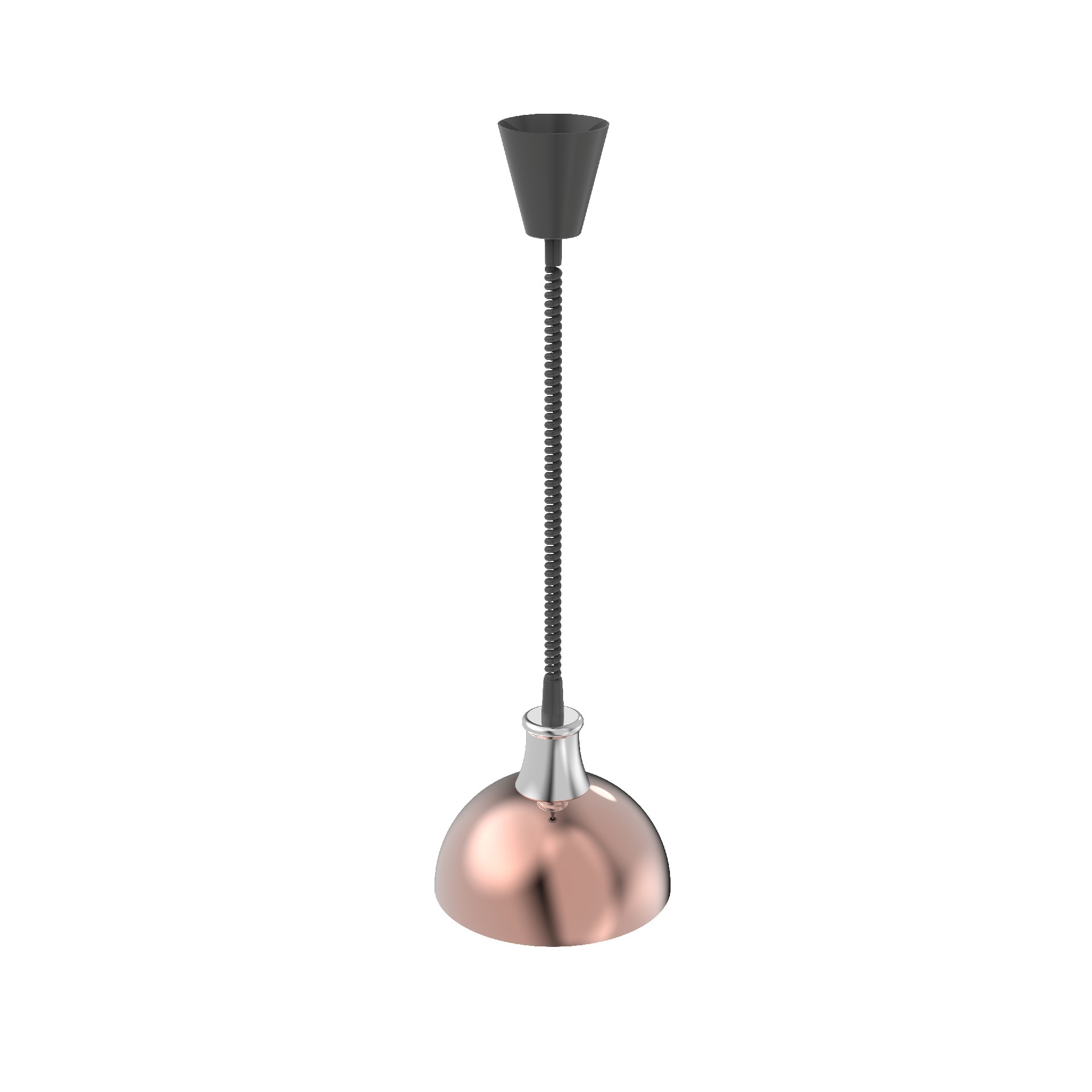
Ceiling-Mounted Rose Gold Buffet Heat Lamp
A ceiling-mounted heat lamp solution that combines professional radiant warming with an elegant rose gold finish. The overhead installation maximizes counter space while providing consistent downward heat coverage over your buffet display. Perfect for upscale hotel buffets and fine dining restaurants where food presentation quality and visual appeal are paramount. The adjustable mounting bracket accommodates various buffet configurations.

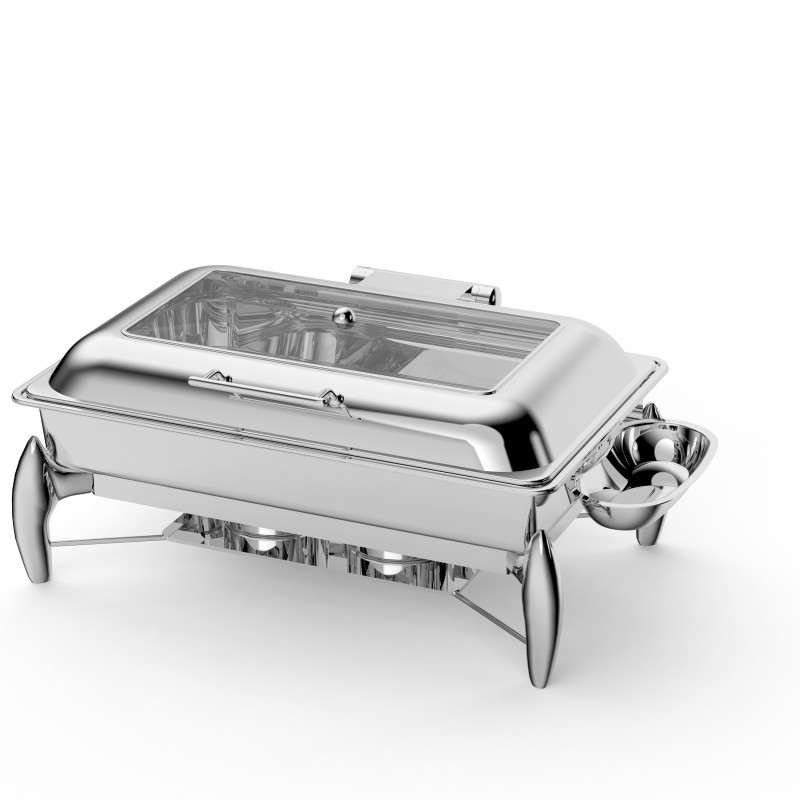
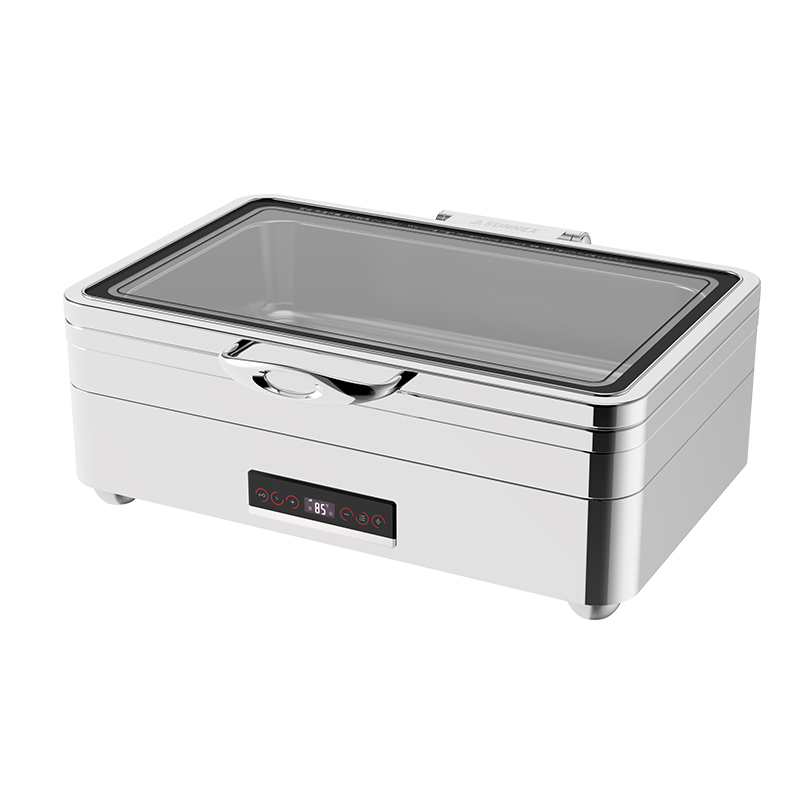
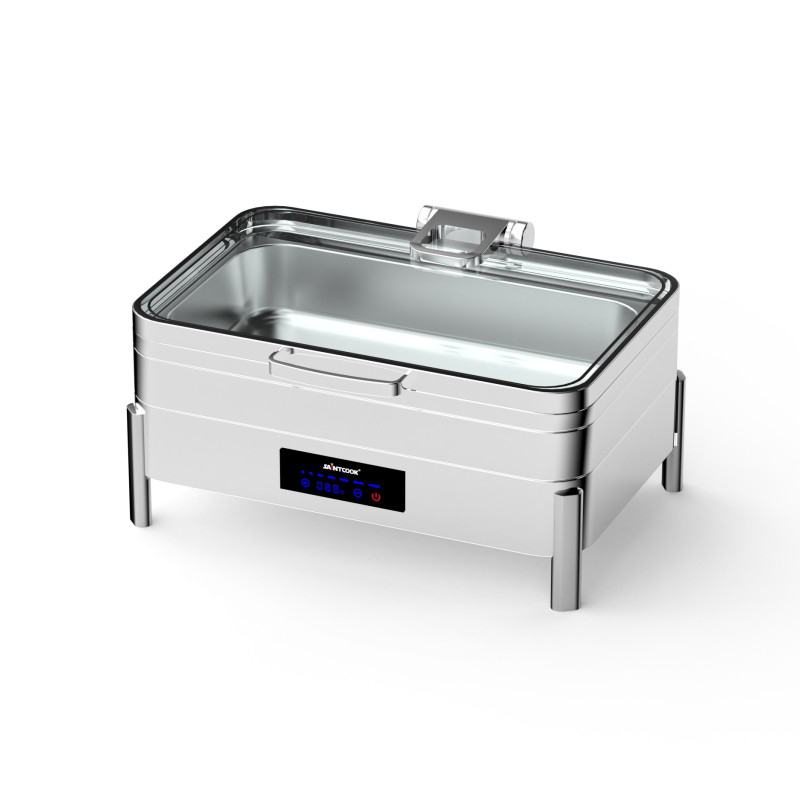
Electric Food Warmer with Glass Cover
An electric heated food warmer enclosed under a tempered glass cover, combining base heating with visibility. The glass cover maintains consistent internal temperature while protecting food from airborne particles and customer handling in self-service environments. The heated base plate ensures food stays warm from below, while the enclosed design reduces heat loss. Ideal for operations that need the holding capability of a warmer with the visibility of an open display.
Conclusion
There is no universally "best" option between food heat lamps and food warmers — only the right tool for each specific application. Understanding the fundamental differences in how they work, what types of food they are best suited for, and what your operation's actual needs are will lead to the right decision every time.
For most open-buffet, presentation-focused, and short-to-medium holding scenarios, heat lamps are the clear choice. For long holding times, liquid dishes, and plated meal programs, food warmers deliver better results. Many operations will ultimately benefit from both, used strategically in their respective strengths.
Related Articles
Electric Buffet Warmer with Adjustable Thermostat for Restaurants
Discover the best Electric Buffet Warmer with Adjustable Thermostat for Restaurants solutions. Real ...
Mini Chafing Dish for Breakfast Buffet & Condiment Stations
Discover the best Mini Chafing Dish for Breakfast Buffet & Condiment Stations solutions. Real case s...
9QT Extra-Large Chafing Dish for Large-Scale Banquet Events
Discover the best 9QT Extra-Large Chafing Dish for Large-Scale Banquet Events solutions. Real case s...

Wall-Mounted Buffet Stove for Space-Saving Kitchen Layouts
Discover the best Wall-Mounted Buffet Stove for Space-Saving Kitchen Layouts solutions. Real case st...
Stainless Steel Food Warmer for Supermarket Deli Departments
Discover the best Stainless Steel Food Warmer for Supermarket Deli Departments solutions. Real case ...
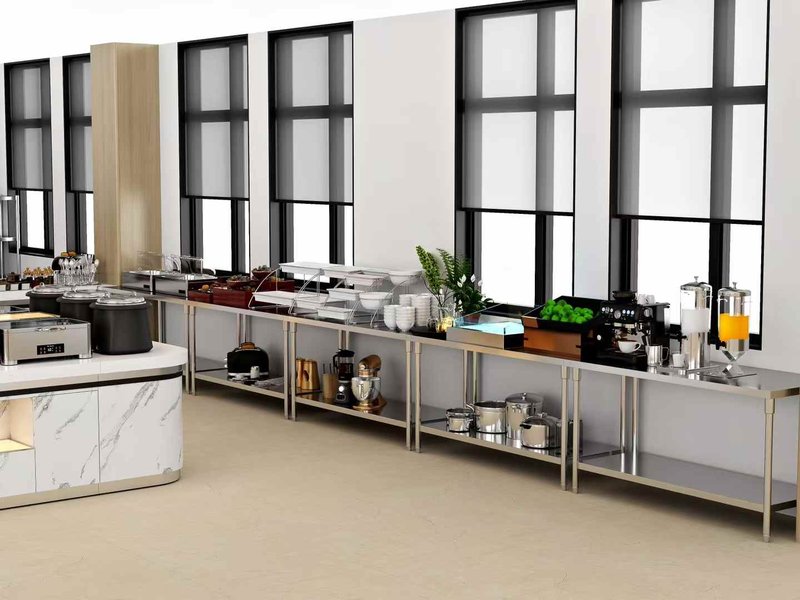
Commercial Chafer Dish with Temperature Control for Food Safety
Discover the best Commercial Chafer Dish with Temperature Control for Food Safety solutions. Real ca...