
How Does a Food Heat Lamp Work? Simple Science Breakdown
If you have ever stood near a fireplace or a patio heater and felt warmth on your face before the surrounding air seemed warm, you have experienced radiant heat directly. Food heat lamps operate on the same principle, applying this everyday physics phenomenon to the challenge of keeping food at safe serving temperatures in commercial environments. Understanding the science behind how heat lamps work helps operators use them more effectively and make better decisions about when and how to deploy them.

The Physics of Radiant Heat
Heat energy moves from one place to another through three primary mechanisms: conduction, convection, and radiation. Each plays a different role in cooking and food warming, and understanding them is key to understanding why radiant heat from a lamp is so effective for certain applications.
Conduction is heat transfer through direct contact. When you touch a hot pan, heat flows from the pan into your hand through conduction. In food warming, conduction transfers heat from a hot surface — like a heated plate or Bain Marie water — into the food resting on or in it.
Convection is heat transfer through the movement of a fluid — typically air or water. A convection oven circulates hot air around food, warming it more evenly than a standard oven. In food warming, convection helps distribute heat through enclosed spaces like heated holding cabinets.
Radiation is heat transfer through electromagnetic waves. Unlike conduction and convection, radiant heat does not require a medium to travel. The warmth you feel from the sun, from a fireplace, from a space heater across the room — all of these are radiant heat reaching you through the air. When these electromagnetic waves strike an object — like your skin or the surface of a piece of meat — they are absorbed and converted to thermal energy, warming that object directly.
The Electromagnetic Spectrum and Infrared Radiation
Radiant heat is part of the electromagnetic spectrum, specifically in the infrared region. Electromagnetic waves in this frequency range have wavelengths longer than visible red light but shorter than microwaves. When these infrared waves are absorbed by food, they cause the molecules in the food to vibrate more rapidly, which we experience as heat.
Most commercial food heat lamps use one of two types of radiant heat sources:
Infrared bulbs emit infrared radiation at specific wavelengths optimized for efficient heat transfer. They are designed to produce heat rather than light, though some light is also emitted. Infrared heat lamps are highly efficient at converting electrical energy into usable warmth.
Halogen bulbs are a type of incandescent bulb that contains a halogen gas inside the glass envelope. They produce both visible light and significant infrared radiation, making them function as heat lamps while also providing illumination. Halogen heat lamps are often used where the visual appearance of food under the lamp matters, as the bright light showcases the food more effectively.
Anatomy of a Food Heat Lamp
The Lamp Housing
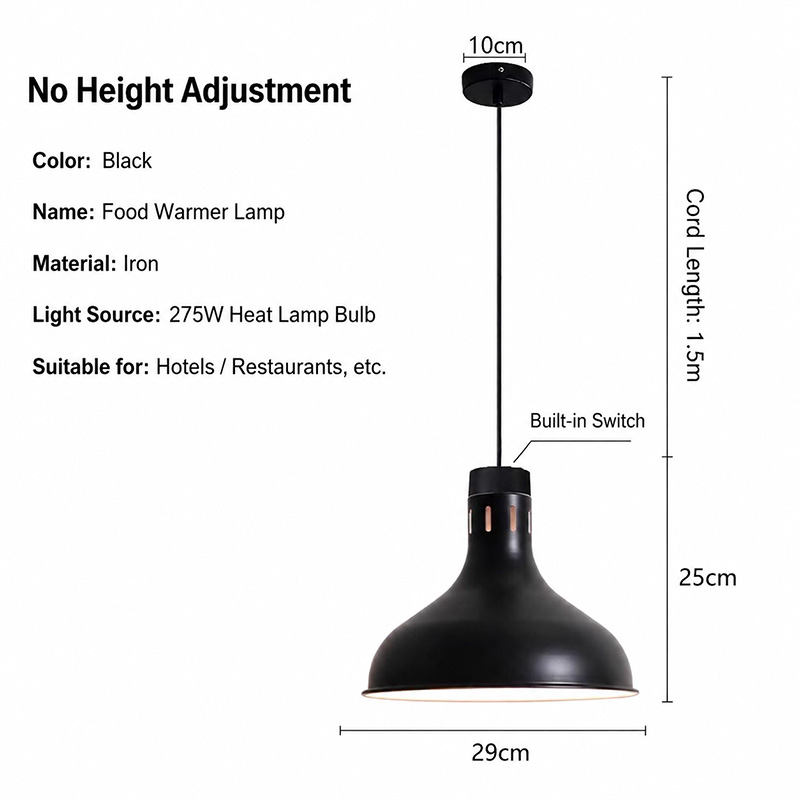
The outer shell of a heat lamp serves multiple purposes. It protects the internal components, contains the reflective surfaces, and provides the mounting point for the adjustable arm or ceiling mount. In commercial settings, lamp housings are typically made from stainless steel for durability and corrosion resistance. Some models feature decorative finishes like rose gold or brushed chrome for front-of-house applications where aesthetics matter.
The Reflective Surface
Inside the housing, a reflective surface — usually polished aluminum or stainless steel — lines the interior. When the bulb emits infrared radiation, the reflector redirects waves that would otherwise travel upward or sideways downward toward the food. This concentration of heat is what makes heat lamps effective: without the reflector, much of the heat would dissipate into the surrounding air.
A clean reflector significantly affects performance. Dust, grease, and food residue on the reflective surface can reduce heat output by thirty percent or more, which is why regular cleaning of the lamp interior is an important maintenance practice.
The Bulb
The bulb is the heat-generating element. Commercial heat lamp bulbs are specifically designed for sustained operation at high temperatures. Unlike household bulbs, which may be designed for intermittent use, commercial heat lamp bulbs are rated for continuous duty.
Bulb wattage determines the amount of heat produced. A 250-watt bulb produces roughly 250 watts of thermal energy, which sounds straightforward but actually varies depending on how efficiently the bulb converts electricity to infrared radiation. Quality matters here — a well-designed 250-watt infrared bulb may actually produce more useful heat at the food surface than a poorly designed 350-watt bulb due to better emission characteristics.
The Adjustable Arm and Base
The arm connects the lamp head to its mounting point and allows height adjustment. In freestanding models, this is a weighted base with an extending vertical arm. In ceiling or wall-mounted models, the arm may be a fixed or adjustable bracket system. The key engineering challenge is creating an arm that can hold the lamp head steady at any height without drooping or shifting during service.
How the Lamp Creates a Warming Zone
When you turn on a heat lamp, the bulb begins emitting infrared radiation in all directions. The reflector captures waves traveling in non-useful directions and redirects them downward. The resulting beam of infrared energy travels downward until it strikes an object — typically the food surface or the pan holding the food.
When infrared waves strike food, they do not heat the air around it significantly. They heat the food directly. This is the critical difference between radiant warming and convection warming: the food itself becomes warm, not just the air around it. This is why a heat lamp can keep food warm even in a relatively cool room — the food is absorbing radiant energy directly from the lamp.
The size of the warming zone directly beneath the lamp depends on the bulb's output, the reflector's design, and the distance to the food. As a general rule, a single-head heat lamp creates a useful warming zone roughly 12 to 18 inches in diameter at normal mounting heights.
The Role of Distance and Height
The relationship between lamp height and heat intensity follows the inverse square law for radiant energy. Moving the lamp to half the distance from the food does not double the heat — it quadruples it. This has important practical implications:
Precise control is possible. Small adjustments in lamp height create noticeable changes in warming intensity. This allows operators to fine-tune conditions for different food types.
Too close is dangerous. Positioning the lamp too close to food can create excessive surface heat, causing drying, discoloration, or even scorching. Manufacturers typically specify minimum safe mounting heights.
Height affects coverage area. Raising the lamp increases the coverage area but reduces intensity per square inch. Lowering it concentrates the heat into a smaller, more intense zone. Different service scenarios call for different positions.
Heat Lamps and Food Safety: What Science Tells Us
The science of radiant heat has clear implications for food safety. Infrared radiation heats the food surface where bacteria can grow, but does not penetrate deeply into dense foods. This means a thick roast could potentially have a warm surface while the interior remains cool — a scenario that creates food safety risk if the surface temperature is not high enough to inhibit bacterial growth.
The FDA Food Code specifies that hot food must be held at 135 degrees Fahrenheit (57 degrees Celsius) or above. Some local regulations require 140 degrees Fahrenheit (60 degrees Celsius). The surface temperature of food under a heat lamp can reach these thresholds quickly in the right conditions, but operators must verify this with a calibrated thermometer rather than assuming the lamp is maintaining safe temperatures throughout the food mass.
Dual-heat systems — which warm food from both above and below — address this limitation by ensuring the entire food mass, not just the surface, reaches and maintains safe temperatures. This is why dual-heat workstations are preferred for dense, thick foods where surface-only warming is insufficient.
Comparing Heat Lamp Performance Across Conditions
Several environmental factors affect how effectively a heat lamp maintains food temperature:
Ambient air temperature. A heat lamp works most efficiently in a warm environment. In a cold room or outdoor setting with significant air movement, the lamp must work harder to maintain food temperature, and the actual heat reaching the food may be substantially less than the lamp's rated output.
Air movement and drafts. Forced air movement — from HVAC systems, open doors, or outdoor wind — carries heat away from the food surface, reducing the lamp's effectiveness. In drafty environments, higher wattage lamps or enclosed warming solutions are more appropriate.
Food type and density. Thin, flat foods like pancakes or chicken breasts warm quickly under a lamp. Dense foods like whole roasts or thick casseroles warm more slowly and may not reach safe internal temperatures throughout without additional warming from below.
Pan material and color. Dark pans absorb more radiant energy than light-colored or reflective pans. A dark roasting pan will absorb more heat from the lamp and transfer it to the food than a polished stainless steel pan of the same shape.
Maintenance Implications of the Science
Understanding how heat lamps work makes the importance of maintenance clearer:
Reflector cleaning. Dust and grease on reflectors significantly reduce their efficiency. A clean reflector might direct eighty percent of emitted radiation downward; a dirty one might direct only fifty percent. Regular cleaning is not just about appearance — it directly affects performance.
Bulb replacement. As bulbs age, their emission efficiency decreases. A bulb at the end of its life may produce visible light normally while emitting substantially less infrared radiation. Replacing bulbs at recommended intervals prevents this gradual performance degradation from affecting food quality and safety.
Structural integrity. The adjustable arm mechanism must hold the lamp head steady at any height. Worn or damaged mechanisms allow the lamp to shift or droop during service, changing the warming conditions unpredictably.
Recommended Products
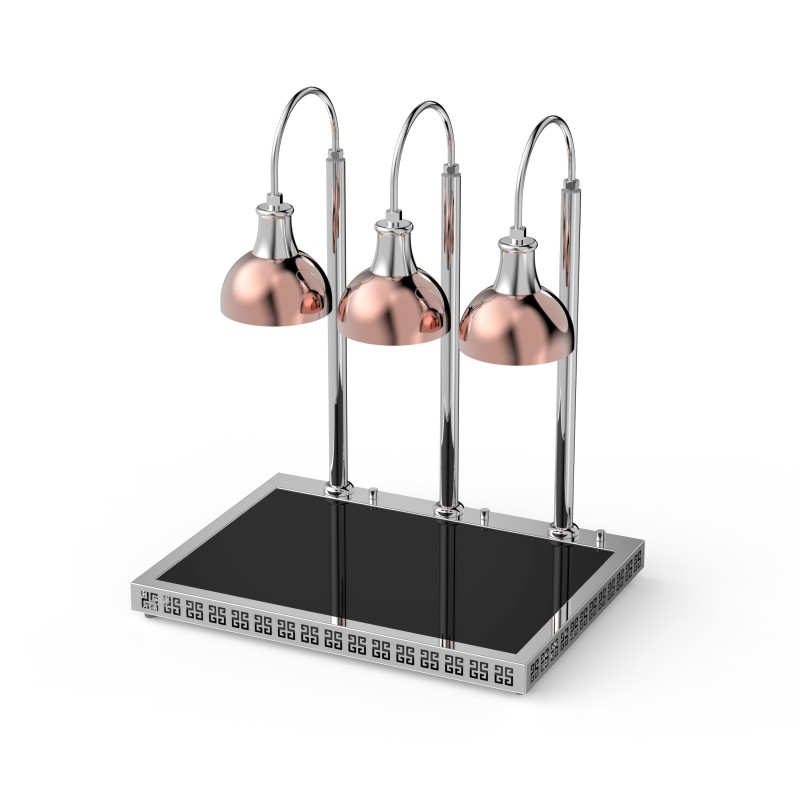
Three-Head Rose Gold Buffet Heat Lamp Station
A professional three-head heat lamp station designed for commercial buffet environments where consistent, reliable radiant warming is essential. Three independently adjustable lamp heads provide flexible coverage across multiple food items simultaneously, while the rose gold finish adds visual elegance to upscale buffet presentations. Each head can be positioned at a different height to deliver the precise heat intensity needed for different food types — a delicate fish course at a higher position, a carved roast closer to the lamp for maximum warmth.

Single-Head Rose Gold Heat Lamp for Restaurants
A compact, commercial-grade single-head heat lamp built for reliability and precise radiant heat control. The adjustable arm allows operators to fine-tune warming intensity for different food types and service conditions. The rose gold finish makes it equally suitable for open kitchen environments, buffet counters, and front-of-house service stations where appearance matters. Designed for daily commercial use with stainless steel construction and durable components that withstand the demands of a busy food service operation.
Conclusion
The science behind food heat lamps — radiant infrared technology, the role of reflective surfaces, the physics of distance and intensity — is straightforward and intuitive once demystified. This understanding helps food service professionals deploy heat lamps more effectively, maintain them properly, and avoid the common mistakes that lead to food quality problems or safety violations.
Radiant heat works because it heats food directly rather than warming the surrounding air. It keeps food surfaces dry and crisp. It showcases food beautifully in open buffet presentations. But it has limitations — particularly for dense foods and in cold, drafty environments — that operators must understand and plan around.
When matched to the right application, a properly maintained heat lamp is one of the most elegant and effective tools in the food service equipment arsenal.
Related Articles
Electric Buffet Warmer with Adjustable Thermostat for Restaurants
Discover the best Electric Buffet Warmer with Adjustable Thermostat for Restaurants solutions. Real ...
Mini Chafing Dish for Breakfast Buffet & Condiment Stations
Discover the best Mini Chafing Dish for Breakfast Buffet & Condiment Stations solutions. Real case s...
9QT Extra-Large Chafing Dish for Large-Scale Banquet Events
Discover the best 9QT Extra-Large Chafing Dish for Large-Scale Banquet Events solutions. Real case s...

Wall-Mounted Buffet Stove for Space-Saving Kitchen Layouts
Discover the best Wall-Mounted Buffet Stove for Space-Saving Kitchen Layouts solutions. Real case st...

Stainless Steel Food Warmer for Supermarket Deli Departments
Discover the best Stainless Steel Food Warmer for Supermarket Deli Departments solutions. Real case ...
Commercial Chafer Dish with Temperature Control for Food Safety
Discover the best Commercial Chafer Dish with Temperature Control for Food Safety solutions. Real ca...