
How Long to Keep Food Warm in a Heat Lamp? Expert Tips
One of the most common questions in food service operations concerns how long food can safely remain under a heat lamp without compromising food safety or quality. The answer involves multiple factors including the type of food being held, the temperature at which it is maintained, the specific heat lamp configuration in use, and the acceptable quality thresholds for different service contexts. Understanding these variables helps operators make informed decisions about holding times that protect both customer safety and the dining experience.
Food Safety Temperature Requirements
The Danger Zone Explained
Food safety regulations establish the danger zone as the temperature range between 5 and 60 degrees Celsius where bacteria multiply most rapidly. Within this range, pathogenic bacteria can reach dangerous levels that cause foodborne illness, with growth rates doubling at warmer temperatures within the zone. Hot-holding equipment must maintain food above 60 degrees Celsius throughout the holding period to prevent bacterial growth, making temperature monitoring the single most important factor in safe food holding.
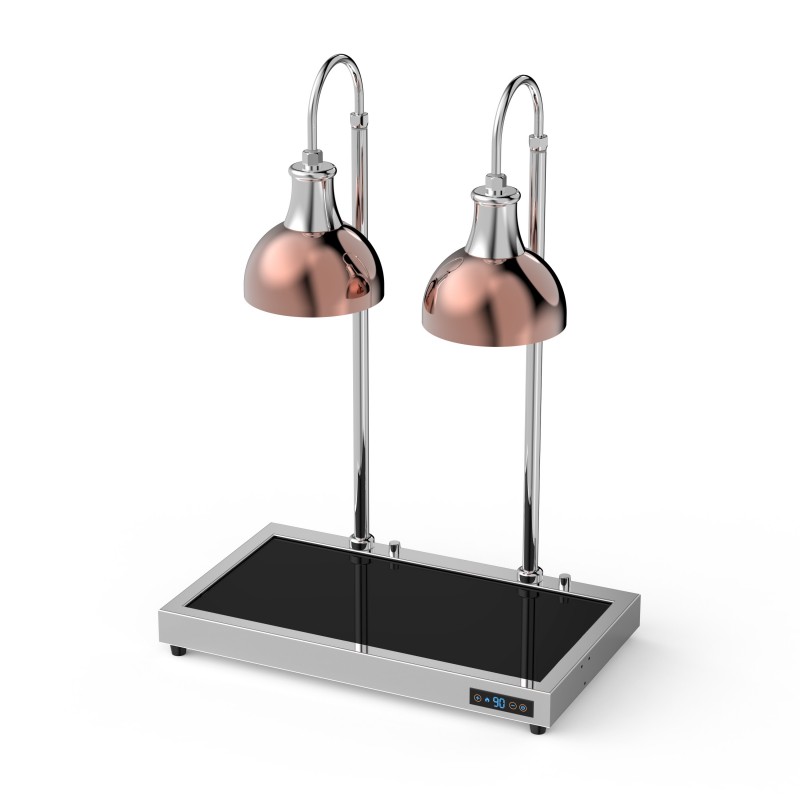
The Dual-Insulation Workstation with Heat Lamp & Heating Plate addresses temperature management through its digital thermostat, which actively monitors and adjusts base plate temperature to maintain consistent conditions throughout extended holding periods. This automated temperature control reduces the risk of temperature drift that can occur with non-thermostatic units, particularly during the varying ambient conditions typical in buffet and catering environments.
Regulatory Guidelines and Standards
Food safety authorities generally recommend that hot-holded foods not exceed two to four hours within the danger zone, including the total time from initial cooking through service completion. In most jurisdictions, any food that has been held below 60 degrees Celsius for more than two hours should be discarded rather than reheated and returned to service, as the bacterial load accumulated during the cooling period cannot be eliminated by reheating alone. Consult local food safety regulations for specific requirements that apply to your operation type and jurisdiction.
How Food Type Affects Maximum Holding Time
High-Risk Protein Foods
Protein foods including meat, poultry, fish, and dairy-based dishes present the highest food safety risk when hot-held, as these items provide the nutrients that pathogenic bacteria require for rapid multiplication. Red meat dishes should not exceed two hours of hot holding, as extended holding causes both safety concerns and quality deterioration with proteins breaking down and moisture evaporating. Poultry and stuffing dishes present particular risk due to salmonella concerns and should be monitored closely, with holding times at the shorter end of the recommended range.
Starches and Side Dishes
Starch-based dishes such as rice, pasta, and potato preparations can generally be held for longer periods than protein dishes, as these items provide less favourable conditions for bacterial growth. However, starches held at hot-holding temperatures for extended periods undergo texture degradation, with rice becoming dry and hard, pasta absorbing sauce and becoming mushy, and potato dishes developing surface crusting while cooling in the centre. Three to four hours represents a practical maximum for starch holding before quality becomes unacceptable to customers.
Sauces and Gravies
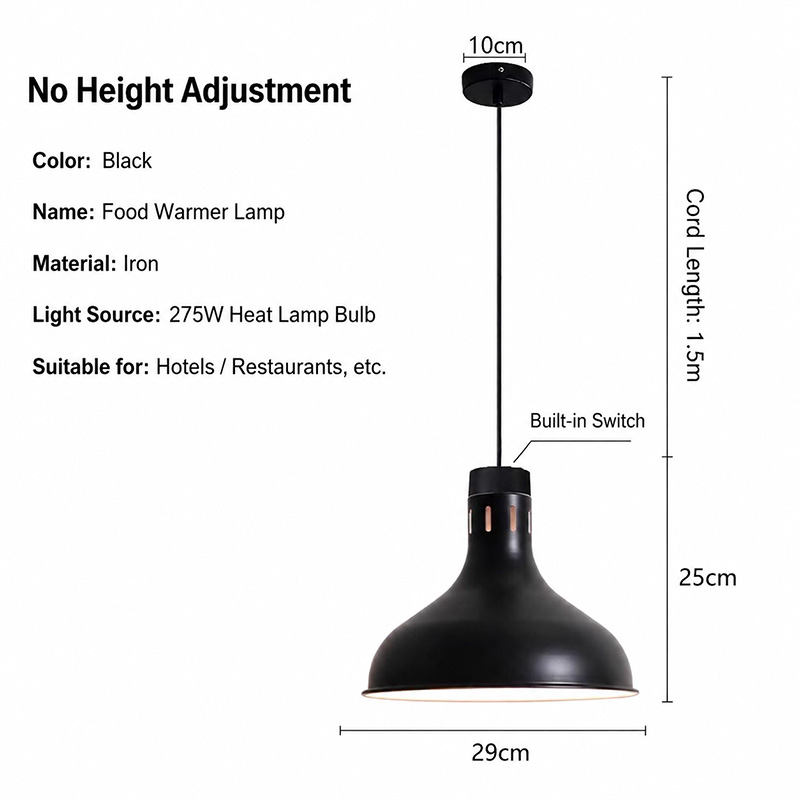
Liquid foods present unique hot-holding challenges because temperature stratification can create cooler zones at the surface where bacterial growth occurs most readily. Sauces and gravies should be stirred regularly during holding to ensure consistent temperature throughout the volume, and holding times should be limited to three hours even with active stirring and monitoring. The Ceiling-Mounted Rose Gold Buffet Heat Lamp with its pendant-mounted design provides even infrared coverage over sauce boats and gravy dishes, helping maintain consistent surface temperatures that support longer safe holding when combined with regular stirring.
Vegetables and Sides
Vegetables can generally tolerate longer hot-holding periods than protein dishes, with holding times of three to four hours before significant quality degradation occurs. However, vegetables with high water content such as leafy greens and broccoli undergo texture changes rapidly under heat lamps, becoming wilted and losing visual appeal. Root vegetables and denser preparations tolerate extended holding better, maintaining both temperature and quality for three to four hours under appropriate heat lamp configurations.
Equipment Factors That Influence Holding Time
Lamp Wattage and Coverage Area
The warming capacity of a heat lamp determines how effectively it maintains food temperature across varying loads and ambient conditions. Higher wattage elements provide more thermal energy, compensating for greater heat losses during busy service periods when display doors open frequently or when large volumes of food require warming. The three-head configuration of the Three-Head Rose Gold Buffet Heat Lamp Station provides more total wattage than single or dual-head units, enabling consistent temperature maintenance across larger food volumes and in more challenging ambient conditions.
Base Plate and Surface Heating
Heat lamps that combine overhead infrared radiation with base heating provide more comprehensive temperature maintenance than overhead-only units. The combination addresses heat loss through multiple pathways simultaneously, with overhead elements countering radiative and convective losses while base heating compensates for conductive losses into serving vessels and counter surfaces. This dual-zone approach extends the practical holding time for food by maintaining more consistent temperatures throughout the food mass rather than only at the surface.
Thermostatic Control Systems
Units with thermostatic temperature control automatically adjust heating output based on actual temperature readings, maintaining target temperatures regardless of ambient variations or food load changes. Non-thermostatic units deliver fixed heating output that may become excessive as ambient temperatures warm during the day or insufficient when food volume decreases and less thermal mass is available to absorb the heating energy. The digital thermostat in the Dual-Insulation Workstation with Heat Lamp & Heating Plate provides active temperature management that extends holding time capability by preventing the temperature drift that compromises food safety and quality.
Quality Considerations Beyond Safety
Visual Appearance and Food Presentation
Food that remains technically safe to serve may nonetheless become unacceptable to customers due to visual deterioration during extended holding. Heat lamps create surface drying that produces unappetizing crusting on protein surfaces, causes moisture loss from vegetables, and creates a wilted appearance in greens and fresh preparations. Food service operators must balance the cost savings from extended holding against the customer experience impact of presenting food that appears tired and over-held.
Texture and Taste Degradation
Extended heat exposure degrades food texture and flavour even when temperature safety is maintained. Proteins become progressively tougher and drier as moisture evaporates under heat lamps, with the rate of deterioration depending on the specific food item and the humidity conditions in the display. Sauces reduce and concentrate as liquid evaporates, becoming overly thick and salty. Fried foods lose crispiness rapidly under heat lamps, making extended holding inappropriate for breaded or battered items regardless of safety considerations.
Colour Changes in Food
Heat and light exposure cause visible colour changes in many foods that signal quality deterioration to customers even when the food remains technically safe. Green vegetables fade to yellow-green or brown under sustained heat exposure. Roasted meats develop grey oxidation zones at surfaces exposed to heat lamps. sauces and gravies darken as Maillard reaction products continue to form at holding temperatures. Monitoring food appearance alongside temperature provides a practical quality check that complements temperature monitoring alone.
Recommended Holding Times by Food Category
Establishing clear holding time guidelines for different food categories helps kitchen staff make consistent decisions about when to remove food from service and replace it with freshly prepared items. The following recommendations balance food safety requirements with quality considerations for typical food service operations.
| Food Category | Maximum Holding Time | Quality Notes | Recommended Equipment |
|---|---|---|---|
| Red meat dishes | 2 hours maximum | Proteins toughen and dry rapidly | Dual-zone, thermostatic control |
| Poultry and stuffing | 1.5 hours maximum | Salmonella risk; texture degrades quickly | High-wattage, close monitoring |
| Fish and seafood | 1.5 hours maximum | Delicate texture; dries and flakes rapidly | Gentle heat, reduced height |
| Starches (rice, pasta, potato) | 3 to 4 hours | Texture hardens; may absorb moisture | Moderate heat, covered when possible |
| Sauces and gravies | 3 hours with stirring | Surface cooling risk; reduces and thickens | Pendant lamp for even coverage |
| Vegetables | 3 to 4 hours | Wilt and lose colour; dense types better | Moderate height, check frequently |
| Fried foods | Not recommended | Crispiness lost within minutes | Serve immediately only |
Operational Strategies for Managing Holding Times
Batch Preparation and Rotation
Rather than preparing large quantities of food at the start of service and holding everything under heat lamps, experienced operators prepare food in batches that align with anticipated demand patterns. Initial batches sized for the first one to two hours of service provide immediate availability, with subsequent batches prepared as service progresses and remaining food from earlier batches is depleted. This approach reduces the volume of food held beyond acceptable timeframes while maintaining continuous availability of fresh product.
Temperature Monitoring Protocols
Establish regular temperature monitoring protocols that specify checking frequency, measurement locations, and documentation requirements. Temperature readings should be taken at multiple points across the food display, as localised cold spots may exist even when primary monitoring points show acceptable readings. Document all temperature readings with timestamps to create records that demonstrate due diligence in food safety management.
Visual Quality Checks
Complement temperature monitoring with visual quality assessments conducted at regular intervals throughout the holding period. Designate staff responsibility for quality checks that evaluate food appearance, texture, and colour alongside temperature measurements. Foods that fail quality assessment should be removed from service regardless of whether they have reached the maximum temperature holding time, as quality failures represent customer experience failures that damage reputation.
Using the Right Equipment for Extended Holding
Equipment selection directly impacts the achievable holding time and quality outcomes for hot-held foods. The Dual-Insulation Workstation with Heat Lamp & Heating Plate with its digital thermostat provides active temperature management that maintains safe holding conditions with less manual monitoring than non-thermostatic units, making it suitable for operations with limited staff availability for continuous food checking. The pendant-mounted Ceiling-Mounted Rose Gold Buffet Heat Lamp provides even heat distribution over sauce boats and small serving vessels where temperature stratification is a particular concern, extending the practical holding time for liquid preparations.
For operations requiring broad buffet coverage with consistent temperature maintenance, the three-head configuration of the Three-Head Rose Gold Buffet Heat Lamp Station delivers the wattage and coverage area needed to maintain temperature across extended displays throughout service periods. The combination of overhead infrared from three lamp heads and the warming surface beneath ensures that food at display edges receives the same thermal attention as food in the centre.
Conclusion
The maximum safe holding time for food under heat lamps depends on the food type, the equipment configuration, the ambient conditions, and the quality standards of the operation. While food safety regulations provide clear time limits based on temperature maintenance, practical operations must also consider quality factors that determine customer satisfaction. The most successful approach combines appropriate equipment selection with batch preparation strategies and regular monitoring protocols that ensure both safety and quality throughout service periods. Understanding the specific holding time requirements for different food categories allows operators to select the right equipment and develop the operational procedures that maximise food availability while protecting customer safety and dining experience.
Featured Products
Dual-Insulation Workstation with Heat Lamp & Heating Plate
BAVA Dual-Insulation Workstation with Heat Lamp and Heating Plate. Dual-zone warming with infrared lamp + heated base. Black glass-ceramic surface, digital thermostat, copper dome lamps. Models BJ661/BJ662 with optional sneeze guard. CE certified.
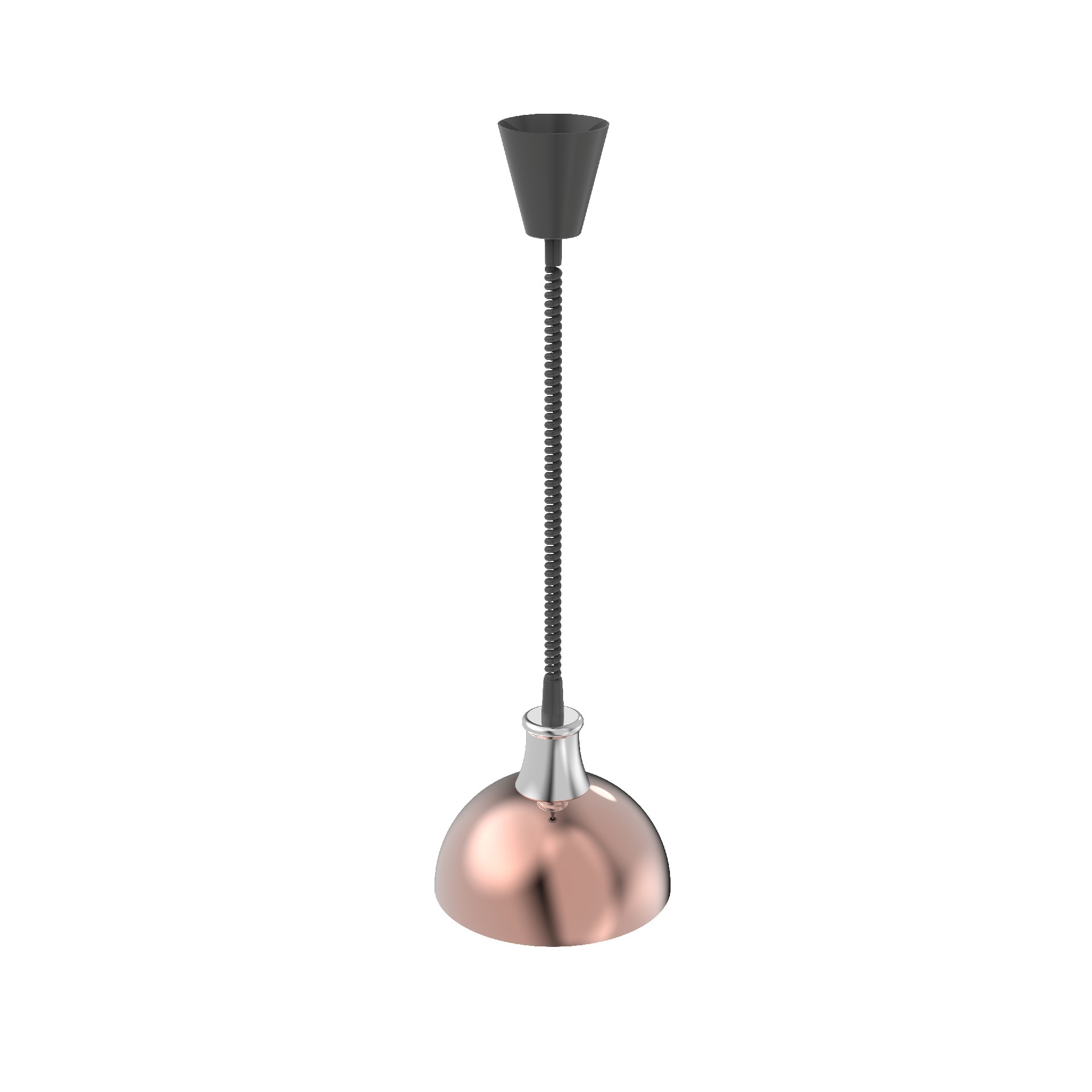
Ceiling-Mounted Rose Gold Buffet Heat Lamp
BAVA Ceiling-Mounted Rose Gold Buffet Heat Lamp. Single-head pendant lamp with rose gold dome, coiled cord height adjustment, matte black canopy. Models BJ1001/BJ1002. CE certified. Ideal for hotel buffets and upscale catering.
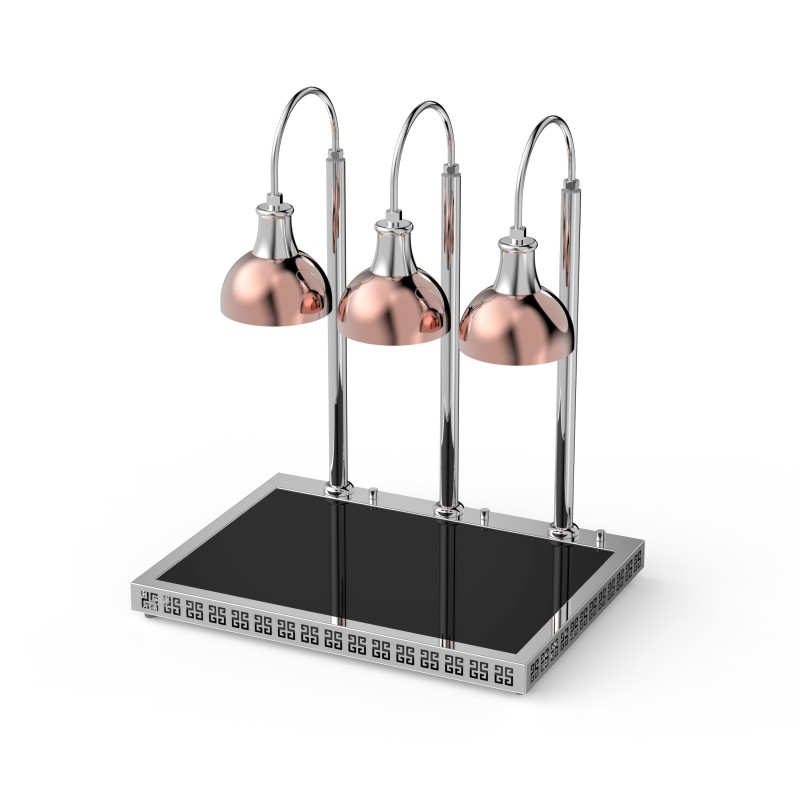
Three-Head Rose Gold Buffet Heat Lamp Station
BAVA Three-Head Rose Gold Buffet Heat Lamp Station. Three rose gold dome lamps in linear arrangement over black glass warming surface. Greek key decorative base pattern. BJ663T adds adjustable glass shelf. Premium hotel buffet design. CE certified.
Related Articles
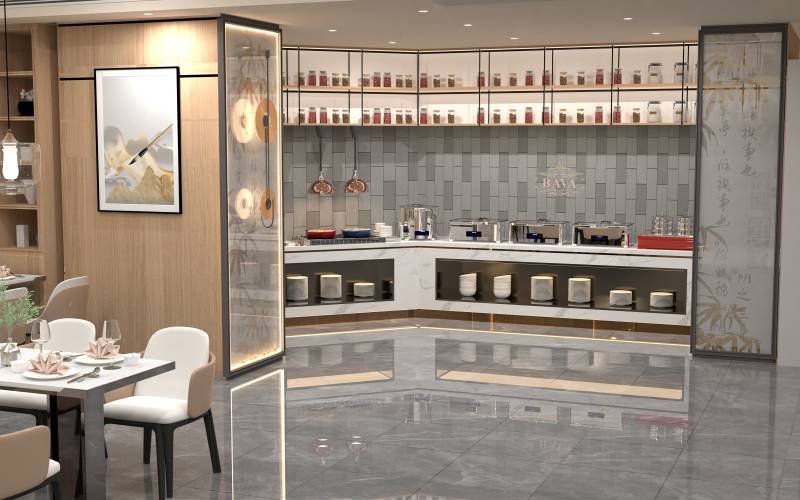
Electric Buffet Warmer with Adjustable Thermostat for Restaurants
Discover the best Electric Buffet Warmer with Adjustable Thermostat for Restaurants solutions. Real ...
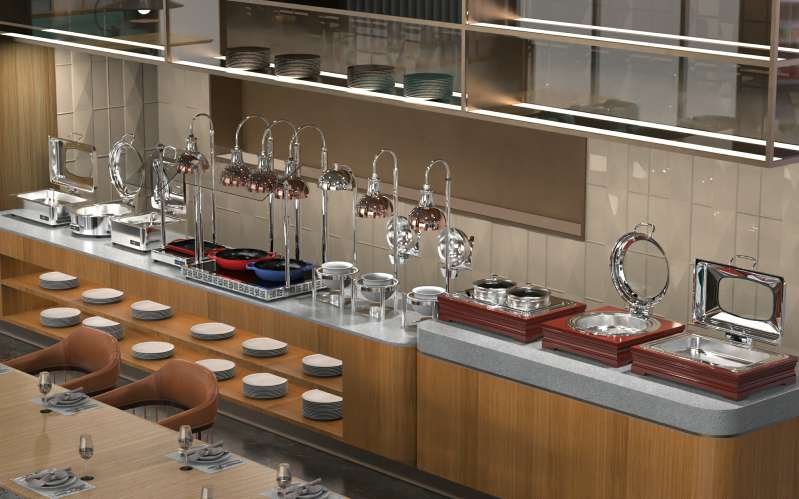
Mini Chafing Dish for Breakfast Buffet & Condiment Stations
Discover the best Mini Chafing Dish for Breakfast Buffet & Condiment Stations solutions. Real case s...
9QT Extra-Large Chafing Dish for Large-Scale Banquet Events
Discover the best 9QT Extra-Large Chafing Dish for Large-Scale Banquet Events solutions. Real case s...
Wall-Mounted Buffet Stove for Space-Saving Kitchen Layouts
Discover the best Wall-Mounted Buffet Stove for Space-Saving Kitchen Layouts solutions. Real case st...
Stainless Steel Food Warmer for Supermarket Deli Departments
Discover the best Stainless Steel Food Warmer for Supermarket Deli Departments solutions. Real case ...
Commercial Chafer Dish with Temperature Control for Food Safety
Discover the best Commercial Chafer Dish with Temperature Control for Food Safety solutions. Real ca...