
How to Choose the Right Food Heat Lamp for Your Business
Selecting the appropriate food heat lamp for a commercial operation requires balancing multiple factors including the type of food being served, the physical layout of the service area, the volume of food that needs to be maintained at safe temperatures, and budget constraints that affect equipment purchasing decisions. The right heat lamp configuration can maintain food quality and safety throughout service periods, while an unsuitable choice creates ongoing challenges with temperature maintenance, equipment durability, and staff frustration. This guide walks through the key decision factors that help food service operators identify the heat lamp configuration best suited to their specific operational requirements.
Assessing Your Food Holding Requirements
Volume and Display Size
The primary factor in heat lamp selection is the volume of food that must be held at safe temperatures simultaneously. A single-head heat lamp provides effective warming coverage for approximately one linear metre of food display, making it suitable for small buffets, limited menu items, or counter-service operations. Larger displays require multi-head configurations that provide sufficient total wattage and coverage area to maintain temperatures across the full display without cold spots at the edges.
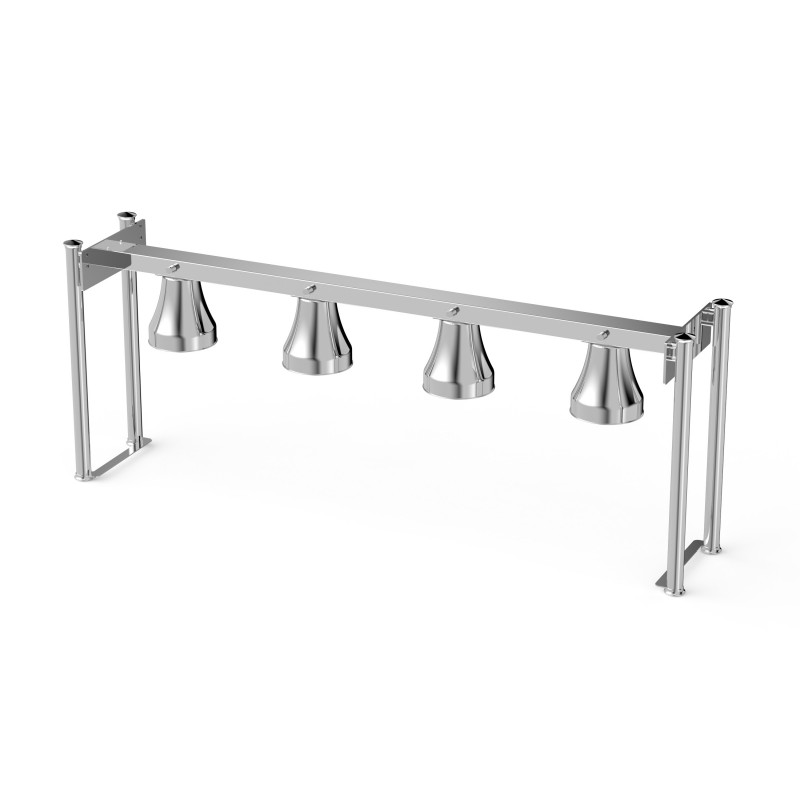
The Stainless Steel Buffet Heat Lamp Rack with its four-lamp overhead configuration covers substantially greater display area than single or dual-head units, making it appropriate for larger buffet setups, banquet service lines, and operations where multiple food items require simultaneous holding. The extended coverage of four-head configurations eliminates the compromise of partial display warming where some food items remain at safe temperatures while others cool into the danger zone.
Food Types and Temperature Needs
Different food types require different holding temperatures and have different heat transfer characteristics that influence lamp selection. Dense protein dishes require higher temperatures and longer heat-up times than lighter preparations, making units with greater wattage and enclosed warming surfaces more effective for meat and poultry holding. Delicate items like sauces and soups need gentler heat that prevents surface scorching while maintaining liquid temperatures, making pendant-mounted units with adjustable height particularly valuable for these applications.
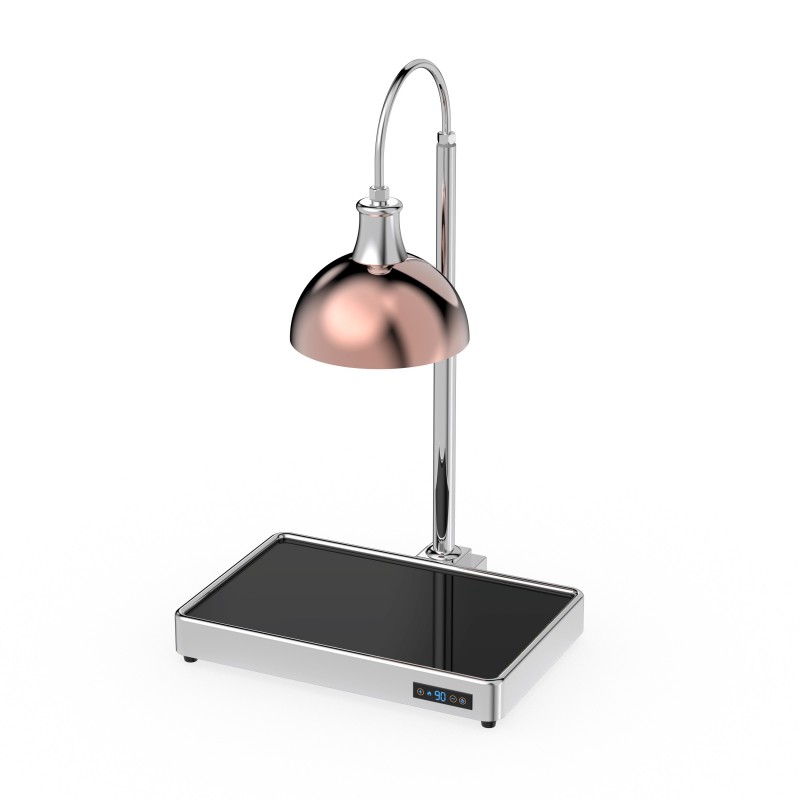
The dual-zone heating of the Single-Head Rose Gold Buffet Heat Lamp addresses the variable temperature needs of different food types by combining overhead infrared radiation with thermostatic base plate warming. This combination maintains appropriate temperatures for both solid foods on the warming surface and liquid preparations in vessels that benefit from even radiant heat from above, making it versatile for operations with diverse menu offerings.
Service Period Duration
Operations with extended service periods face greater heat lamp challenges than those with brief service windows. Each hour of holding time increases the risk of temperature drift as ambient conditions change and food mass gradually loses moisture to the warming environment. Units with thermostatic temperature control actively compensate for these gradual changes, maintaining target temperatures throughout extended service periods without the manual adjustment required by non-thermostatic units.
Understanding Lamp Configurations
Freestanding Countertop Units
Freestanding countertop heat lamps position the warming source at table or counter height, making them immediately accessible for staff loading and monitoring while occupying minimal floor space. These units are appropriate for operations where food is held at individual service stations, where space constraints prevent larger installations, or where flexibility to move equipment between locations is valuable. Countertop units typically serve one to three food items depending on the specific model and the size of individual portions.
The Stainless Steel Heat Lamp-BJ10 exemplifies the countertop configuration with its polished stainless steel finish, height-adjustable post, and weighted base that provides stability on counter surfaces. The bell dome shade directs infrared radiation downward onto food surfaces while the height-adjustable post allows operators to set the optimal warming height for different food types and portion sizes. This flexibility makes countertop units suitable for operations with variable menu offerings that require different warming configurations throughout the day.
Gantry and Rack Configurations
Multi-head gantry configurations mount multiple lamp heads on a freestanding frame that spans the width of food display counters, providing consistent warming coverage across extended display areas. Gantry units typically support two to four lamp heads on adjustable arms that allow positioning to match specific display configurations. The overhead frame design keeps the floor clear while positioning warming elements directly above food items at the optimal height for heat transfer.
The Stainless Steel Buffet Heat Lamp Rack extends the gantry concept with its four-lamp stainless steel frame, providing the coverage area needed for large buffet configurations and banquet service lines. The stainless steel construction provides durability appropriate for commercial environments where equipment is assembled, disassembled, and transported between locations. Additional accessories including angled lamp heads and sneeze guards extend the functionality of this base configuration for specific operational requirements.
Pendant and Ceiling-Mounted Units
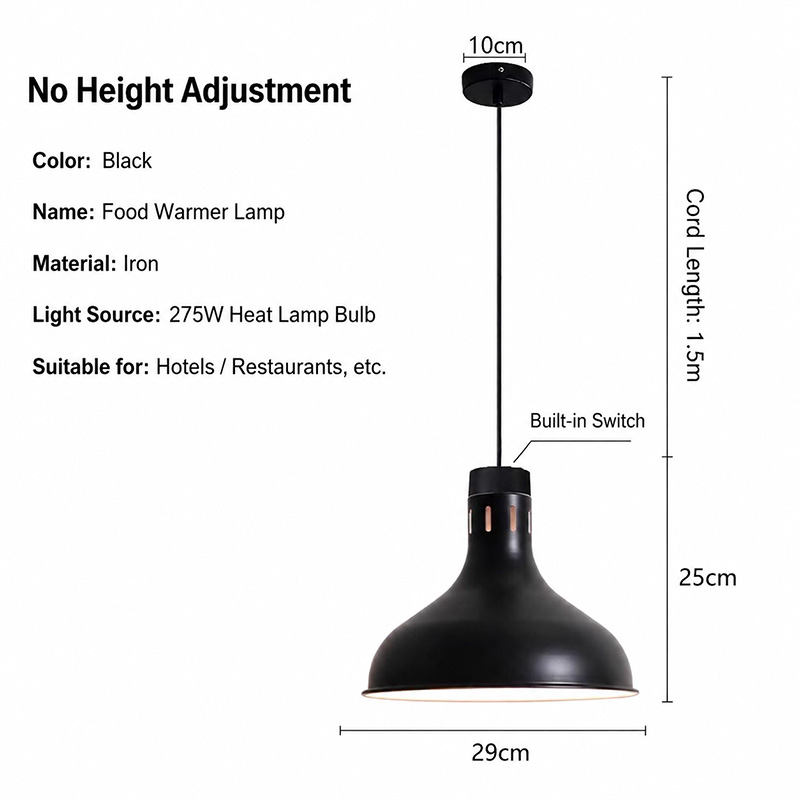
Pendant-mounted heat lamps hang from ceiling or overhead support structures, keeping the floor completely clear and providing an unobstructed view of the food display from all angles. These units are particularly appropriate for operations where aesthetic appearance is important, such as hotel breakfast buffets, fine dining banquet setups, and formal event catering where the heat lamp itself should not dominate the visual presentation.
Height adjustment in pendant units requires either lowering the lamp head or adjusting the mounting height, making these configurations most suitable for permanent installations where the mounting height can be set once and left for extended periods. Coiled cord mechanisms in some pendant designs allow in-service height adjustment without tools, providing flexibility that partially compensates for the fixed-mounting limitation.
Key Technical Specifications
Wattage and Heating Capacity
Total wattage determines the heat output available to maintain food temperatures and must be matched to the display size and ambient conditions of the specific installation. Underpowered lamps struggle to maintain safe temperatures in large displays, during busy service periods with frequent door opening, or in cold ambient conditions. Oversized units waste energy and may create excessive surface drying on food items. Calculating the required wattage involves estimating the total food mass, the display opening size, and the expected frequency of service interruptions.
Temperature Control Features
Units with thermostatic temperature control actively regulate heating output to maintain target temperatures regardless of ambient variations or food load changes. This automation reduces the need for staff monitoring and adjustment while providing more consistent temperature maintenance than fixed-output units. Digital thermostat displays in premium units allow precise temperature setting and monitoring, providing visibility into the thermal environment that supports food safety documentation.
Construction Materials and Durability
Commercial heat lamps face demanding use conditions including repeated assembly and transportation, exposure to food soils and cleaning chemicals, and extended operational hours. Stainless steel construction provides the durability and corrosion resistance required for commercial environments, with polished finishes offering easier cleaning and enhanced aesthetic appeal. The polished mirror stainless steel of the Stainless Steel Heat Lamp-BJ10 balances durability with visual presentation for operations where the heat lamp is visible to customers in front-of-house service areas.
Matching Configuration to Operation Type
Hotels and Hospitality
Hotel breakfast and banquet operations typically feature multiple food types including proteins, starches, vegetables, and sauces, requiring flexible warming solutions that can accommodate different holding temperatures and food presentations. The aesthetic appearance of heat lamps in hospitality environments matters more than in back-of-house operations, making rose gold and polished stainless steel finishes particularly appropriate for these applications. Pendant-mounted units with their unobtrusive profile complement formal dining presentations, while gantry configurations provide the coverage needed for extended breakfast buffets.
Contract Catering and Events
Contract catering operations that set up and dismantle equipment at different venues require portable and modular heat lamp configurations that can be efficiently transported and configured. Countertop units with integrated warming surfaces offer the greatest portability, while gantry configurations provide rapid deployment for larger events where multiple metres of food display require simultaneous coverage. The durability of stainless steel construction becomes particularly important in contract applications where equipment undergoes repeated handling and transportation.
Quick Service Restaurants
Quick service operations with limited display windows and rapid turnover benefit from compact heat lamp configurations that provide focused warming for a small number of items. Countertop single-head units or small gantry configurations with two heads provide sufficient capacity for typical quick service display sizes without the excess capacity of larger configurations. Fast response to demand changes in quick service environments makes thermostatic control particularly valuable, as it eliminates the temperature adjustment work that staff would otherwise need to perform during busy periods.
Budget Considerations
Initial Purchase Cost
Heat lamp prices range from basic single-head units available at modest cost to premium multi-head configurations with advanced temperature control features. Initial purchase cost should be evaluated against the operational requirements of the specific application, as purchasing undersized equipment creates ongoing performance problems while purchasing over-specified equipment wastes capital on features that will not be used. The lowest-priced option is rarely the most cost-effective when total cost of ownership including performance issues and premature replacement is considered.
Operating Costs
Electricity consumption over the operational lifetime of heat lamp equipment represents a significant ongoing cost that should factor into purchasing decisions. Units with thermostatic control reduce energy consumption by reducing output when ambient temperatures rise or food loads decrease, providing savings that compound over the equipment lifespan. Higher-wattage units consume more electricity per hour of operation, making the choice of appropriately-sized equipment rather than oversized equipment an ongoing cost management consideration.
Maintenance and Replacement
Equipment with accessible designs that facilitate element replacement and regular cleaning reduces maintenance costs and extends effective service life. Units with proprietary element designs that require sourcing from specific distributors may incur higher ongoing maintenance costs than those using standard-format elements available from multiple suppliers. Building a parts and consumables inventory appropriate to your equipment fleet reduces maintenance response times and operational disruptions from equipment downtime.
Comparison of Key Configurations
The following comparison summarises the primary characteristics of the three heat lamp configurations to guide selection decisions.
| Feature | Countertop Unit | Gantry/Rack (4-head) | Pendant/Ceiling |
|---|---|---|---|
| Coverage area | 1-2 food items | Extended display (2m+) | Variable by height |
| Floor space | Minimal footprint | Full footprint required | No floor footprint |
| Portability | High (easy to move) | Moderate (partial assembly) | Low (fixed installation) |
| Aesthetic impact | Moderate (visible equipment) | High (large frame visible) | Low (minimal profile) |
| Temperature control | Varies by model | Available on premium models | Thermostatic on premium |
| Best for | Small displays, flexibility | Large buffets, banquets | Hospitality, formal events |
| Setup complexity | Minimal (plug and use) | Moderate (assembly required) | High (ceiling mount) |
Making the Final Decision
Consulting with Suppliers
Heat lamp suppliers with experience across multiple operation types can provide valuable guidance on configuration selection for specific applications. Describe your operation including food types, display size, service period duration, ambient conditions, and available space to enable informed recommendations. Request demonstrations where possible, as seeing equipment in operation provides insights that specifications alone cannot convey about noise levels, heat output, and visual appearance.
Phased Implementation
For operations planning major food service equipment investments, phased implementation allows learning from initial deployments before committing to larger purchases. Starting with one or two units of a candidate configuration allows staff to develop proficiency with the equipment and identify any operational challenges before scaling the deployment across the full operation. This approach reduces the risk of large-scale purchases of equipment that proves unsuitable for the specific operational context.
Conclusion
Choosing the right food heat lamp requires systematic assessment of operational requirements against available configurations, with attention to the interaction between display size, food types, service duration, and budget constraints. Countertop units like the Stainless Steel Heat Lamp-BJ10 provide flexible warming for smaller displays and operations requiring equipment portability. Extended gantry configurations like the Stainless Steel Buffet Heat Lamp Rack address large buffet and banquet requirements where multiple metres of food display require simultaneous coverage. Premium dual-zone units like the Single-Head Rose Gold Buffet Heat Lamp provide the temperature precision needed for operations with diverse food types that require different holding approaches. Taking time to accurately specify requirements before purchasing avoids the performance problems and premature replacement costs that result from undersized equipment and ensures that the selected configuration provides reliable service throughout its operational lifespan.
Featured Products
Stainless Steel Buffet Heat Lamp Rack
BAVA Stainless Steel Buffet Heat Lamp Rack. 4-lamp overhead system in stainless steel. Models: BJ604 (basic), BJ604B (angled), BJ604B-G (copper/gooseneck), BJ604C (sneeze guard). Freestanding gantry design. CE certified.
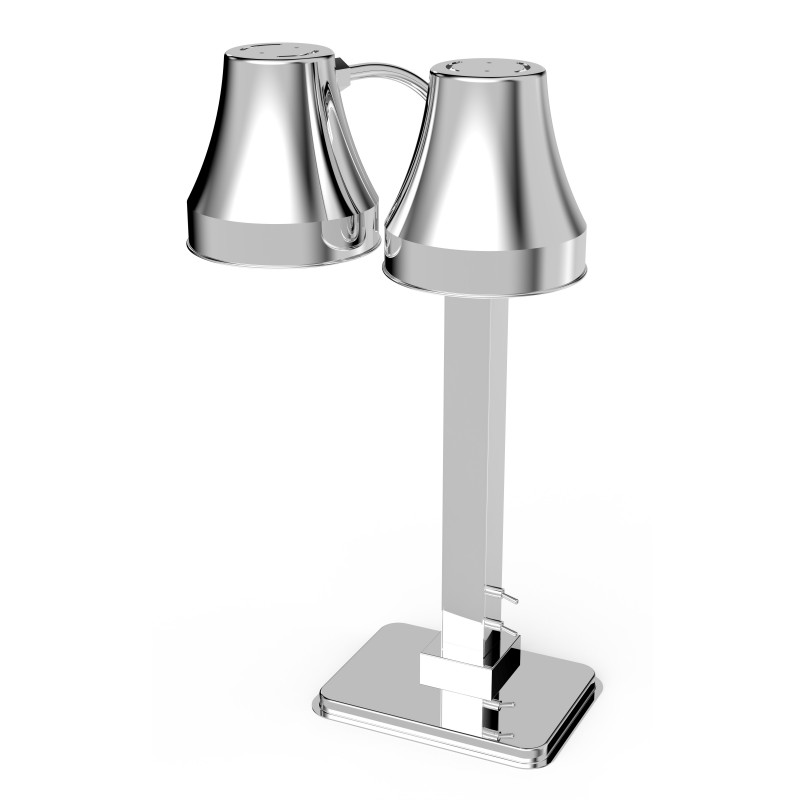
Stainless Steel Heat Lamp-BJ10
BAVA Stainless Steel Heat Lamp BJ10 Series. Freestanding countertop design with polished mirror SS, bell dome shade, height-adjustable post, weighted base. Available in single-head (BJ10/BJ101) and dual-head (BJ102). CE certified.
Single-Head Rose Gold Buffet Heat Lamp
BAVA Single-Head Rose Gold Buffet Heat Lamp. Dual-zone heating with infrared lamp and thermostatic base plate. Polished stainless steel + rose gold finish. Models BJ1631/BJ1831T. Ideal for hotel buffets and catering.
Related Articles
Electric Buffet Warmer with Adjustable Thermostat for Restaurants
Discover the best Electric Buffet Warmer with Adjustable Thermostat for Restaurants solutions. Real ...
Mini Chafing Dish for Breakfast Buffet & Condiment Stations
Discover the best Mini Chafing Dish for Breakfast Buffet & Condiment Stations solutions. Real case s...
9QT Extra-Large Chafing Dish for Large-Scale Banquet Events
Discover the best 9QT Extra-Large Chafing Dish for Large-Scale Banquet Events solutions. Real case s...
Wall-Mounted Buffet Stove for Space-Saving Kitchen Layouts
Discover the best Wall-Mounted Buffet Stove for Space-Saving Kitchen Layouts solutions. Real case st...
Stainless Steel Food Warmer for Supermarket Deli Departments
Discover the best Stainless Steel Food Warmer for Supermarket Deli Departments solutions. Real case ...
Commercial Chafer Dish with Temperature Control for Food Safety
Discover the best Commercial Chafer Dish with Temperature Control for Food Safety solutions. Real ca...