
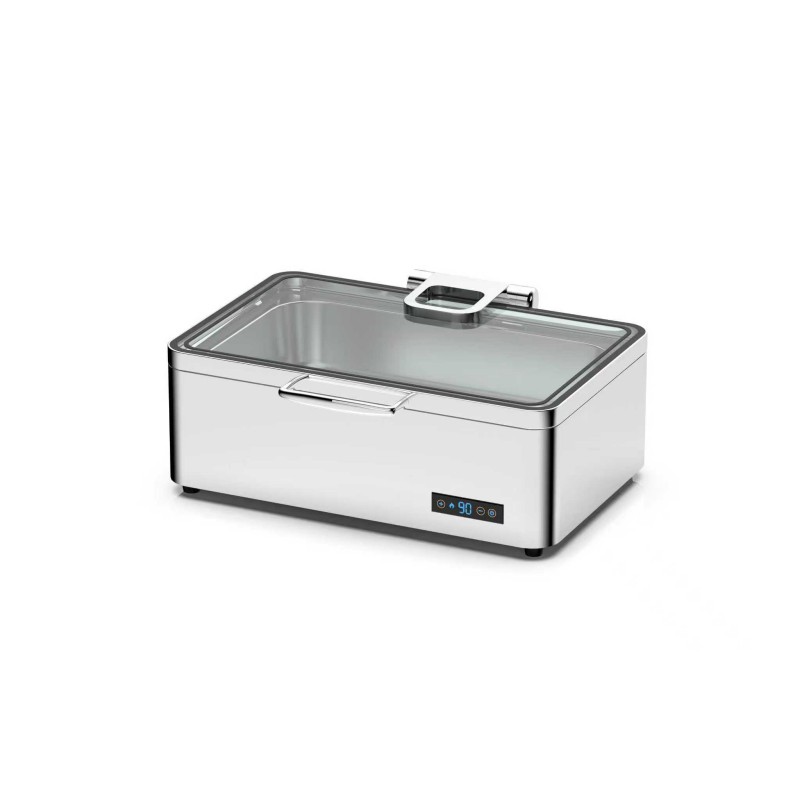
How to Clean a Commercial Chafing Dish: Step-by-Step Guide
Short answer: cool the unit for at least 10 minutes, empty the water pan, wash all parts in 45-55 °C detergent water, rinse, descale the water pan weekly with a 1:10 vinegar solution, then dry every part within 5 minutes. Never submerge an electric base. Full care routines for every model in our chafing dish range.
The nine steps, in order
Cleaning a chafer is mostly about order of operations. Doing the steps out of sequence is what causes streaked stainless, wet bases and water scale that takes an hour to remove later.
| Step | Action | Time | Common mistake |
| 1 | Extinguish fuel safely, close the lid | 1 min | Carrying a lit or hot unit |
| 2 | Cool for 10 min, then pour out water | 10 min | Pouring boiling water into a sink |
| 3 | Lift out food pan and lid, scrape residue | 3 min | Using steel wool on the polished face |
| 4 | Wash in 45-55 °C detergent water | 5 min | Water too cool to cut grease |
| 5 | Rinse in clean hot water | 2 min | Leaving detergent film that streaks |
| 6 | Descale the water pan weekly | 15 min soak | Scrubbing dry scale with an abrasive |
| 7 | Sanitise food-contact surfaces | 2 min | Sanitising a surface that is still greasy |
| 8 | Dry with a lint-free cloth within 5 min | 3 min | Air-drying, which leaves spotting |
| 9 | Store lid-open or stacked with a liner | 2 min | Stacking wet, which traps moisture |
Step 2 is the one most kitchens skip, and it is the reason stainless eventually looks grey. Pouring boiling water down a drain also risks scalding and can damage PVC pipework over time.
Step 8 matters more than it seems. Water left to evaporate on a 60 °C surface deposits the minerals it carries, and those deposits become the scale you later remove with acid.
Chemicals: what is safe on each part
Chafers mix polished stainless, sometimes mirrored finishes, and in electric models an aluminium or coated well. Not every cleaner is safe on all three.
| Part | Safe | Avoid | Why |
| Food pan (304 stainless) | Detergent, degreaser, vinegar, citric acid | Bleach over 200 ppm for long soaks | Chloride pitting |
| Water pan | Descaler, citric acid, vinegar | Abrasive pads on the polished face | Scratches hold more scale |
| Lid and frame (mirror finish) | Detergent, microfibre, stainless polish | Steel wool, scouring powder | Permanent dulling |
| Rolled-gold or coated finish | pH-neutral detergent only | Any acid or alkali above pH 9 | Finish lifts and clouds |
| Electric base | Damp cloth, exterior only | Immersion, hose, dishwasher | Electric shock and element failure |
| Fuel holder | Detergent, soft brush | Soaking in water overnight | Corrosion of the spring mechanism |
Bleach deserves special mention. At sanitiser strength (50-200 ppm) and short contact time it is fine on stainless. Left in a pan overnight, chloride attack produces the small brown pits that operators mistake for rust.
How often, and who does it
Frequency depends on service hours, but the pattern below holds for most operations and is easy to audit.
| Task | Frequency | Who | Record |
| Empty, wash, dry | After every service | Kitchen porter | Closing checklist |
| Descale water pan | Weekly, or daily in hard water | Porter | Weekly sheet |
| Check lid hinge and stay | Weekly | Maintenance | Log |
| Polish mirrored surfaces | Monthly | Stewarding | None |
| Inspect electric cord and plug | Monthly | Competent person | PAT / safety log |
| Full strip and deep descale | Quarterly | Maintenance | Asset log |
In hard-water areas above 200 ppm calcium carbonate, move descaling to daily. The half-hour saved each week is small next to the two hours spent restoring a scaled pan.
Detergent dosing and water temperature
Two variables decide whether a wash actually removes grease: concentration and temperature. Most kitchens overdose detergent and underheat the water, and the two errors cancel each other out into poor results and streaked steel.
| Water temperature | Detergent dose per 10 L | Result on grease | Risk |
| Below 35 °C | 40-60 ml | Poor, grease smears | Rewash needed |
| 35-45 °C | 30-40 ml | Adequate | Slow on baked-on film |
| 45-55 °C | 20-30 ml | Good | None at this dose |
| 55-65 °C | 15-25 ml | Excellent | Scald risk without gloves |
| Above 65 °C | Per label | Excellent but protein sets | Protein bakes onto the surface |
Note the last row: very hot water sets protein rather than removing it, which is why egg residue is easier to clean in warm water than in hot. Dose by measure, not by eye, and the wash becomes predictable.
Frequently Asked Questions
Can I put chafing dish parts in a dishwasher?
Food pans and water pans, yes, in most stainless models. Mirror-polished lids and any gold or coated finish, no: dishwasher detergent is alkaline enough to dull them within 20-30 cycles.
How do I remove the brown film inside the water pan?
That is scale, not rust. Soak for 15-30 minutes in a 1:10 vinegar solution or a citric acid descaler at 60 °C, then rinse. It should lift without scrubbing.
Why does my stainless look dull after washing?
Usually detergent residue dried on the surface, or a scouring pad on a polished face. Rinse thoroughly, dry immediately, and switch to a non-scratch pad.
How long does cleaning one chafer take?
Budget 8-12 minutes including cooling, and about 4 minutes if the water pan is already descaled and only needs washing and drying.
What should never go near a chafer?
Steel wool, oven cleaner, bleach soaks, and immersion of any electric component. Those four cause most of the cosmetic damage seen on rental fleets.
Related reading
Related Articles

How Many Chafing Dishes Do You Need Per 50 Guests?
Plan 1 full-size chafer per 25-30 guests for each entree and 1 per 35-40 for sides. Includes a guest...

How Long Can Food Stay Under a Heat Lamp? The 4-Hour Rule
Food can stay under a heat lamp for up to 4 hours if it stays above 135°F (57°C); quality usually ...

How Much Does a Commercial Chafing Dish Cost? 2026 Price Ranges
Wholesale chafing dishes run $22-55 for 201 fuel units, $45-90 for 304 stainless, $65-180 for electr...

What Size Food Pan Fits a Full-Size Chafing Dish? GN Sizes Explained
A full-size chafer takes one GN 1/1 pan (530 x 325 mm), or two GN 1/2, or three GN 1/3. Includes ful...
Is Food Under a Heat Lamp Safe? A Straight Answer
Food under a heat lamp is safe when three conditions are met: above 135°F (57°C), under 4 hours, a...

How Much Water Goes in a Chafing Dish Water Pan?
Fill a full-size water pan with 1.5-2.5 L of hot water to about two-thirds depth, keeping the level ...