
How Long Can Food Stay Under a Heat Lamp? The 4-Hour Rule
Short answer: food can stay under a heat lamp for up to 4 hours when it is not otherwise temperature controlled, provided the food itself stays at or above 135°F (57°C). In practice quality falls first: fries and fried chicken are past their best after 15–25 minutes, sliced meat after 20–30 minutes. Set up your lamp correctly and the clock stops running — see our commercial food heat lamps.
Two clocks are running at once
| Clock | Limit | What it governs |
| Safety clock (FDA Food Code) | 4 hours without active temperature control | Legal discard point for hot-held TCS food |
| Temperature clock | Food must stay ≥ 135°F (57°C) | If held above this, the safety clock does not run |
| Quality clock | 15–45 min depending on the product | Crispness, colour, moisture — what guests actually judge |
Keeping the lamp at the right height is what keeps all three pointing the right way. A 250 W bulb usually sits 30–45 cm (12–18 in) above the food.
Hold-time limits by food type
| Food | Regulatory max | Recommended quality window | What happens next |
| French fries, onion rings | 4 h | 15–25 min | Loses crispness, then goes limp |
| Fried chicken, breaded items | 4 h | 20–30 min | Coating softens as steam escapes upward |
| Carved roast beef, turkey | 4 h | 20–30 min per plate | Slices dry and darken; replace from the chafer |
| Pizza slices | 4 h | 30–45 min | Cheese oils out |
| Pastries, croissants, waffles | 4 h | 20–30 min | Dries and toughens |
| Rice, pasta, sauced dishes | 4 h | use a chafer instead | Radiant heat dries the surface 1–3% per 10 min |
How to extend the window without breaking the rules
- Stage, don't stack. Keep bulk product in a covered chafing dish and put small batches of the plated item under the lamp.
- Turn and rotate every 15 minutes so one side does not take all the radiant load.
- Probe the thickest part hourly — target 140–150°F (60–65°C), never below 135°F (57°C).
- Raise the lamp rather than lowering the power when holding for long periods; lowering wattage often drops the surface below the safe line.
- Watch for a dry line at the edges — that is your signal to rotate, roughly 1–3% surface moisture loss every 10 minutes.
What the numbers look like in service
A hotel carving station running for three hours should replace plated slices roughly five to six times, drawing each batch from a chafer held above 135°F (57°C). A lunch buffet holding fries under a single 250 W lamp should refresh every 20 minutes, which is about nine batches in a three-hour service. Neither is wasteful if the backup capacity is smaller than you think — one 4-qt pan (3.8 L) is enough to replenish most lamp stations for 30 minutes.
When to throw it away
- Four hours have elapsed without verified temperature control.
- You cannot produce a temperature log for that pan.
- Product temperature measured below 135°F (57°C) for more than 2 hours (reheat to 165°F / 74°C within 2 hours, or discard).
- Fresh food was added to food already on hold — the combined batch takes the oldest timestamp.
How the rule reads in different markets
| Framework | Hot holding rule | Practical effect |
| US FDA Food Code | 135°F (57°C) minimum; 4 hours maximum without active control | Industry standard most operators follow |
| UK / EU guidance | Hold at or above 63°C (145°F) | Slightly higher target; export buyers should be told |
| Common operator practice | Target 140–150°F (60–65°C) | Built-in margin for lid openings and queue peaks |
| Australia / NZ | Above 60°C (140°F), below 5°C for cold | Same discipline, different numbers |
If you sell equipment internationally, state all three thresholds on your specification sheet. Buyers in Europe will otherwise assume your electric thermostat cannot reach their required 63°C, when in reality most units comfortably hold 140–165°F (60–74°C).
Setting up the station so the rule works for you
Most 4-hour failures are setup failures: the food started cold, the lamp was too far away, or the pan sat outside the heated footprint. Mount a single 250 W head 30–45 cm above a 600 × 400 mm area, preheat all pans, and verify with a probe before service. Keep backup product in a covered chafing dish above 135°F (57°C) so every refresh starts hot rather than dragging the whole station down.
Frequently Asked Questions
How long can food stay under a heat lamp before it must be thrown out?
Four hours maximum without active temperature control under FDA Food Code. If the food is verified at 135°F (57°C) or above throughout, it can be held longer, though quality will have dropped well before then.
Does a heat lamp count as temperature control?
Yes, if you can demonstrate the food stayed at 135°F (57°C) or above — which means hourly probe logs. Without logs, most inspectors treat the pan as uncontrolled and start the 4-hour clock.
Can I hold food under a lamp overnight?
No. Quality and safety both fail long before that; cool, store correctly and reheat to 165°F (74°C) for service.
Do I need to cover food under a heat lamp?
No — covering traps steam and undoes the point of radiant heat. Cover only when you move the item off the lamp station.
How many batches per hour are realistic?
Two to three. That pace keeps surface moisture above acceptable levels while staying well inside both clocks.
Related reading
Related Articles
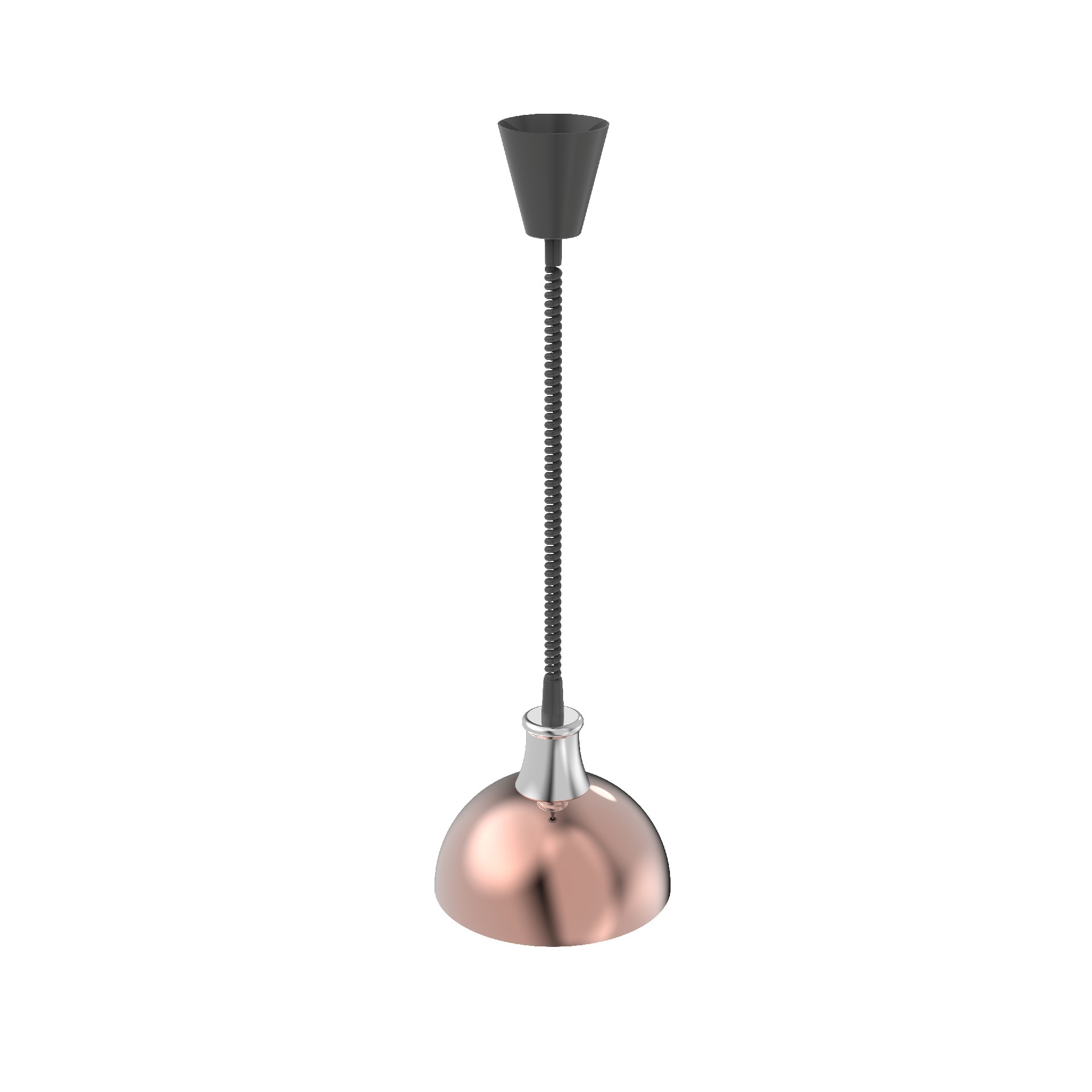
How Long Can Food Stay Under a Heat Lamp? The 4-Hour Rule
Food can stay under a heat lamp for up to 4 hours if it stays above 135°F (57°C); quality usually ...
Is Food Under a Heat Lamp Safe? A Straight Answer
Food under a heat lamp is safe when three conditions are met: above 135°F (57°C), under 4 hours, a...
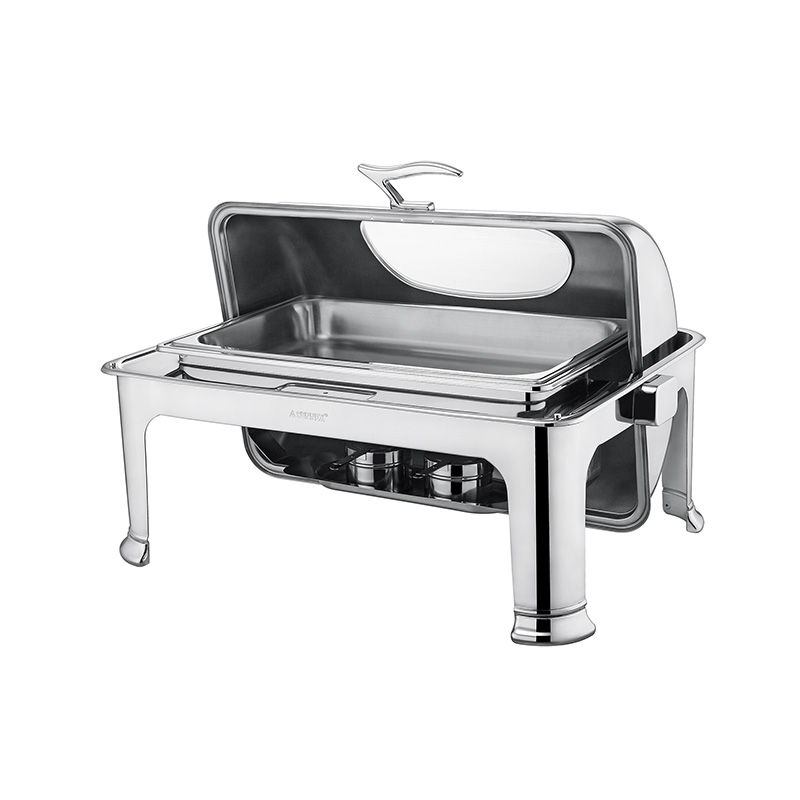
How to Choose the Right Chafing Dish for Your Buffet
Choose the right chafing dish in 6 steps: fuel vs electric, shape, quart size, gauge and lid type. I...
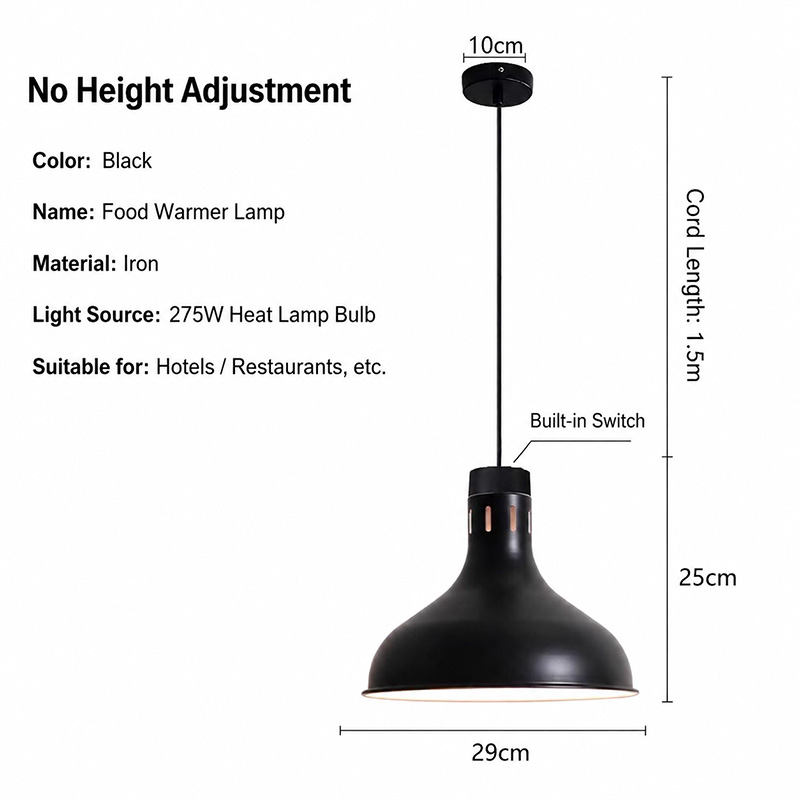
Does a Heat Lamp Produce Radiation? What It Really Emits
A heat lamp emits infrared radiation, which is non-ionizing: photon energy around 0.9–1.6 eV versus...
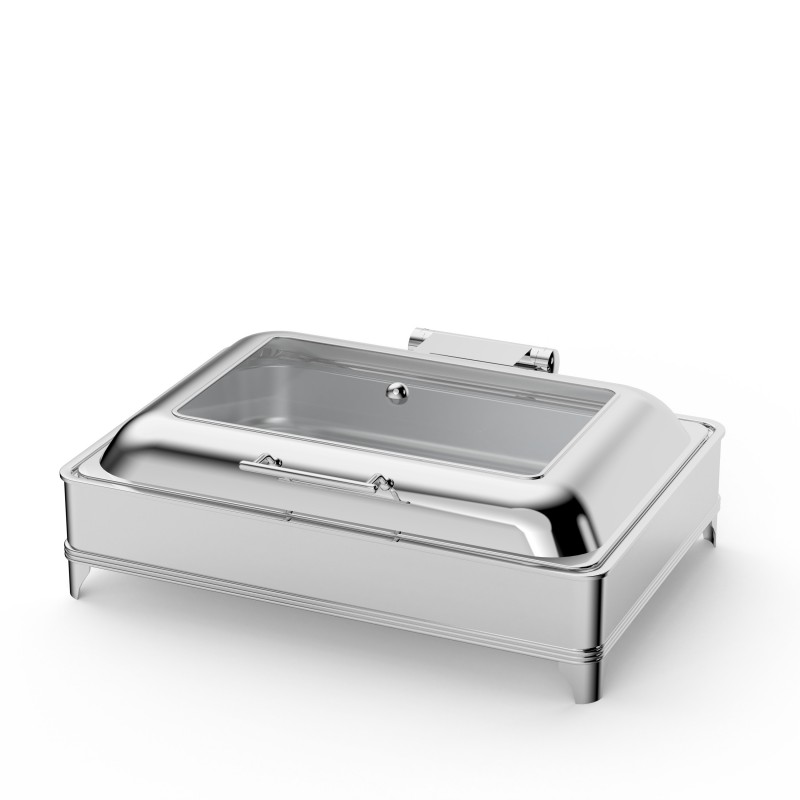
304 vs 201 Stainless Steel: Which Alloy for Buffet Equipment?
304 (18/8) costs 20–40% more than 201 and resists rust far better because of its 8% nickel; 201 swa...
Chafing Dish Fuel vs Electric: Which Should You Use?
Electric chafing dishes cost about $0.06 per hour to run; canned fuel costs $0.60–1.50. Compare ene...