
Related Products
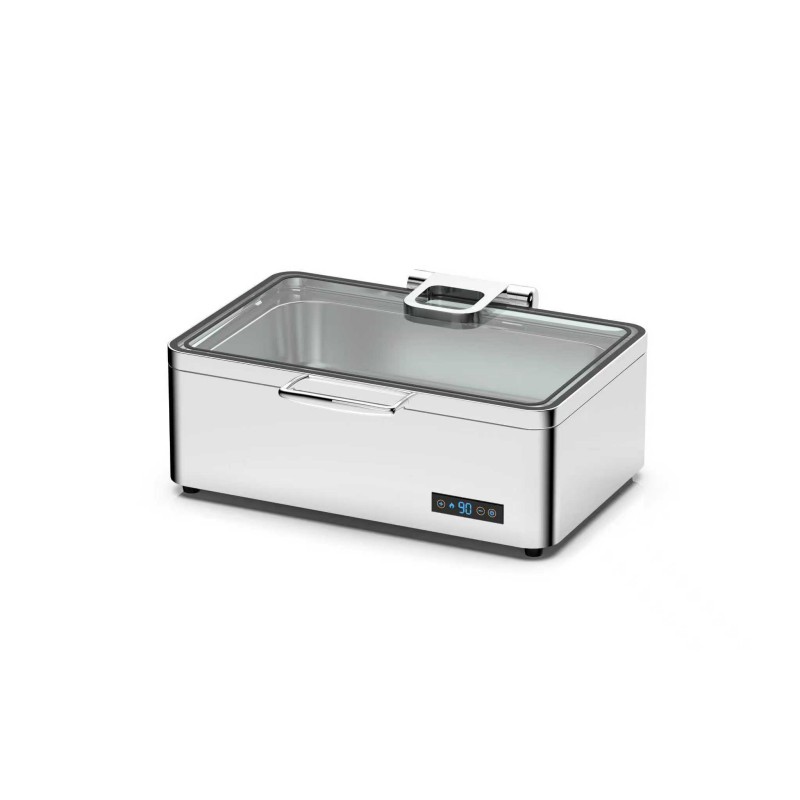
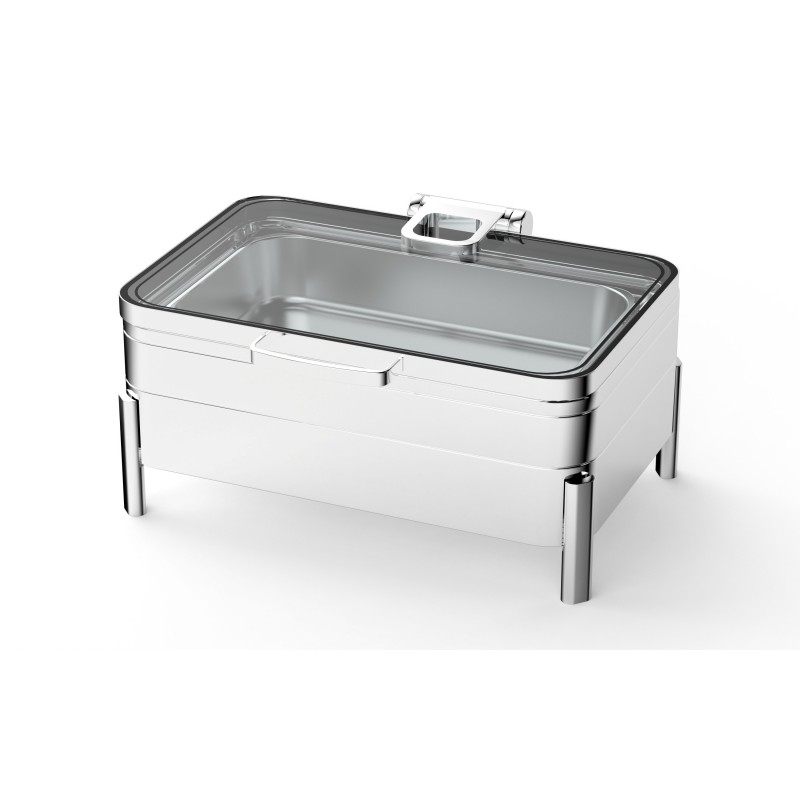
Chafing Dish Fuel vs Electric: Which Should You Use?
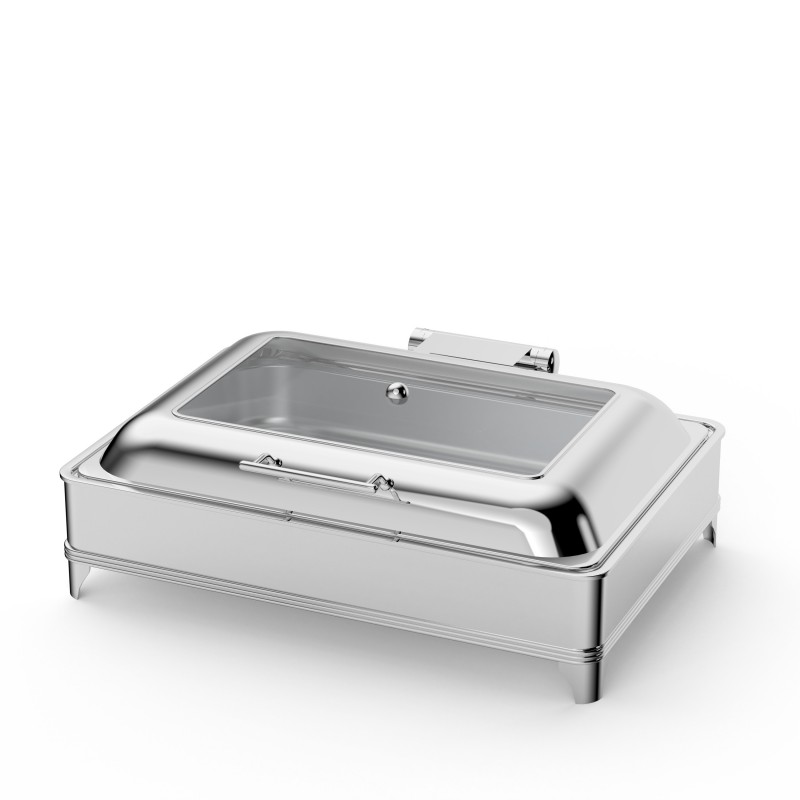
Short answer: an electric chafer costs about $0.06 per service hour (400 W at $0.15/kWh) while canned fuel costs $0.60–1.50 per hour. Fuel wins where there is no mains power or where you move stations; electric wins once a station runs more than roughly 150 service hours a year. Compare both types in commercial chafing dish configurations.
Cost per service hour, worked honestly
| Cost driver | Electric chafer | Fuel chafer (canned gel) |
| Power / consumable | 400 W typical (300–500 W) | 1 can per 2 hours |
| Unit price | $0.15 per kWh | $1.20–3.00 per can |
| Running cost per hour | $0.045–0.075 | $0.60–1.50 |
| Heat-up with hot water | 12–18 min to 140°F (60°C) | 15–25 min to 140°F (60°C) |
| Attention during service | Thermostat holds, occasional stir | Re-light, swap cans, watch flame |
| Fire and burn risk | Low | Open flame, hot can handling |
Energy is only part of the picture. Two staff minutes saved per pan per service is worth more than the electricity at most wage rates, so count the labour.
Break-even by how often you serve
| Service hours per year | Electric running cost | Fuel running cost | Verdict |
| 50 (a few weddings) | $3.75 | $45 | Electric still cheaper, but the capital cost may not pay back |
| 150 (weekly event) | $11 | $135 | Electric starts to pay for itself |
| 750 (daily lunch buffet, one pan) | $56 | $675 | Electric clearly wins |
| 1,500 (hotel breakfast line) | $113 | $1,350 | Electric; specify replaceable elements |
Add roughly $60–120 for the price gap between a comparable fuel and electric frame, and you recover it somewhere between 100 and 200 service hours.
Decision table: which one belongs on your line
| Situation | Choose | Reason |
| Fixed buffet with outlets every 2 m | Electric | Thermostat keeps 140–160°F (60–71°C) without staff babysitting |
| Off-site tent wedding | Fuel | No power, no cables on guest routes |
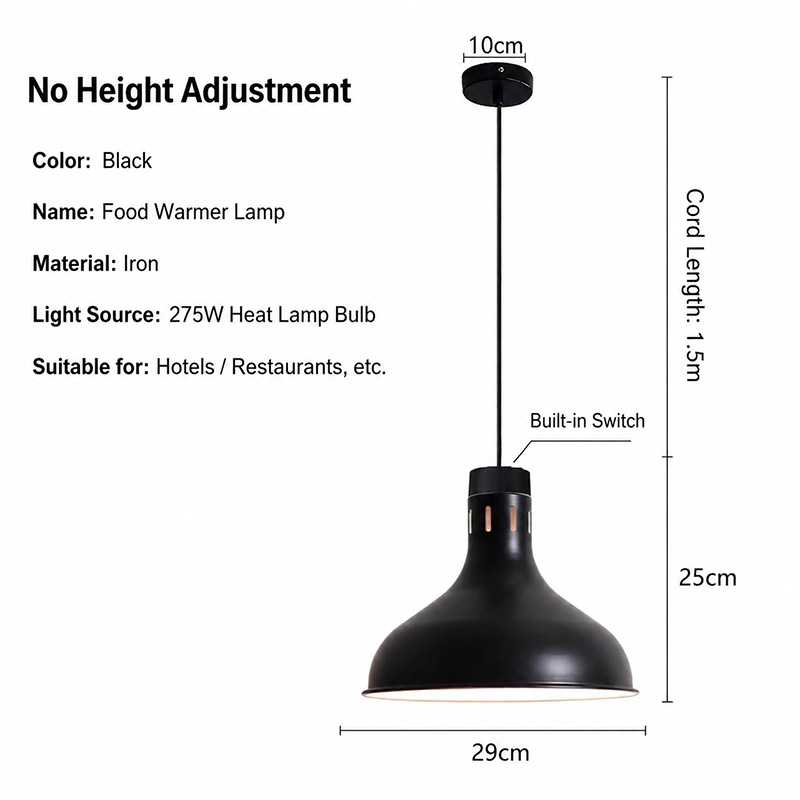
| Carving station in a hotel | Electric + overhead heat lamp | Lamp adds top heat, no drying from the pan rim |
| Outdoor winter service | Fuel with wind guard | Wind strips heat faster than most thermostats compensate |
| Induction-ready banquet suite | Electric induction model | Fast heat-up, no open flame permitted by the venue |
Fuel consumption maths
A standard 2-hour gel can delivers roughly 2,000–2,600 BTU/hour of usable heat. For one full-size pan held at 140°F (60°C), plan:
- 1 can per pan per 2-hour service window, plus 20% spares;
- 6-hour cans for long banquets — cheaper per hour but they cannot be extinguished and resealed safely mid-service;
- 1 extra can per pan if you start with cold water rather than hot.
Temperature behaviour you should test before buying
- Fill the water pan with hot water at 1 inch (2.5 cm).
- Load the food pan with a representative dish (not a dry pan test).
- Log internal food temperature at 15, 30 and 60 minutes.
- Open the lid for 20 seconds every 10 minutes to simulate real service.
- Accept only models that stay at or above 135°F (57°C) through step 4.
Hidden costs buyers forget to budget
The energy line is only half the story. Before you commit, price these five items into the comparison:
| Cost item | Electric | Fuel |
| Consumables per 1,000 service hours | $45–75 in power | 500 cans at $1.20–3.00 = $600–1,500 |
| Consumable logistics | None | Storage, can disposal, spill clean-up |
| Spare parts stock | Thermostats, elements, cords | Fuel holders, wind guards |
| Shipping volume | Higher (packed frames) | Lower (nested frames) |
| Insurance / venue rules | Often required indoors | Sometimes banned in exhibition halls |
In most catering businesses the logistics column, not the energy column, decides the winner. A rental company doing 40 events a year may burn 400 cans — that is a pallet of consumables to buy, store, transport and dispose of, and a recurring purchase order you did not need.
Frequently Asked Questions
How much electricity does an electric chafing dish use?
A full-size electric chafer draws 300–500 W. At $0.15/kWh that is $0.045–0.075 per hour; even running 8 hours a day, 300 days a year, one unit costs under $120 in electricity.
How long does chafing dish fuel last?
The common 2-hour gel can burns about 2 hours; 4-hour and 6-hour cans exist. Cold venues, draughts and cold start water can cut burn time by 10–20%, so carry spares.
Can you leave food in a chafing dish for 4 hours?
FDA Food Code allows hot-held TCS food without temperature control for up to 4 hours before it must be discarded. If you hold at 135°F (57°C) or above you can serve longer, but quality — especially of rice, pasta and green vegetables — drops sharply after 2 hours. See safe holding temperatures.
Is a heat lamp cheaper than a chafing dish?
A 250 W heat lamp costs about $0.04 per hour to run — the cheapest holding method per hour — but it dries food surfaces, so it suits crispy items rather than sauced dishes. Full comparison: Heat Lamp vs Chafing Dish.
Do electric chafers need a special circuit?
Usually not. Many units run at 400–500 W on 110–120 V, so a standard 15 A circuit handles two to three units. Always check the plate voltage before shipping to 220–240 V countries.
Related reading
Related Articles
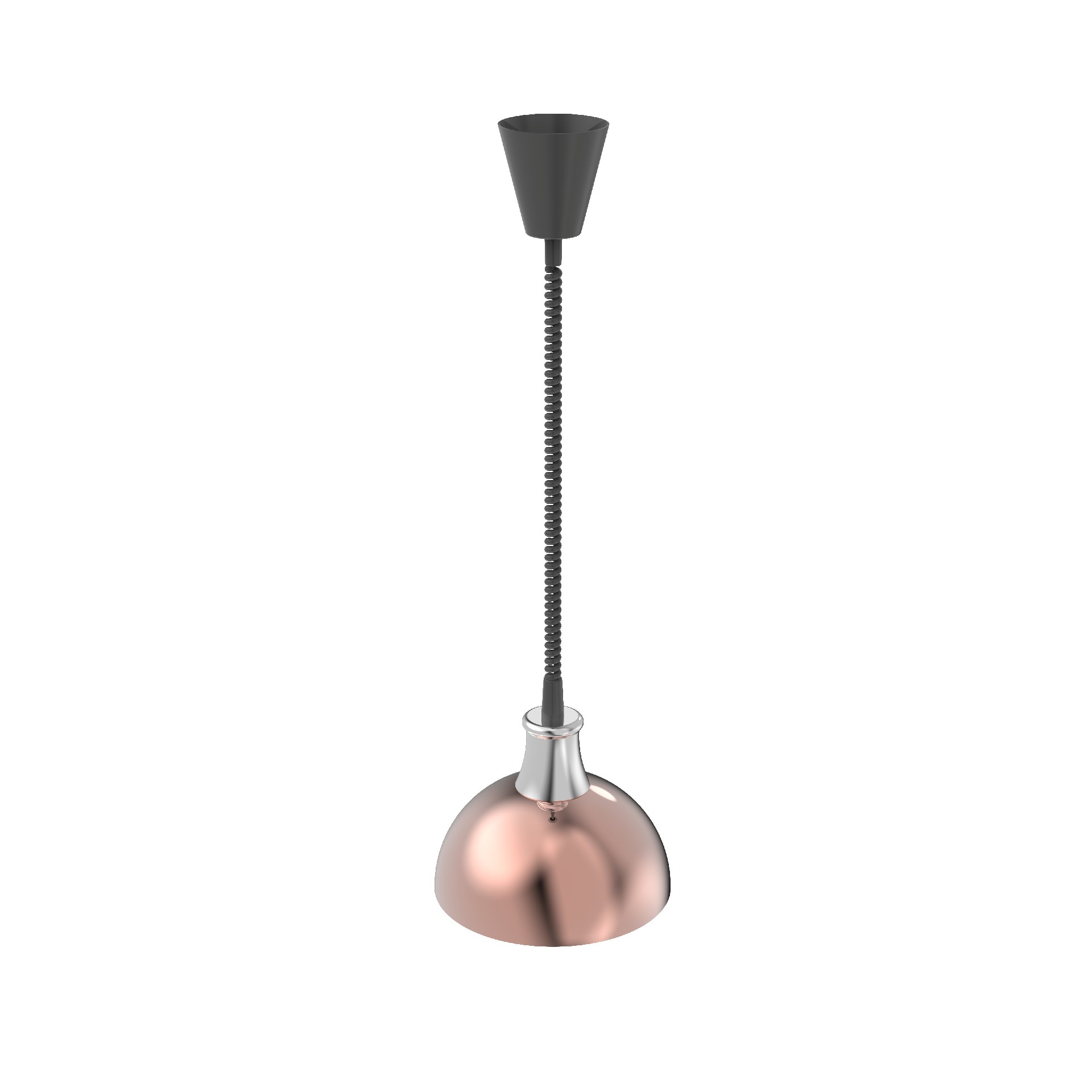
How Long Can Food Stay Under a Heat Lamp? The 4-Hour Rule
Food can stay under a heat lamp for up to 4 hours if it stays above 135°F (57°C); quality usually ...
Is Food Under a Heat Lamp Safe? A Straight Answer
Food under a heat lamp is safe when three conditions are met: above 135°F (57°C), under 4 hours, a...
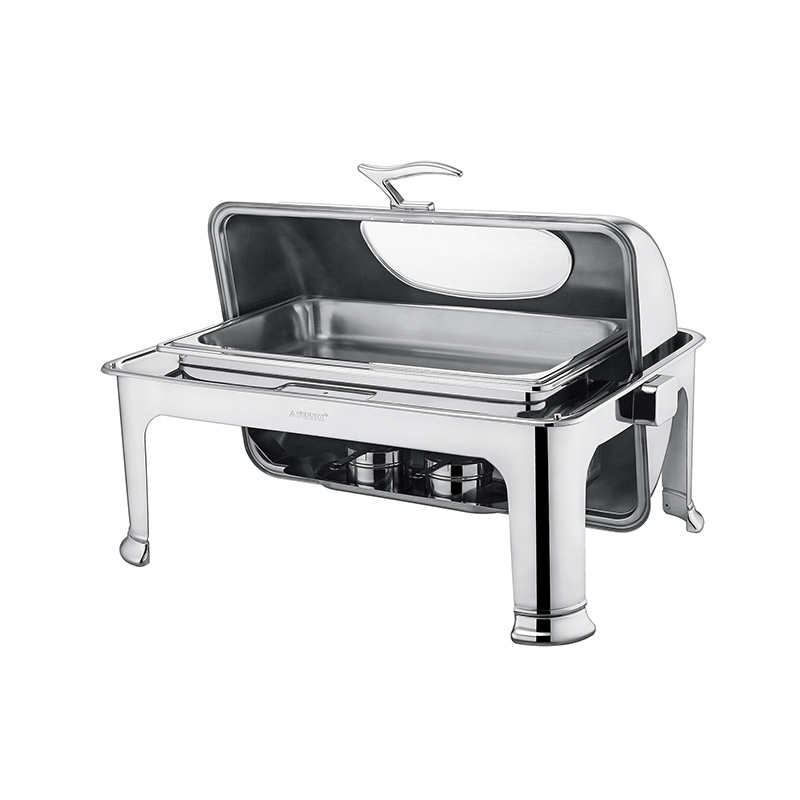
How to Choose the Right Chafing Dish for Your Buffet
Choose the right chafing dish in 6 steps: fuel vs electric, shape, quart size, gauge and lid type. I...
Does a Heat Lamp Produce Radiation? What It Really Emits
A heat lamp emits infrared radiation, which is non-ionizing: photon energy around 0.9–1.6 eV versus...
304 vs 201 Stainless Steel: Which Alloy for Buffet Equipment?
304 (18/8) costs 20–40% more than 201 and resists rust far better because of its 8% nickel; 201 swa...
Chafing Dish Fuel vs Electric: Which Should You Use?
Electric chafing dishes cost about $0.06 per hour to run; canned fuel costs $0.60–1.50. Compare ene...