
Related Products
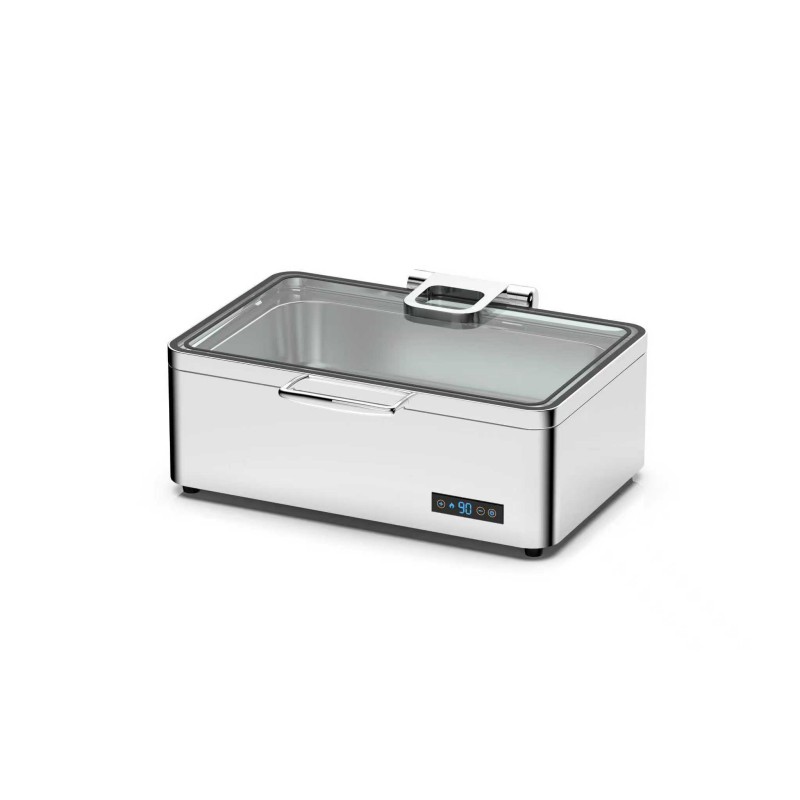
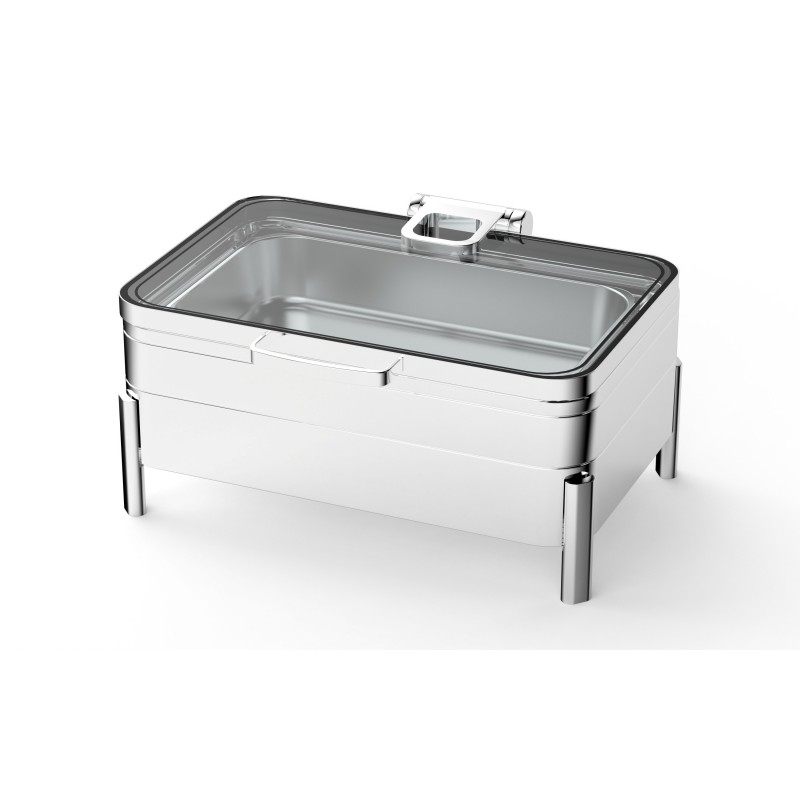
How to Choose the Right Chafing Dish for Your Buffet
Short answer: for a fixed buffet line, buy a full-size (8–9 qt) rectangular electric chafer in 304 stainless steel; for off-site catering, buy a roll-top fuel chafer in 4–6 qt. Whichever you pick, hold food at or above 135°F (57°C) and budget one 4-qt pan per 20–25 guests. Compare valid configurations in our commercial chafing dishes range.
Key takeaways
- A standard full-size chafer pan is GN 1/1, 530 × 325 mm; anything else changes how much fits on your line.
- Plan roughly 8 qt (7.6 L) of entrée per 50 guests, plus one 4-qt pan per side dish.
- 304 stainless (18/8) resists rust in humid buffet rooms; 201 will spot-rust in 12–18 months.
- Electric models cost about $0.05–0.07 per hour to run; canned fuel costs about $0.60–1.50 per hour.
Step 1 — Start with the venue, not the catalogue
The same menu needs different hardware at a hotel breakfast line and at a Saturday wedding in a tent. Use this matrix first:
| Where you serve | Recommended configuration | Why |
| Hotel / restaurant fixed buffet | Full-size rectangular electric, 8–9 qt, roll-top lid | Mains power gives steady thermostat control; rectangular pans pack tightly |
| Off-site catering, no reliable power | Full or half-size fuel chafer with 2-hour cans | No cords, no trip hazards, setup in under 5 minutes |
| Banquet / plated backup | Rectangular 6 qt with lift-off lid | Fits standard GN pans you already own |
| Dessert and breakfast station | Round 4 qt, glass or roll-top | Smaller footprint, looks formal on display |
| Outdoor events in wind | Fuel chafer with wind guard + higher-wall water pan | Wind strips heat from open frames |
Step 2 — Fuel or electric
Electric wins when you have power: a thermostat holds 140–165°F (60–74°C) without anybody watching flames. Fuel wins when you don't: two cans keep a pan hot through a two-hour service window for about $2.50–3.00. We broke down running costs, labour and setup time in Chafing Dish Fuel vs Electric.
Step 3 — Shape and footprint
Rectangular pans leave no dead space between frames and lineup with your GN pans; round pans photograph better but waste roughly 20–25% of counter length. Full comparison: Rectangular vs Round Chafing Dish.
Step 4 — Size: quarts, litres and servings
Buy capacity for your busiest service, not your average one. Refilling mid-service means lifting the lid, dropping the temperature below 135°F (57°C) and slowing the queue.
| Pan capacity | Volume | Portions of 150 g side dish | Typical use |
| 2 qt | 1.9 L | 10–12 | Sauces, condiments |
| 4 qt | 3.8 L | 20–24 | Vegetables, breakfast items |
| 6 qt | 5.7 L | 30–36 | Small-venue entrées |
| 8 qt | 7.6 L | 40–48 | Full-size hotel entrée |
| 9 qt | 8.5 L | 45–55 | Banquet entrée, roast station |
Need exact dimensions and GN equivalents? See Chafing Dish Sizes & Capacities.
Step 5 — Material and gauge
Ask two questions: what alloy, and how thick. 304 (18/8) stainless with a food pan of 0.6–0.8 mm and a frame of 1.0–1.2 mm survives thousands of washes. Thinner 0.4–0.5 mm pans dent on the first transport and warp under dry heat. In coastal or high-humidity venues insist on 304; the cheaper 201 alloy shows tea-staining within a year.
Step 6 — Lid and service details
- Roll-top: best self-service geometry; guests serve one-handed and the lid stays out of the food.
- Lift-off: cheapest and easiest to clean; needs a lid rest or it ends up on the tablecloth.
- Glass top: merchandising value, heavier to transport, more breakage.
- Hydraulic soft-close: premium banquet feel; check the gas strut's rated cycles (20,000+ is acceptable).
How many chafers do you need?
| Guests | Entrée pans (8 qt) | Side pans (4 qt) | Total chafers |
| 50 | 2 | 2 | 4 |
| 100 | 3 | 4 | 7 |
| 200 | 6 | 7 | 13 |
| 300 (banquet) | 9 | 10 | 19 |
The buyer checklist (copy and send with your RFQ)
- Useful capacity required: ____ qt per pan.
- Heat source: ☐ canned fuel ☐ electric ____ W, ____ V.
- Alloy: ☐ 304 ☐ 201 — with gauge stated for pan, water pan and frame.
- Pan footprint: ☐ full GN 1/1 ☐ half ☐ round Ø ____ mm.
- Lid: ☐ roll-top ☐ lift-off ☐ glass ☐ hydraulic.
- Stackable frames for storage? ☐ yes ☐ no.
- Spare parts available: water pans, food pans, fuel holders, lids.
- MOQ, lead time and warranty in writing; ask for a CE / LFGB declaration if you import into the EU.
For the rest of the line — heat lamps, dispensers, display pieces — use our full buffet equipment checklist.
Frequently Asked Questions
How much water goes in a chafing dish water pan?
About 1 inch (2.5 cm) of hot water, which is roughly 1.5–2 quarts (1.4–1.9 L) for a full-size pan. Start with hot tap water so food reaches 135°F (57°C) faster, and top it up before it drops below about half an inch.
Can I put a chafing dish directly on a wooden table?
Not safely. Fuel cans and electric elements heat the base; use a heat-proof mat or a metal chafer table cover to keep the surface below its scorch point.
What size chafing dish do I need for 100 guests?
For a buffet with two side dishes and one entrée, plan three 8-qt entrée pans and four 4-qt side pans — seven chafers in total, plus one spare frame ready to swap in.
Are electric chafing dishes cheaper to run than fuel?
Yes. A typical electric chafer draws 300–500 W, costing about $0.05–0.07 per hour at $0.15/kWh, versus roughly $0.60–1.50 per hour for gel or wick fuel. The saving is largest on permanent lines that run daily.
What does MOQ 50 pcs mean for a hotel order?
It is the minimum factory run for a standard configuration; mixed models can usually be combined into one container. Typical lead time is 25–30 days, with a 12-month warranty on the frame and heating element.
Related reading
Related Articles
How Long Can Food Stay Under a Heat Lamp? The 4-Hour Rule
Food can stay under a heat lamp for up to 4 hours if it stays above 135°F (57°C); quality usually ...
Is Food Under a Heat Lamp Safe? A Straight Answer
Food under a heat lamp is safe when three conditions are met: above 135°F (57°C), under 4 hours, a...
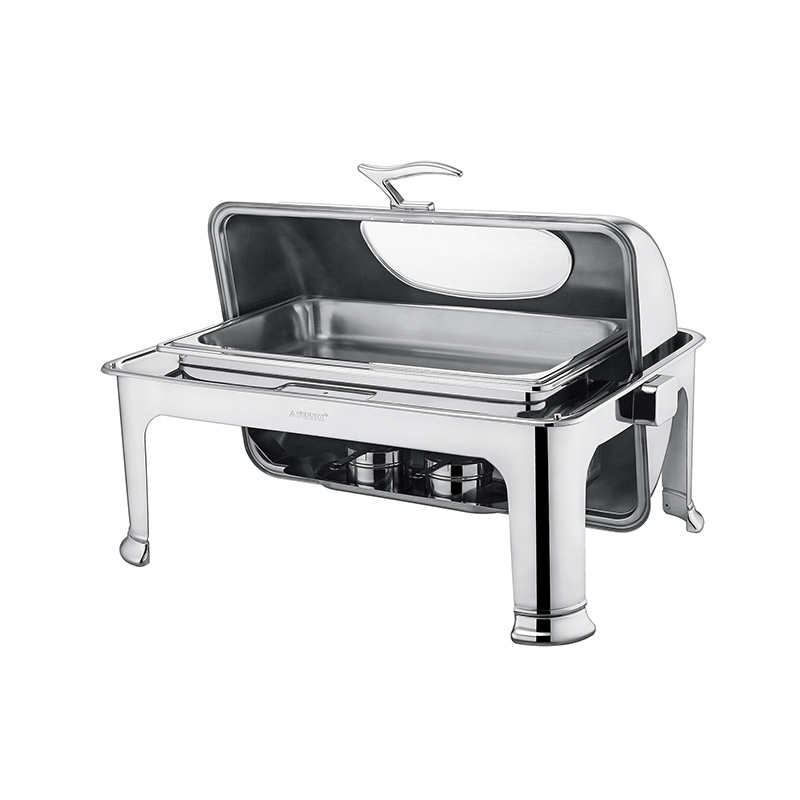
How to Choose the Right Chafing Dish for Your Buffet
Choose the right chafing dish in 6 steps: fuel vs electric, shape, quart size, gauge and lid type. I...
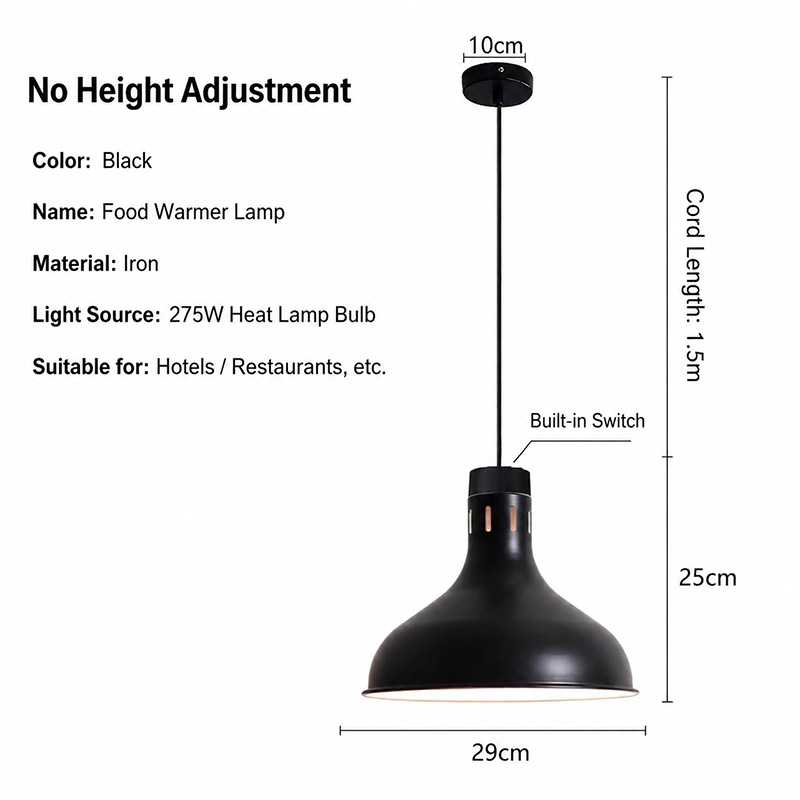
Does a Heat Lamp Produce Radiation? What It Really Emits
A heat lamp emits infrared radiation, which is non-ionizing: photon energy around 0.9–1.6 eV versus...
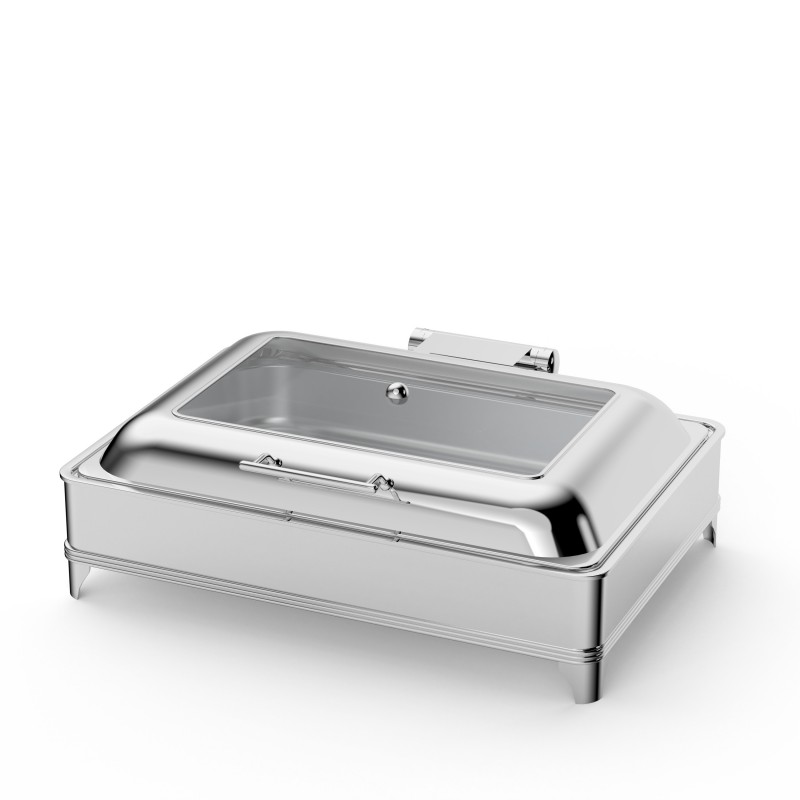
304 vs 201 Stainless Steel: Which Alloy for Buffet Equipment?
304 (18/8) costs 20–40% more than 201 and resists rust far better because of its 8% nickel; 201 swa...
Chafing Dish Fuel vs Electric: Which Should You Use?
Electric chafing dishes cost about $0.06 per hour to run; canned fuel costs $0.60–1.50. Compare ene...