
Related Products
304 vs 201 Stainless Steel: Which Alloy for Buffet Equipment?
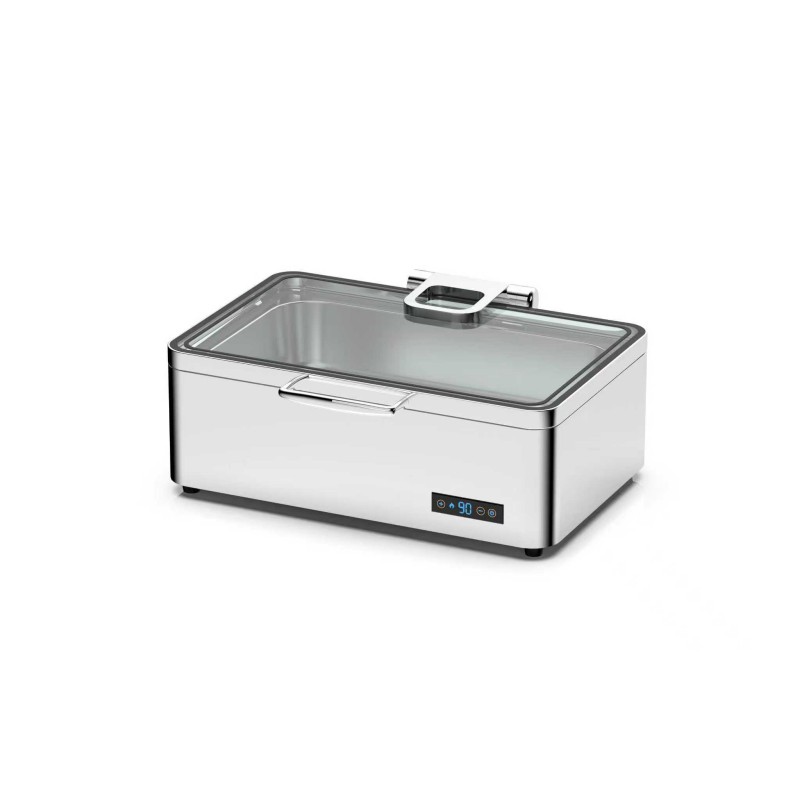
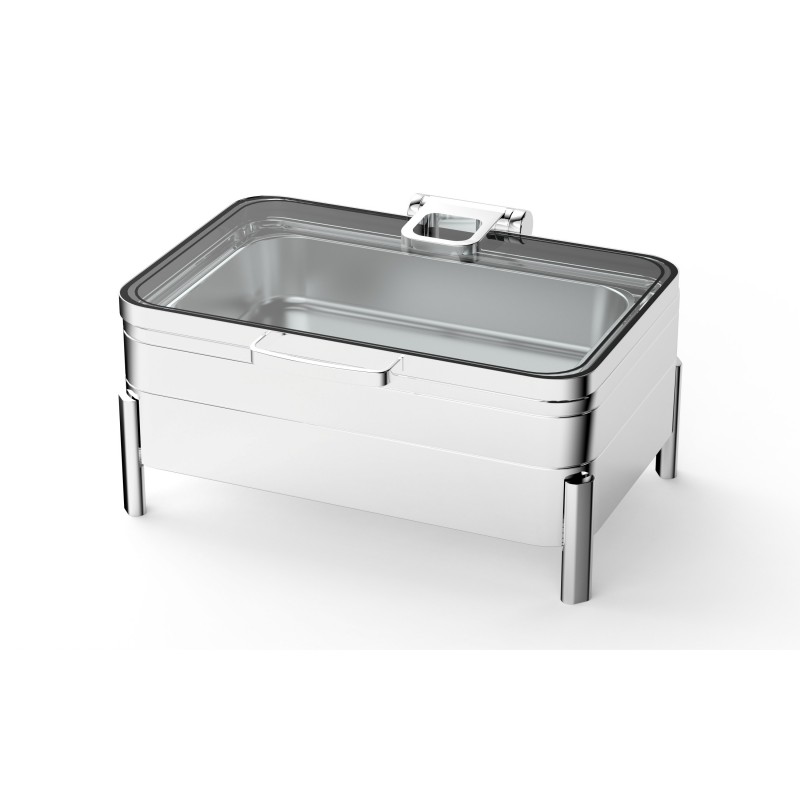
Short answer: choose 304 (18/8) for anything that touches water, salt or acid daily — typical buffet service. It holds roughly 18% chromium and 8% nickel and costs 20–40% more than 201, which replaces nickel with manganese and nitrogen and starts tea-staining within a year in humid rooms. Every unit we build is specified in 304: stainless steel chafing dishes.
Composition and standards
| Grade | Chromium | Nickel | Manganese | Carbon (max) | Common standards |
| 304 | 18–20% | 8–10.5% | ≤ 2% | 0.08% | AISI 304 / SUS304 / 06Cr19Ni10 |
| 304L | 18–20% | 8–12% | ≤ 2% | 0.03% | Better weldability |
| 201 | 16–18% | 0.8–1.2% | 5.5–7.5% | 0.15% | AISI 201 / SUS201 / 12Cr17Mn6Ni5N |
| 316 | 16–18% | 10–14% + 2–3% Mo | ≤ 2% | 0.08% | Coastal, high-chloride use |
| 430 | 16–18% | ≈ 0% | ≤ 1% | 0.12% | Ferritic, magnetic, lower corrosion |
Performance differences that show up in service
| Property | 304 | 201 |
| Corrosion resistance in normal service | Excellent — decades with basic care | Fair — surface tea-staining in 12–18 months |
| Resistance to chlorides (salt, sanitiser residue) | Good | Poor; pitting starts early |
| Field life, daily hotel buffet | 5–10 years for pans | 2–4 years before heavy staining |
| Formability / deep drawing | Excellent | Good, but work-hardens faster |
| Relative material price index | 100 | 60–80 |
| Magnet response | Non-magnetic annealed; slight pull after deep drawing | Usually non-magnetic |
Why the price gap is not the saving it looks like
On a 500-unit banquet fleet, saving 25% on steel can look like real money. But when 201 water pans start staining, the visible cost is guest perception and replacement labour: repolishing 500 pans costs far more than the alloy premium, and stain-affected pieces are often simply scrapped. For anything the guest sees — chafing dish frames, roll-top lids, beverage urns — 304 is the default specification worldwide.
How to verify what you actually received
- Handheld XRF analyser: the gold standard; reads nickel, chromium and manganese percentages in seconds. Ask your supplier for a reading from each heat of steel.
- Chemical spot test kits: distinguish molybdenum (316) and give a rough nickel indication; good as a receiving check.
- Mill certificate EN 10204 3.1: request it with every order; it states actual composition per batch.
- Do not rely on the magnet test. Both 304 and 201 are largely non-magnetic annealed, and cold working induces magnetism without changing the alloy.
Where 201 is genuinely acceptable
201 is not a bad material — it is a cost-engineered one. It performs adequately when the part stays dry, sees low chloride exposure, and will not be judged on appearance after years of service.
| Application | 304 needed? | Reason |
| Water pans, chafers, beverage urns | Yes | Permanent contact with water, heat and sanitiser |
| Visible frames and roll-top lids | Yes | Staining is immediately visible to guests |
| Indoor frames in dry climates | Recommended | Longer life still outweighs the price difference |
| Structural legs, hidden brackets | Acceptable in 201 | Low cosmetic and corrosion demand |
| Trolley frames, storage racks | Acceptable in 201 | Dry service, no food contact |
The criticism of 201 is when it is supplied without disclosure in food-contact and high-humidity roles. Disclosed and used in the right place, it is legitimate engineering.
How to specify it in a purchase contract
- State the grade explicitly — "AISI 304 / 06Cr19Ni10" — on every part line, not just the header.
- Require a mill certificate EN 10204 3.1 per heat of steel, sent before shipment.
- Add an acceptance clause allowing independent testing of a random part at the buyer's cost.
- Name the consequence of non-compliance, typically full replacement at the supplier's cost.
- Keep one signed retained sample from each order, marked with the order number.
Bottom line: how to decide in 60 seconds
- Food contact with water, heat and sanitiser? Specify 304, no exceptions.
- Something guests look at every day? 304 — staining shows within a season with 201.
- Dry, structural, hidden? 201 is acceptable if it is declared and priced accordingly.
- Coastal venue or high-chloride water? Move up to 316.
- Always get the mill certificate and, if the order is large, one XRF reading taken at random on receipt.
Alloy choice is a three-year decision, not a one-order decision. Every operator who has repolished 500 stained pans has learned this the expensive way.
Frequently Asked Questions
Is 201 stainless steel food safe?
Yes, 201 is used in food contact products and is not inherently toxic. Its weakness is corrosion resistance, so it stains and pits much sooner in daily buffet conditions than 304.
Why is 304 called 18/8?
Because of its nominal composition: about 18% chromium and 8% nickel. You may also see 18/10 on higher nickel content, common in European cookware.
Will 304 ever rust?
Practically it can show surface rust if contaminated — steel wool particles, carbon-steel shelf contact, or dried salt and chlorine residue. Clean the contamination off and passivate with citric acid.
Should I pay extra for 316?
Only for coastal venues, very high-chloride water, or heavy salt handling such as seafood displays. Otherwise 304 gives the best value for buffet equipment.
How do I spot a 201 part sold as 304?
Two warning signs: a price well below the market for 304, and a supplied sample that develops orange surface spotting after a few weeks in a humid kitchen. Always ask for the mill certificate.
Related reading
Related Articles
How Long Can Food Stay Under a Heat Lamp? The 4-Hour Rule
Food can stay under a heat lamp for up to 4 hours if it stays above 135°F (57°C); quality usually ...
Is Food Under a Heat Lamp Safe? A Straight Answer
Food under a heat lamp is safe when three conditions are met: above 135°F (57°C), under 4 hours, a...
How to Choose the Right Chafing Dish for Your Buffet
Choose the right chafing dish in 6 steps: fuel vs electric, shape, quart size, gauge and lid type. I...
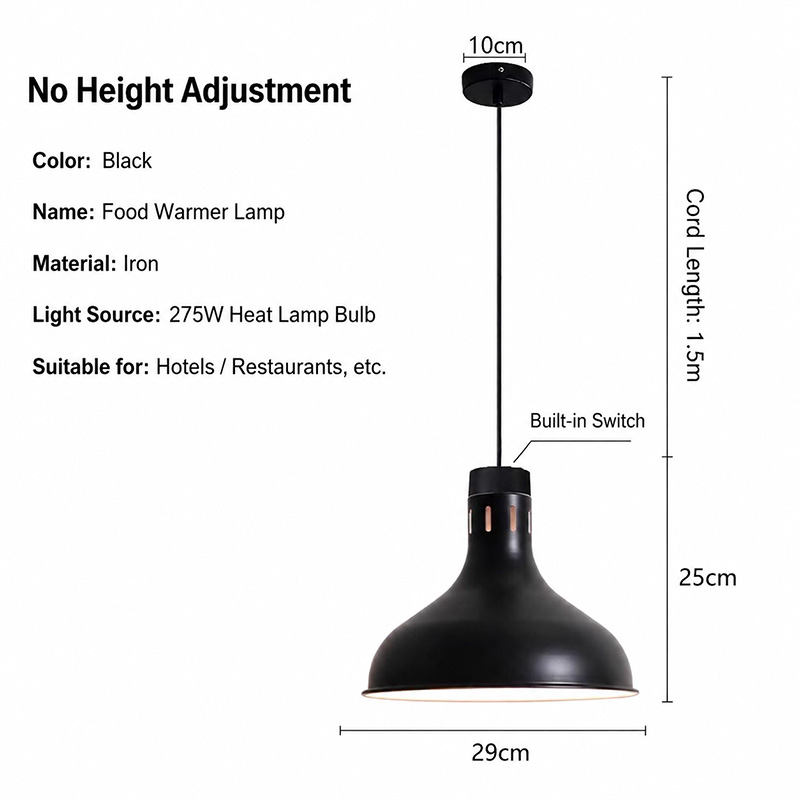
Does a Heat Lamp Produce Radiation? What It Really Emits
A heat lamp emits infrared radiation, which is non-ionizing: photon energy around 0.9–1.6 eV versus...
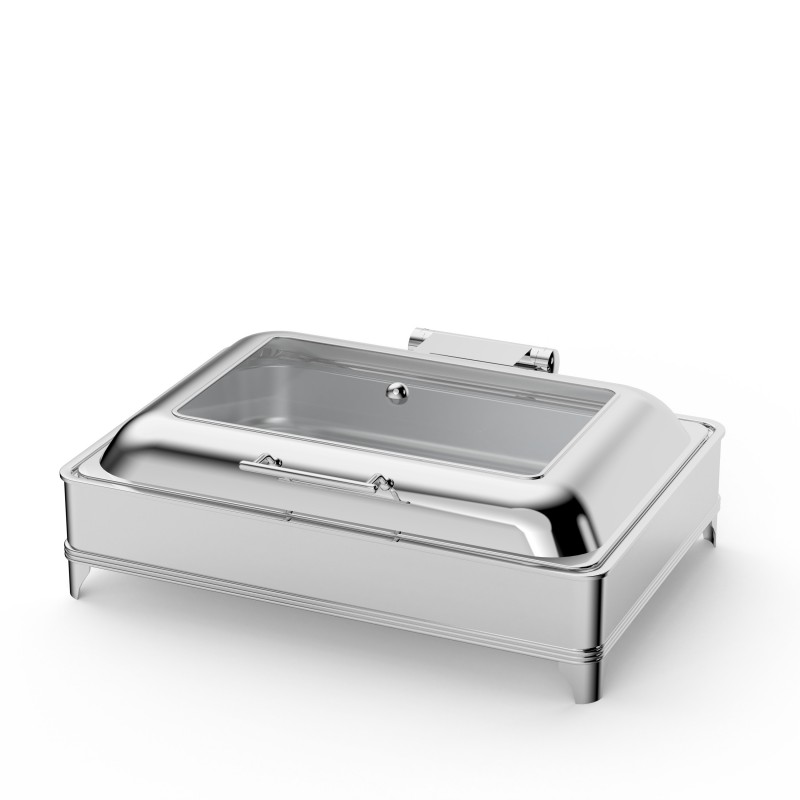
304 vs 201 Stainless Steel: Which Alloy for Buffet Equipment?
304 (18/8) costs 20–40% more than 201 and resists rust far better because of its 8% nickel; 201 swa...
Chafing Dish Fuel vs Electric: Which Should You Use?
Electric chafing dishes cost about $0.06 per hour to run; canned fuel costs $0.60–1.50. Compare ene...