
Does a Heat Lamp Produce Radiation? What It Really Emits
Short answer: yes — a heat lamp produces infrared radiation, but it is non-ionizing. An infrared photon carries roughly 0.9–1.6 eV, while ionizing radiation starts around 10 eV, so it cannot break chemical bonds or make food radioactive. Its only action is warming molecules through vibration. Safe by design, and standard equipment in every buffet: commercial heat lamps.
Radiation is a spectrum, not a verdict
| Type | Wavelength | Photon energy | Ionizing? | From a food heat lamp? |
| Radio waves | > 1 m | < 0.00001 eV | No | No |
| Microwaves | 1 mm – 1 m | 0.00001–0.001 eV | No | No |
| Infrared (IR-A, IR-B) | 0.7–3 µm | 0.4–1.8 eV | No | Yes — the main output |
| Visible light | 400–700 nm | 1.8–3.1 eV | No | Yes, the red glow |
| UV-A / UV-B | 280–400 nm | 3.1–4.4 eV | Not usually classed ionizing | Negligible |
| UV-C germicidal | 100–280 nm | 4.4–12.4 eV | Yes | No |
| X-ray / gamma | < 10 nm | > 100 eV | Yes | No |
What infrared actually does to food
- Absorption at the surface. Water, fat and proteins absorb infrared strongly, converting it to molecular vibration — i.e. heat — within roughly 2–5 mm.
- Conduction inward. The interior warms slowly by conduction, which is why thick items need rotation.
- Evaporation at the surface. Expect about 1–3% moisture loss per 10 minutes, which crisps coatings but dries plated meat.
There is no chemical change beyond cooking-class heat effects. Nothing about infrared makes food radioactive — that is physically impossible without nuclear processes.
The real hazards, ranked
| Hazard | Typical magnitude | Control |
| Contact burn from the bulb | Bulb surface 250–400°C | Guard, keep 30 cm minimum clearance |
| Glass breakage into food | Low but serious | Shatter-resistant PTFE-coated bulbs |
| Fire from combustibles | Relevant near napkins, drapes | Keep 300 mm clear; never drape anything over a lamp |
| Eye discomfort from glare | Common in small rooms | Red or coated bulbs, or raise the mounting height |
| Ionizing radiation | Zero | Not applicable |
Comparison people often ask about
- vs. microwave: microwaves are also non-ionizing but penetrate centimetres and excite water molecules directly; infrared stops at the surface.
- vs. UV sanitising lamps: UV-C does have enough energy to damage DNA and kill microbes, which is why those units are guarded and interlocked. Food heat lamps emit essentially no UV-C.
- vs. sunlight: the same infrared band reaches you through a window — one reason sunlight feels warm on skin even in cold air.
Where the "radiation worry" comes from
The confusion usually comes from mixing up three very different technologies:
| Technology | What it emits | Ionizing? | Used on food? |
| Food heat lamp | Infrared | No | Yes, for holding |
| Microwave oven | Microwaves | No | Yes, for heating |
| UV steriliser | UV-C | Yes | Surfaces and water, not bulk food |
| X-ray inspection unit | X-rays | Yes | Quality inspection only |
Commercial kitchens legitimately contain ionizing equipment — X-ray bone detectors and UV sanitisers — so the question is reasonable. A food heat lamp is not in that category: it is a simple resistive element glowing hot, exactly like the broiler element in your salamander, only pointed downward.
Answering staff and guests in one sentence
A useful line for training and for guest questions: "It gives off infrared, which is the same kind of heat you feel from sunlight through a window — it warms molecules but cannot alter the food's chemistry. The real precautions are not touching the bulb and using shatter-resistant covers." That answers accurately without dismissing the concern, and it redirects attention to the controls that actually matter.
Bottom line for buyers
Three sentences cover almost every question you will be asked by staff, inspectors or guests:
- A heat lamp emits infrared, which is non-ionizing heat radiation — it cannot alter food chemistry or make anything radioactive.
- The real risks are burns, glass and fire; manage them with a guard at 30 cm clearance, shatter-resistant bulbs and nothing combustible nearby.
- Choose the fixture by area covered, not by lamp appearance: about 250 W per 600 × 400 mm, mounted 30–45 cm above the food.
Specified and installed that way, a food heat lamp is one of the safest pieces of holding equipment in any professional kitchen.
Frequently Asked Questions
Can the radiation from a heat lamp harm people?
Not as radiation. The documented risks are burns from contact or very close proximity, glare, and glass breakage. Maintain clearance and use guarded, shatter-resistant bulbs.
Does standing under a heat lamp every day cause health problems?
Occupational exposure limits exist for infrared mainly because of skin and eye heating, not ionizing damage. Normal buffet installation heights put staff and guests well inside safe ranges.
Can infrared change the nutritional value of food?
Only to the same degree as any hot holding: vitamin C and some B vitamins degrade with time and heat, but the cause is temperature and duration, not the radiation type.
Is there any UV coming off a heat lamp?
Effectively none that matters. Quartz and glass envelopes and the low filament temperature mean UV output is negligible compared with a fluorescent tube or the sun.
Do I need shielding or PPE?
No shielding for radiation. Fit a guard to prevent contact and choose shatter-resistant bulbs over open food to protect against glass.
Related reading
Related Articles
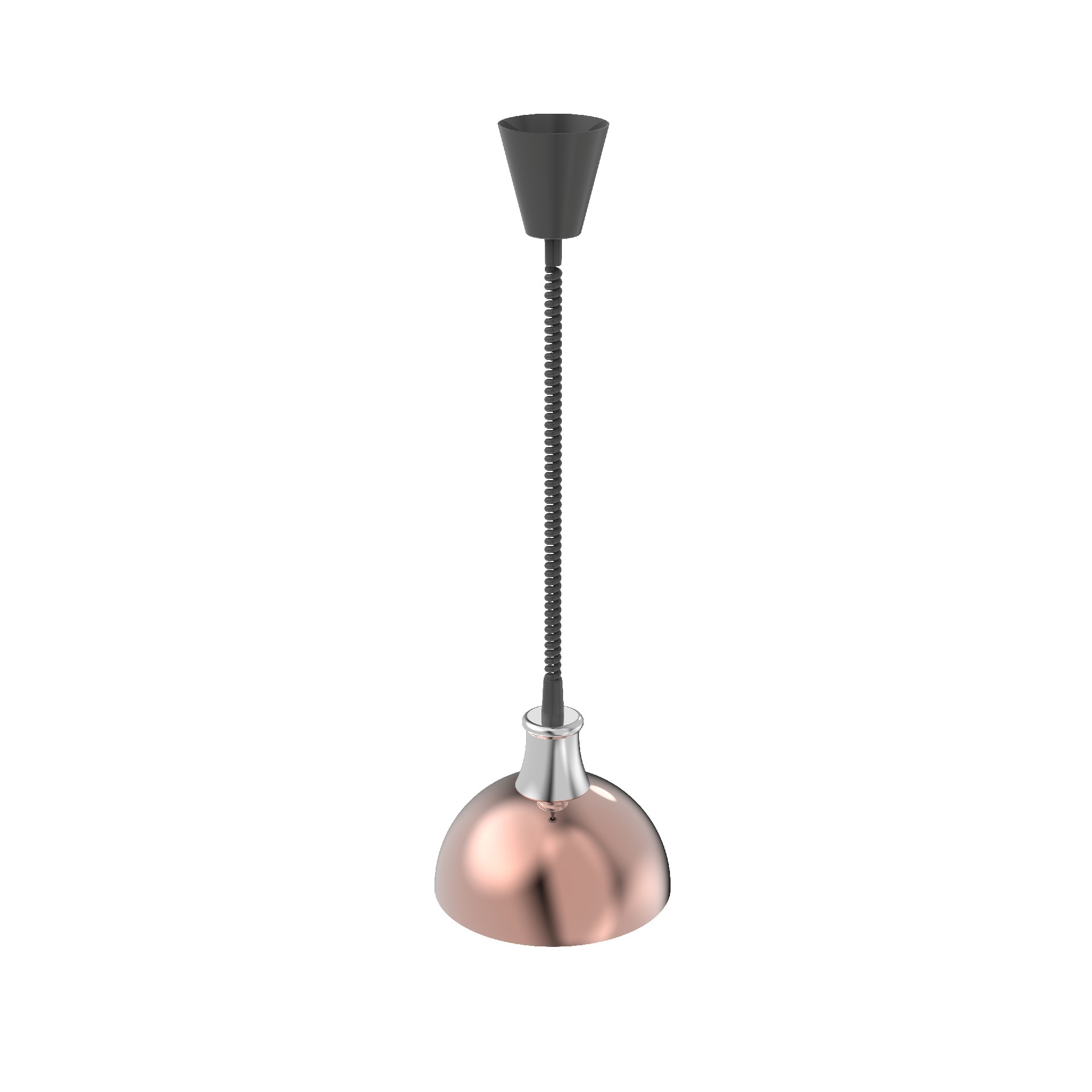
How Long Can Food Stay Under a Heat Lamp? The 4-Hour Rule
Food can stay under a heat lamp for up to 4 hours if it stays above 135°F (57°C); quality usually ...
Is Food Under a Heat Lamp Safe? A Straight Answer
Food under a heat lamp is safe when three conditions are met: above 135°F (57°C), under 4 hours, a...
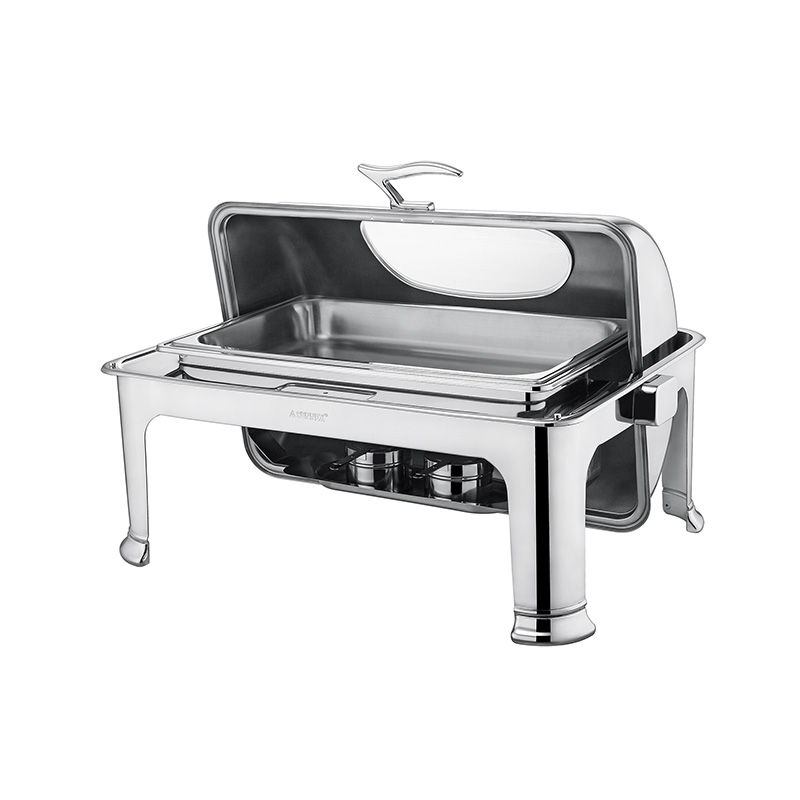
How to Choose the Right Chafing Dish for Your Buffet
Choose the right chafing dish in 6 steps: fuel vs electric, shape, quart size, gauge and lid type. I...
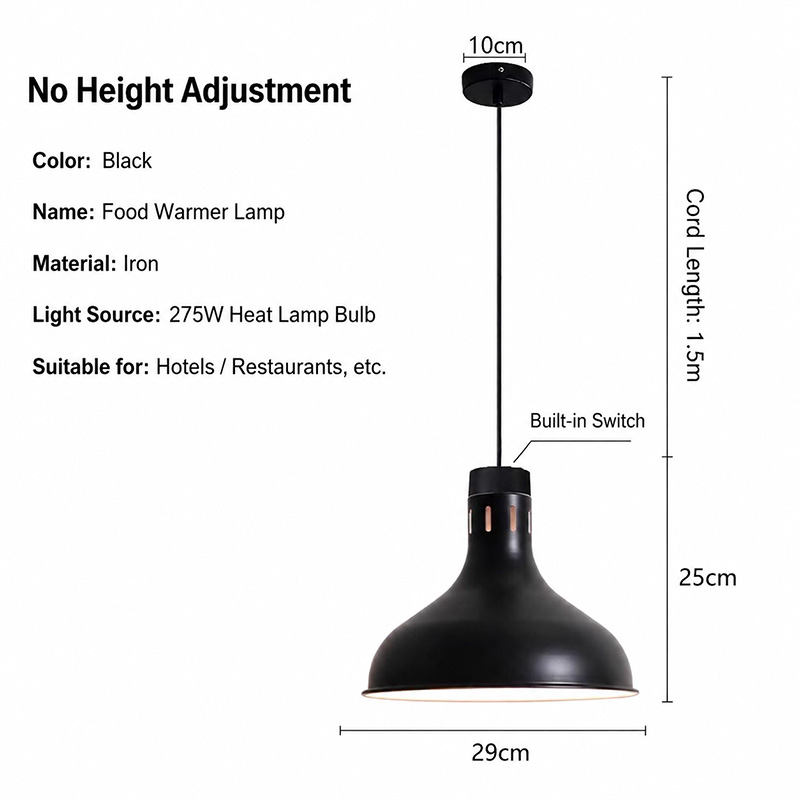
Does a Heat Lamp Produce Radiation? What It Really Emits
A heat lamp emits infrared radiation, which is non-ionizing: photon energy around 0.9–1.6 eV versus...
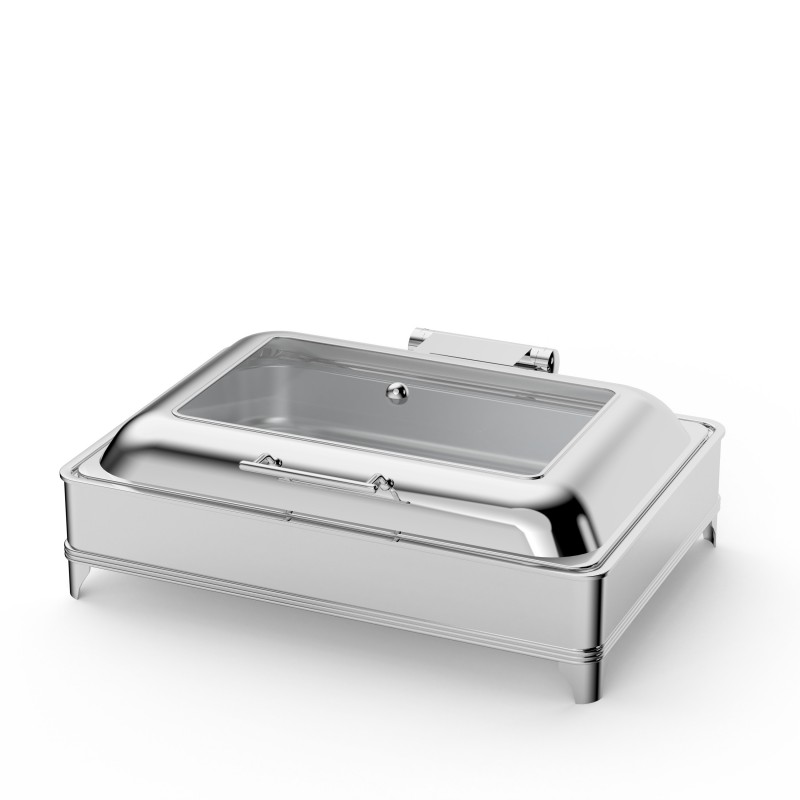
304 vs 201 Stainless Steel: Which Alloy for Buffet Equipment?
304 (18/8) costs 20–40% more than 201 and resists rust far better because of its 8% nickel; 201 swa...
Chafing Dish Fuel vs Electric: Which Should You Use?
Electric chafing dishes cost about $0.06 per hour to run; canned fuel costs $0.60–1.50. Compare ene...