
Related Products
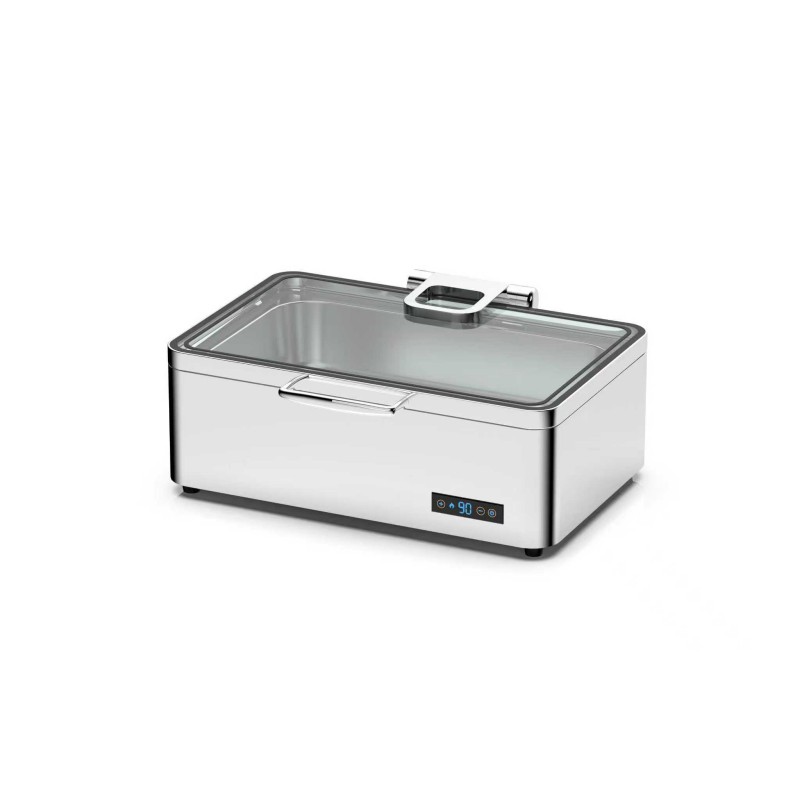
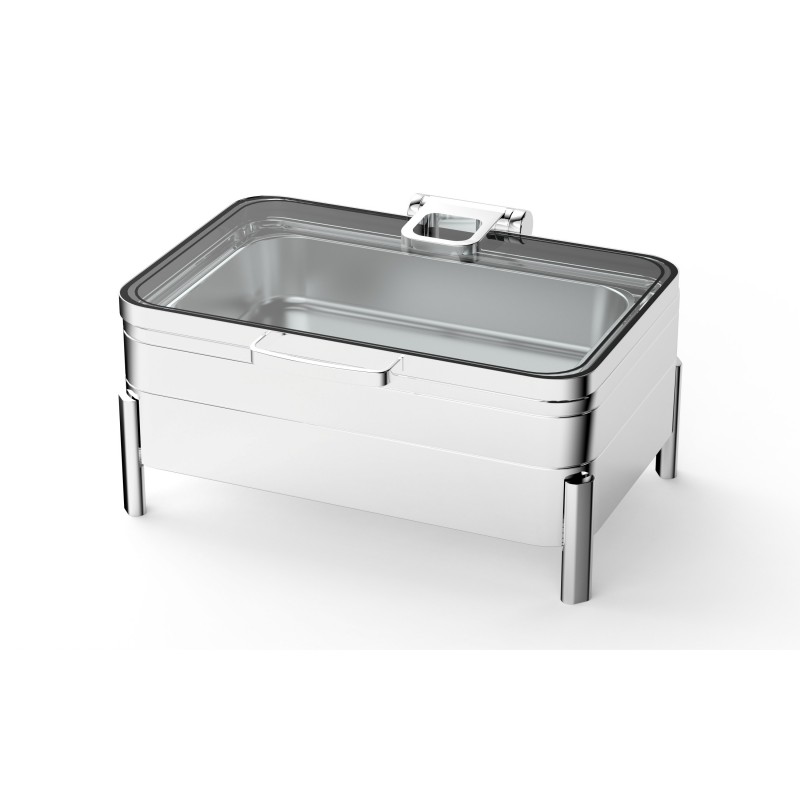
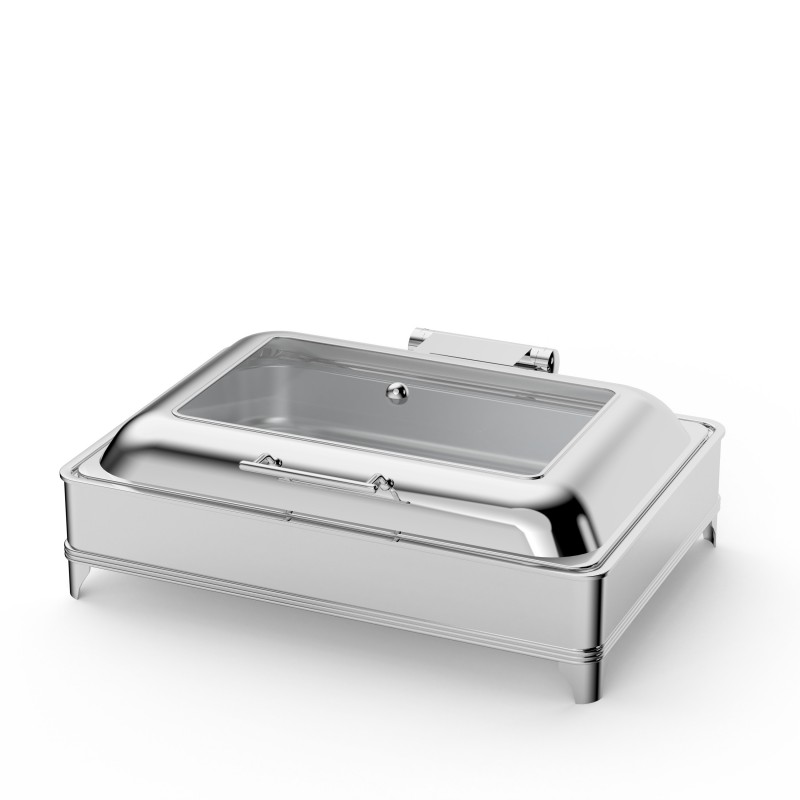
What Is a Chafer Used For? Definition, Parts and Uses
Short answer: a chafer (chafing dish) is a self-contained heated serving frame used to hold already-cooked food at serving temperature during buffet and banquet service. It heats food indirectly through a water pan kept at about 1 inch (2.5 cm) of water, holding dishes at 135–165°F (57–74°C) without cooking them further. See the full commercial chafing dish range.
The six parts of a chafer
- Frame / stand — supports everything and lifts the heat source clear of the table.
- Water pan — holds about 1 inch (2.5 cm) of hot water; the buffer that prevents scorching.
- Food pan — a standard GN pan (commonly 1/1 at 530 × 325 mm, or half size) holding the food.
- Heat source — canned gel or wick fuel, or an electric element with thermostat.
- Lid — roll-top, lift-off, glass or hydraulic; protects food and controls how guests serve themselves.
- Fuel holder / drip tray — positions the can and catches spills.
What a chafer is used for
| Use case | Why a chafer suits it | Typical size |
| Hotel breakfast line | Moist heat keeps eggs and beans palatable for an hour or more | 4 qt half size |
| Banquet and wedding service | Looks formal; no power needed with fuel versions | 8–9 qt full size |
| Catering off-site | Stackable, no wiring, sets up in under 5 minutes | 4–8 qt |
| Corporate canteens | Fixed line with steady daily use | Electric 1/1 |
| Dessert or condiment stations | Small round units suit display | 2–4 qt round |
What a chafer is not for
- Cooking raw food. A chafer holds; a raw protein will sit in the danger zone for too long.
- Reheating cold food. Bring food to 165°F (74°C) before it goes into the pan.
- Storing leftovers. Holding is not storage; the 4-hour discard rule still applies.
Chafer vs related equipment
| Equipment | Heat type | Best for |
| Chafing dish | Moist, indirect | Sauced entrées, sides, breakfast |
| Heat lamp | Dry radiant | Fried foods, carving stations |
| Slow cooker | Direct conduction, lidded | Small batches, back-of-house |
| Soup kettle | Direct conduction | Liquids at 165–200°F (74–93°C) |
| Warming tray | Dry conduction | Short holds, plated items |
Terminology: chafer vs chafing dish
The terms are interchangeable in modern catering. Historically "chafing dish" came from the French échauffer, meaning to warm gently, describing the indirect heat across a water bath that defines the device to this day.
Why the design has barely changed in a century
The principle — a water bath between flame and food — solves three problems at once: it caps temperature at 212°F (100°C) so nothing burns, it adds humidity so food does not dry, and it spreads heat evenly instead of scorching the middle. No cheap technology does all three better for buffet service, which is why the format survives electric versions, induction bases and designer lids.
| Era / variant | Change introduced | Solved |
| Traditional fuel chafer | Canned gel under a water pan | Portability, no wiring |
| Electric chafer | Thermostat at 140–165°F (60–74°C) | Supervision labour |
| Roll-top lid | Rolling lid stays attached | Where to put the lid |
| Induction base | Flame-free heating | Venue fire restrictions |
| Hydraulic lid | Soft-close assist | Noise and guest comfort |
Formats at a glance
- Full size, GN 1/1 (530 × 325 mm): 8–9 qt, the banquet default.
- Half size, GN 1/2 (325 × 265 mm): 4 qt, sides and breakfast items.
- Round Ø 350–400 mm: 4–6 qt, sauces and presentation stations.
- Mini / Ø 200 mm: sauces and condiments.
Whichever you choose, the working rule is the same: about 1 inch (2.5 cm) of hot water, food at 135°F (57°C) or above, and a fresh pan rather than a topped-up one.
Buying notes for a first-time buyer
- Start with the standard: choose GN-compatible pans so replacements come from any supplier, locally, for years.
- Buy one size bigger than the minimum: most buyers regret a 4 qt when the menu grows.
- Order spares with the fleet: about 30% extra food pans and one spare lid per ten frames.
- Decide the lid type early: roll-top for self-service, lift-off for staffed lines, glass when presentation sells the dish.
- Confirm the heat source availability: reliable power means electric is cheaper to run; none or unreliable means fuel.
A chafer is the single most-used item on most buffet lines, and the one where a cheap specification is visible every single day to every single guest.
Frequently Asked Questions
What is the purpose of the water pan?
It caps the temperature at the boiling point of water — 212°F (100°C) — so food cannot scorch, and it adds humidity that slows drying.
Can you cook food in a chafer?
No. A chafer holds food at serving temperature; it cannot reliably bring raw food through the danger zone quickly enough to be safe.
What is another name for a chafer?
Chafing dish — and in procurement documents you may see "hotel pan warmer" or "GN buffet warmer".
How long does food last in a chafer?
Up to 4 hours if it stays at 135°F (57°C) or above and is not topped up with fresh food. Quality generally declines after about 2 hours.
Do I need electricity for a chafer?
Not for fuel models, which run on canned gel — that is why they dominate off-site catering. Electric models need a mains outlet but hold temperature with far less supervision.
Related reading
Related Articles
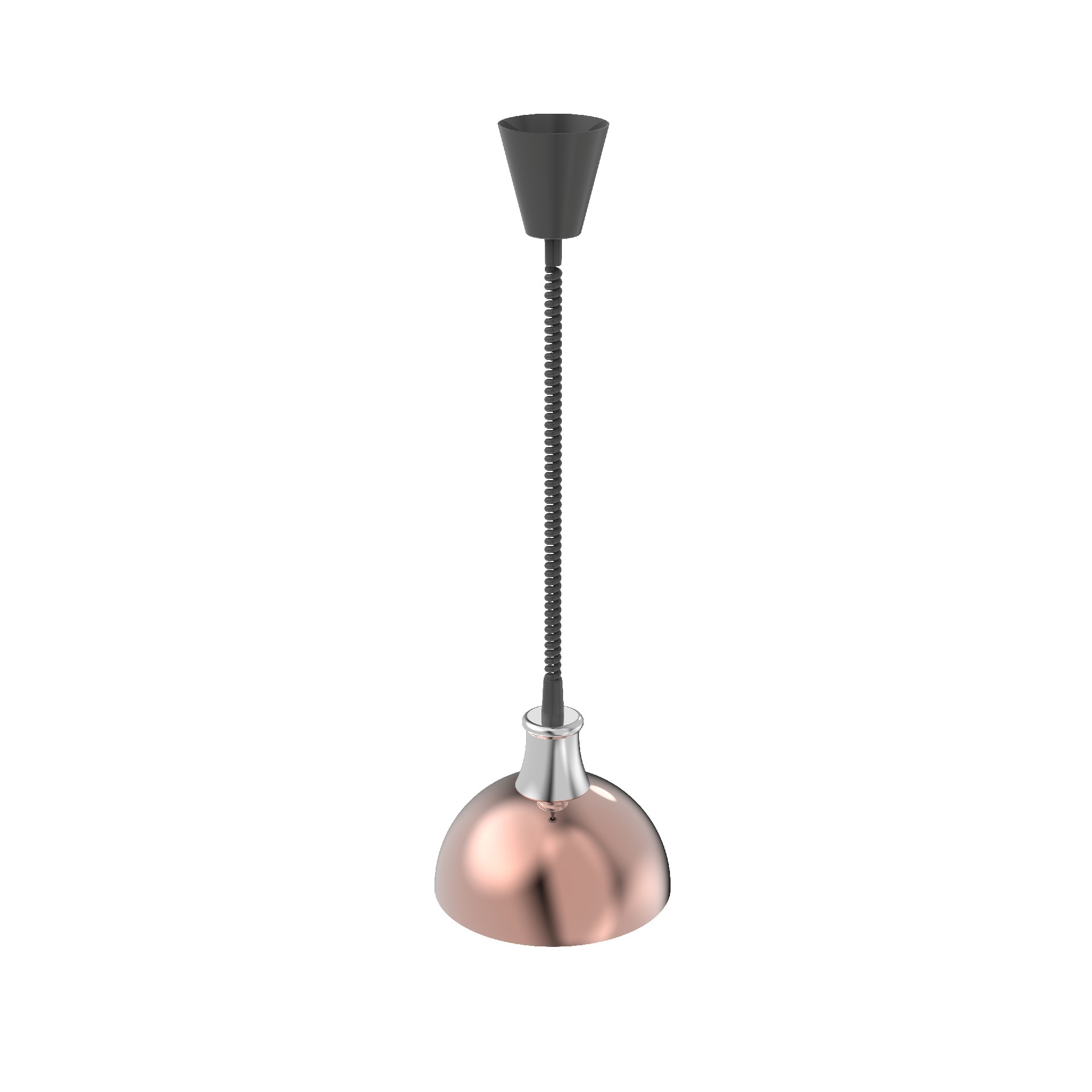
How Long Can Food Stay Under a Heat Lamp? The 4-Hour Rule
Food can stay under a heat lamp for up to 4 hours if it stays above 135°F (57°C); quality usually ...
Is Food Under a Heat Lamp Safe? A Straight Answer
Food under a heat lamp is safe when three conditions are met: above 135°F (57°C), under 4 hours, a...
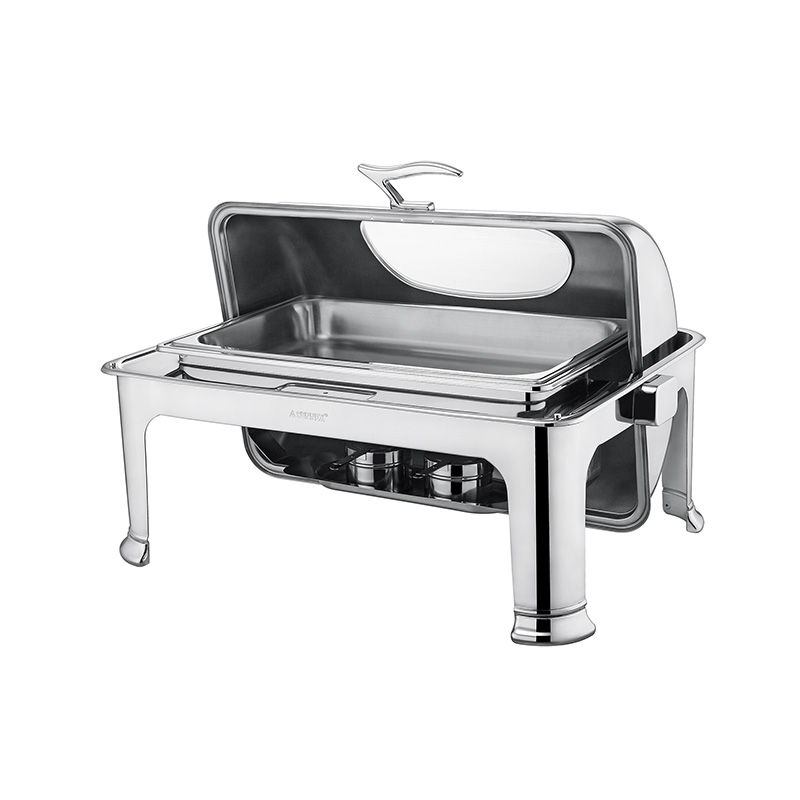
How to Choose the Right Chafing Dish for Your Buffet
Choose the right chafing dish in 6 steps: fuel vs electric, shape, quart size, gauge and lid type. I...
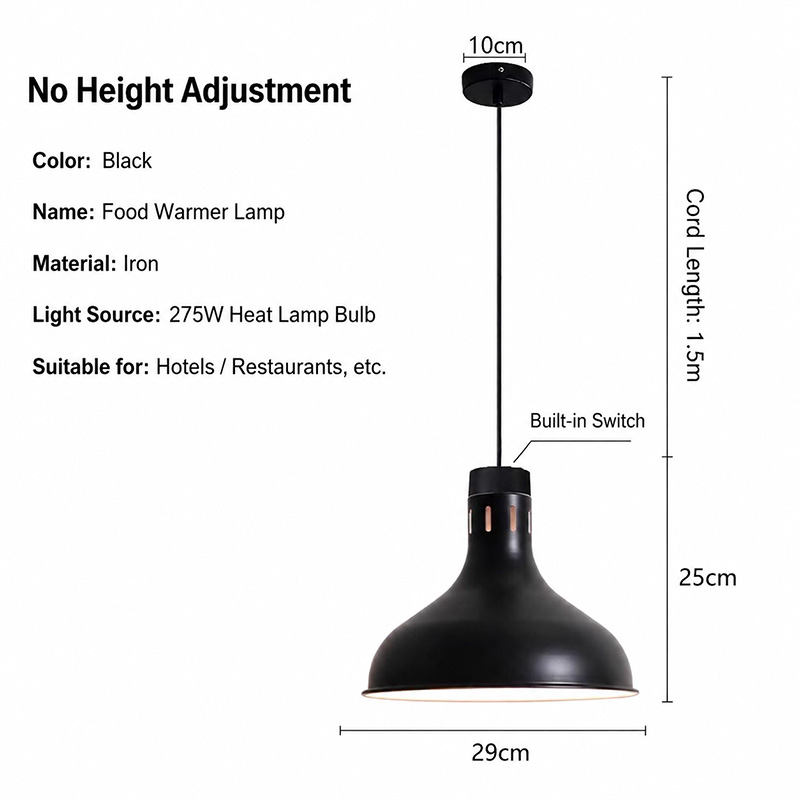
Does a Heat Lamp Produce Radiation? What It Really Emits
A heat lamp emits infrared radiation, which is non-ionizing: photon energy around 0.9–1.6 eV versus...
304 vs 201 Stainless Steel: Which Alloy for Buffet Equipment?
304 (18/8) costs 20–40% more than 201 and resists rust far better because of its 8% nickel; 201 swa...
Chafing Dish Fuel vs Electric: Which Should You Use?
Electric chafing dishes cost about $0.06 per hour to run; canned fuel costs $0.60–1.50. Compare ene...