
Related Products
How Much Fuel Does a Chafing Dish Use? Cost per Event
Short answer: a chafing dish uses roughly one standard 2-hour can per pan per two hours. For a three-hour banquet with seven pans you will burn about 11 cans — roughly $13–33 depending on can price. Preheating with hot water and using wind guards cuts consumption 10–20%; electric configurations cut it far more.
Consumption by event size
| Scenario | Pans | Service length | Cans used | Fuel cost @ $1.20–3.00 per can |
| Small meeting | 3 | 2 h | 3 | $3.60–9.00 |
| Wedding buffet, 120 guests | 6 | 3 h | 9 | $11–27 |
| Banquet, 200 guests | 7 | 3 h | 11 | $13–33 |
| Hotel breakfast, daily | 5 | 4 h (250 days) | 2,500 | $3,000–7,500 per year |
| Full-time daily line, electric alternative | 5 | 4 h (250 days) | n/a | $112 in electricity |
That last row is why permanent operations switch: 400 W per unit, 5 units, 4 hours, 250 days equals 2,000 kWh, or about $300 at $0.15/kWh — against thousands spent on consumable fuel.
Can formats and burn times
| Format | Burn time | Best for | Handling note |
| Standard gel can | 2 h | Most services | Cheapest per can, higher labour |
| Extended gel can | 4 h | Long receptions | Cannot be safely resealed mid-service |
| Wick fuel can | 4–6 h | Banquets | Adjustable flame |
| Methanol pour fuel | Varies | Back-of-house | Higher spill and flare risk |
Five ways to burn less
- Start with hot water. Cold water adds 10–15 minutes of heat-up and a full extra can on long services.
- Use wind guards outdoors. Wind strips 20–30% of effective heat; a guard costs less than the extra cans.
- Keep lids closed. Every unnecessary opening is heat you pay to replace.
- Close stations progressively. Nobody notices when the fourth pan disappears during the last 30 minutes.
- Go electric where power exists. Roughly $0.05–0.07 per hour versus $0.60–1.50.
Annual fuel budget calculator
| Operation | Pans | Hours per day | Cans per year | Annual fuel spend |
| Small café brunch, weekends only | 3 | 4 | 624 | $750–1,870 |
| Event caterer, 40 events | 8 | 3 | 480 | $580–1,440 |
| Hotel breakfast daily | 5 | 4 | 2,600 | $3,120–7,800 |
| Same hotel, electric units | 5 | 4 | n/a | $300–420 |
Working it: cans per year = pans × (hours ÷ 2) × days open. Even at the cheapest can price, a daily operation spends more on fuel in one quarter than a full set of electric units costs to buy.
Storing and disposing of cans
- Store below 40°C in a ventilated cabinet, away from any ignition source — never above an oven.
- Keep stock rotated; gel cans lose potency over years of storage.
- Cool spent cans at least 30 minutes before disposing; a can that feels warm can still ignite waste.
- Never pour water on a burning can — smother it with the lid on a metal surface.
- Check local rules: some jurisdictions treat partially used gel cans as special waste.
Good storage discipline also cuts consumption: cans kept in a hot room tend to burn faster than specification.
Bottom line: three ways to cut the fuel bill
- Hot water start. Filling water pans with hot water instead of cold removes 10–15 minutes of heat-up and roughly one extra can per long service.
- Progressive closing. Take a pan off the line every 20 minutes near the end of service; guests read a five-dish line as generous long after six were needed.
- Electric where power is reliable. At about $0.05–0.07 per hour against $0.60–1.50, the switch pays back inside a season for any daily operation.
None of these changes anything guests notice, which is exactly why they are worth doing before trying to reduce portions or menu items.
Buying cans the smart way
| Buying habit | Result | Better approach |
| Small boxes as needed | Highest unit price, frequent stock-outs | Quarterly pallet order at a contracted rate |
| Cheapest can available | Shorter burn time, more cans used | Compare cost per hour, not per can |
| No consumption tracking | No idea what a service costs | Log cans issued per event for one month |
| Stock stored near the range | Potency and safety issues | Cool, ventilated store away from heat |
Cost per hour is the only fair comparison: a 2-hour can at $1.20 is $0.60 per hour, while a 6-hour can at $4.20 is $0.70 per hour — the cheaper-looking can is not always the cheaper option.
Frequently Asked Questions
How much fuel do I need for a 3-hour event?
Two 2-hour cans per pan, or one 6-hour can. Add about 20% for wind, cold weather or a cold-water start.
How many cans for 100 guests?
With six pans over a three-hour service, about 9–10 cans; order 12 so you have spares.
Can I extinguish and reuse a gel can?
You can snuff it and reseal it, but do not relight it while still warm. Most operators simply let it burn out.
Is electric cheaper than fuel?
Yes over the long run — roughly $0.05–0.07 per hour against $0.60–1.50. Compare properly in fuel vs electric running costs.
Does the can size change consumption?
No, only convenience and cost per hour. A 6-hour can is usually cheaper per hour than three 2-hour cans but removes your flexibility at the end of service.
Related reading
Related Articles
How Long Can Food Stay Under a Heat Lamp? The 4-Hour Rule
Food can stay under a heat lamp for up to 4 hours if it stays above 135°F (57°C); quality usually ...
Is Food Under a Heat Lamp Safe? A Straight Answer
Food under a heat lamp is safe when three conditions are met: above 135°F (57°C), under 4 hours, a...
How to Choose the Right Chafing Dish for Your Buffet
Choose the right chafing dish in 6 steps: fuel vs electric, shape, quart size, gauge and lid type. I...
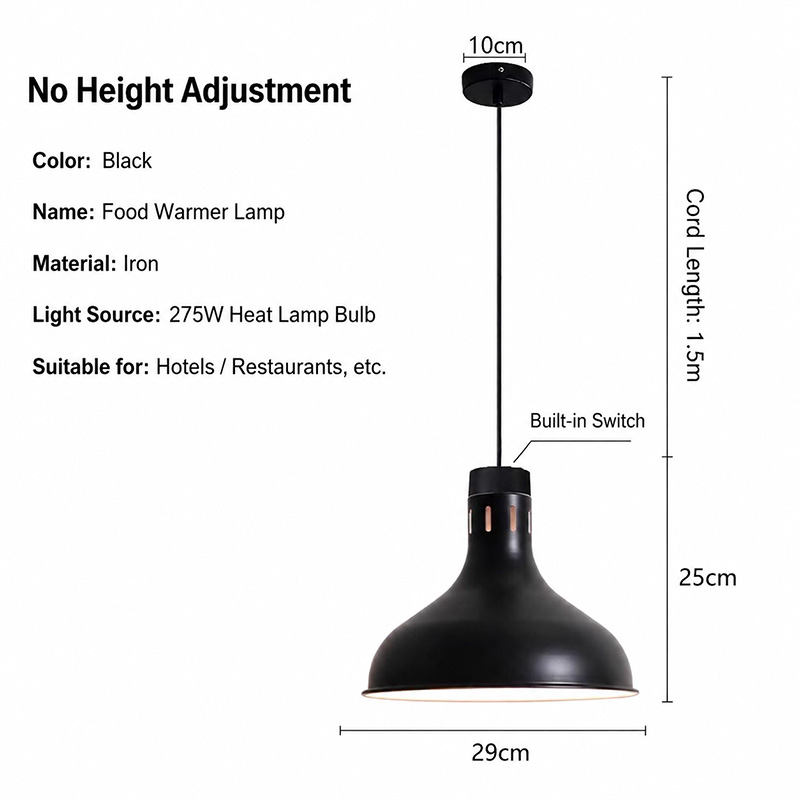
Does a Heat Lamp Produce Radiation? What It Really Emits
A heat lamp emits infrared radiation, which is non-ionizing: photon energy around 0.9–1.6 eV versus...
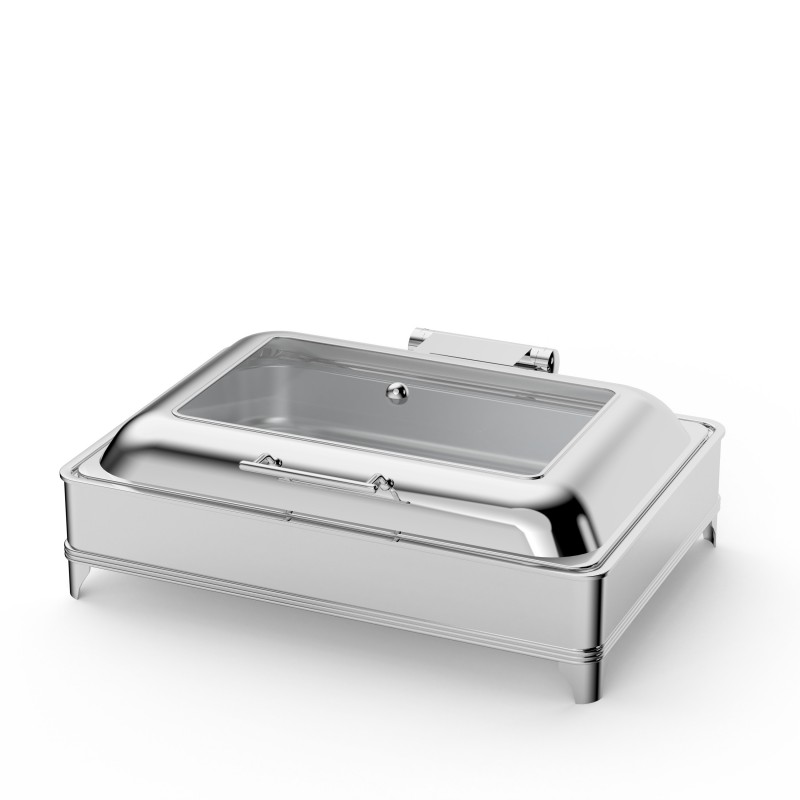
304 vs 201 Stainless Steel: Which Alloy for Buffet Equipment?
304 (18/8) costs 20–40% more than 201 and resists rust far better because of its 8% nickel; 201 swa...
Chafing Dish Fuel vs Electric: Which Should You Use?
Electric chafing dishes cost about $0.06 per hour to run; canned fuel costs $0.60–1.50. Compare ene...